Joyfully Growing In Grace engages in an examination of beliefs found in the Hebrew Roots Movement, Messianic Judaism, and Netzarim streams of thought and related sects.
The term “Messianic” is generally understood to describe Jews who have come to believe in Yeshua/Jesus as their Messiah. Jews who are believers in Jesus/Yeshua typically call themselves Jewish/Hebrew Christians or simply, Christians.
Many Christians meet folks who say they are ‘Messianic’ and assume that those folks are Jewish Christians. Most aren’t Jewish at all, but are Gentile Christians who have chosen to pursue Torah observance and have adopted the Messianic term, calling themselves Messianic Christians, adherents to Messianic Judaism, or simply, Messianics. Some will even try to avoid that label and say that they are followers of "The Way".
These Gentiles (and to be fair, some Messianic Jews) preach Torah observance/pursuance for Christians, persuading many believers that the Christianity of the Bible is a false religion and that we must return to the faith of the first century sect of Judaism that they say Yeshua (Jesus Christ) embraced. According to them, once you become aware that you should be 'keeping' the edicts and regulations of Mosaic Covenant Law, if you do not, you are then in willful disobedience to God.
It has been my observation that Christians who adopt the label of Messianic identify more with the tenets of Judaism than they do with the tenets of Christianity. Many reject the label of Christian altogether and some eventually even convert to Judaism.
1 Thessalonians 5:21-22 says, "But examine everything carefully; hold fast to that which is good; abstain from every form of evil."
Joyfully Growing in Grace examines the methods, claims, and fruits of the Hebrew Roots Movement, Messianic Judaism, and Netzarim streams of thought and related, law-keeping sects.
To borrow from a Forrest Gump quote, “Law ‘keepers’ are like a box of chocolates - ya never know what you’re gonna get!” The goal of JGIG is to be a resource to help those affected by the Torah pursuant movements to try and sort out what they’re dealing with. Make use of the tabs with drop-down menus found at the top of this site – there’s tons of info there, and it’s very navigable.
Be sure to click on the many embedded links within the posts here - there's lots of additional and related information for you to access that way, as well.
Welcome, and may God grant you wisdom and discernment as you consider all of these things.
Today’s Top Ten (or 5? not sure why 10 are no longer showing?)
Do you find it frustrating when you’re directed to a link that does not exist? Me too! My apologies for any broken links you may find here.
JGIG occasionally links to to sites that sometimes change hosting sites or remove content, forums that periodically cull threads, sites/posters that appear to ‘scrub’ content from their sites (or YouTube posts, pdf files, etc.) when that content receives negative attention, and other sites that over time, have simply ceased to exist.
As of this writing (Sep ’23), I’ll be methodically going through JGIG and repairing as many links as I can, slowly, but surely.
Please let me know via the ‘Contact JGIG’ drop-down menu item under the ‘About’ tab at the top of this page if you come across a link that is broken so that I can try to repair or remove it. Please include the name of the post/article where you found the broken link as well as the link itself. You may be able to find content specified by doing a search and viewing a relocated or cached page/post/video using an article title or some text content.
It’s that time of year, believers. Concerned family members are telling you to not celebrate the Resurrection of Christ on Easter and are preparing their homes and themselves to observe the Spring Feasts of Israel.
” . . . I am now again suited up, ready to fight, without fear of man, and I will be active again, especially leading into Passover. Judases will arise the closer we get to Passover, as that spirit does every year, and Amalek will arise and is rising again, and I will not make the mistake of leaving one single Amalekite alive, and I will continue to persue and hunt every one of them down and slay them with the Sword of the Spirit, which is the Word of the ONLY living Elohim/God.”
Let me encourage you that as you interact with the Law-keepers in your life to love them well and to keep pointing them to Christ, His Work, and who they are in Him.
Our walk in Christ is not meant to be a series of battles in a grand war with many enemies.
Christ taught us to love our enemies and to pray for those who persecute us, not to ‘slay them with the Sword of the Spirit’.
NO.
We are to be ambassadors of LIFE by sharing the Truths of the Gospel:
16 So from now on we regard no one from a worldly point of view. Though we once regarded Christ in this way, we do so no longer. 17 Therefore, if anyone is in Christ, the new creation has come: The old has gone, the new is here!
18 All this is from God, who reconciled us to himself through Christ and gave us the ministry of reconciliation:
19 that God was reconciling the world to himself in Christ, not counting people’s sins against them. And he has committed to us the message of reconciliation.
20 We are therefore Christ’s ambassadors, as though God were making his appeal through us. We implore you on Christ’s behalf: Be reconciled to God. 21 God made him who had no sin to be sin for us, so that in him we might become the righteousness of God. (from 2 Cor. 5)
And LIFE is what the celebration of the Resurrection of Christ is all about – not only HIS indestructible life, but the New Life imparted to US in Christ.
These are realities in Christ which are indeed worth celebrating \o/ !!!
So to repeat: As you interact with the Law-keepers in your life,
—> Love them well
—> Keep pointing them to Christ, His Work, and who they are in Him.
Here is a link to an article (can also be found on the Articles Page here at JGIG) that addresses the common arguments regarding the early church and the establishment of the celebration of the Resurrection of Christ, commonly known as Easter. There are four areas addressed by the article:
Last year around this time I read a comment on a Law-keeping forum about preparing for the Spring Feasts. Regarding getting the leaven out of their homes, it seems that in addition to removing obvious leaven from the home (yeast, baking powder, baking soda, all fermenting/leavening agents along with all leavened breads and any food products containing leaven including frozen and canned products, condiments, etc.), it’s also important to get rid of any peanut butter and jelly, as crumbs from leavened bread can get transferred into the containers by one’s knife. Another person posted how they should probably get rid of their mayo, too, ‘just in case’.
One does have to wonder, in case WHAT?!
What great calamity will happen to the one in Christ if there are crumbs in their mayonnaise jar during the Spring Feasts? Leaven is a symbol of sin, not sin itself. Even then, after the work of Christ, this is what God has to say:
2 Corinthians 5:17-19 17Therefore, if anyone is in Christ, the new creation has come: The old has gone, the new is here! 18All this is from God, who reconciled us to himself through Christ and gave us the ministry of reconciliation: 19that God was reconciling the world to himself in Christ, not counting people’s sins against them.
In Christ, this is how we are to celebrate, understanding that >> we << can never get every speck of leaven (representing sin) out of our lives:
1 Corinthians 5:6-8 6 Your boasting is not good. Don’t you know that a little yeast works through the whole batch of dough? 7 Get rid of the old yeast that youmay be a new batch without yeast — as you really are. For Christ, our Passover lamb, has been sacrificed. 8 Therefore let us keep the Festival, not with the old yeast, the yeast of malice and wickedness, but with bread without yeast, the bread of sincerity and truth.
Folks, this season of remembrance is not about >> US << getting sin (leaven) out of our lives and going through the object lesson that Israel did every year, it’s about >>> JESUS <<< and how HE has already CLEANSED those in Christ from our sins and about remembering, in the bread and the wine, HIM and what HE has already DONE.
We are the righteousness of God in Christ Jesus! (2 Cor. 5:21) We are not to dwell on sin, we are to dwell on the Gift of Righteousness we have in Christ:
Romans 5:17 17For if by one man’s offence death reigned by one; much more they which receive abundance of grace and of the gift of righteousnessshall reign in life by one, Jesus Christ.
If you want to do the object lessons of the Passover, Unleavened Bread, and First Fruits to learn how God designed His Law and its shadows to perfectly point to Christ, that’s fine. But to attempt to observe the Old Covenant, as those without Christ did – year after year – after Christ has already fulfilled those shadows and commanded us to remember HIS Body – broken for us – and HIS Blood – shed for us – in the bread and the wine . . .
Let me put it this way:
God does not care about the crumbs in your peanut butter, jelly or mayo jars. He just doesn’t. He cares about the condition of your heart and whether or not you are in Christ:
1 John 3:23-24 23And this is his command: to believe in the name of his Son, Jesus Christ, and to love one another as he commanded us. 24The one who keeps God’s commands lives in him, and he in them. And this is how we know that he lives in us: We know it by the Spirit he gave us.
The Law ‘keeper’ is constantly working to get the leaven (sin) out, by observing this day or avoiding that food or wearing fringes on their clothes, when Jesus said, “The work of God is this: to believe in the one he has sent.” (John 6, reiterated in 1 John 3 above) and then went on to state how HE is the Bread from heaven, and HE is the Living Water. Jesus then goes about systematically replacing elements found in the Old Testament and the Law with HIMSELF. Many left Him after that (John 6:66).
We are to partake in HIM. Remember HIM. We are not to strive as those without Christ didby observing ritual and regulation in Feast observances, but to remember what Christ HAS ALREADY DONE!“This is my body given for you; do this in remembrance of me . . . This cup is the New Covenant in My Blood, poured out for you.” (From Luke 22)
Romans 7:4-6 4So, my brothers and sisters, you also died to the law through the body of Christ, that you might belong to another, to him who was raised from the dead, in order that we might bear fruit for God. 5For when we were in the realm of the flesh, the sinful passions aroused by the law were at work in us, so that we bore fruit for death. 6But now, by dying to what once bound us, we have been released from the law so that we serve in the new way of the Spirit, and not in the old way of the written code.
2 Corinthians 3:4-6 4Such confidence we have through Christ before God. 5Not that we are competent in ourselves to claim anything for ourselves, but our competence comes from God. 6He has made us competent as ministers of a new covenant—not of the letter but of the Spirit; for the letter kills, but the Spirit gives life.
I’ve heard it said that as soon as a law is given, mankind starts looking for loopholes. In Christ, we don’t have to look for loopholes, because we are not under law. We can walk in the newness of the life that we have in Christ (Romans 6:4), led by the Spirit He gave us (Ephesians 1, Galatians 5), walking not in Law and bearing its fruit (sin, death, fruit unto death Romans 7:5, 7-8, 9-11), but walking in His Spirit, bearing His Fruit (love, joy, peace, forbearance, kindness, goodness, faithfulness, gentleness and self-control Galatians 5).
We often hear from those in Law-keeping camps, “Choose ye this day Whom you will serve!” and “As for me and my house, we will serve the Lord (YHWH)!” (Joshua 24:15)
In the New Covenant, walking in His Spirit is the way to serve God. Those in Christ are led by His Spirit; we are no longer under Law. In a very practical sense, that means that we can spend more time actively loving others and sharing the Grace of God in the Gospel with them instead of spending time inspecting our peanut butter jars.
If you or someone you know is in the HRM or a related Law-keeping sect and are questioning what you believe, a clear presentation of the Gospel can be found HERE. For more resources regarding the Hebrew Roots/Messianic movements see the Post Index and the Articles Page. General study helps, discernment, and apologetics sites can be found HERE. Good, foundational studies with a special emphasis on Old Covenant/New Covenant Truths can be found HERE. Be sure to check out the other testimonies on the Testimonies Page, as well. Make use of the tabs with drop-down menus found at the top of this site – there’s tons of info there, and it’s very navigable. May God guide and bless you as you seek His Truth.
Jesus’ Gospel? Paul’s Gospel? Are they different? Or are they complementary? Is Paul’s Gospel ‘his’, or is it God’s Gospel embraced by Paul? Are Paul’s writings (and the other apostolic writings in the New Covenant Scriptures) what Jesus alluded to in John 16?
I was asked this question in an email recently:
“Another question, some at hrm [Hebrew Roots Movement/Torah pursuant folks] say there is the gospel of Jesus vs the gospel of Paul. Basically they teach that Paul wrote his own gospel even though Jesus clearly stated after his death burial and resurrection there would be more to come(information).”
My response (edited and expanded for this venue):
That’s a great question! In John 16, Jesus says this:
12 “I still have many things to say to you, but you cannot bear them now. 13 When the Spirit of truth comes, he will guide you into all the truth, for he will not speak on his own authority, but whatever he hears he will speak, and he will declare to you the things that are to come. 14 He will glorify me, for he will take what is mine and declare it to you. 15 All that the Father has is mine; therefore I said that he will take what is mine and declare it to you.
Jesus is clearly telling His disciples that there is more truth to come that they, on that side of the Cross, could not, would not understand.
The Work of the Cross, the Resurrection, the Ascension, and His Perfect High Priesthood all needed to be in place before the fullness of the Gospel of Grace could be explained.
With the implications to the Law and Israel’s relationship with it and with God, when you think about it, it kinda had to be Paul to receive that revelation of the Gospel of Grace.
Paul was a Pharisee of the highest reputation, knowing the Law inside and out. For him to embrace the Gospel of Grace, which he proclaimed to be ‘his’ Gospel, was huge. To address that question real quick, Paul, by the end of his letter to the Romans states that it is ‘his’ Gospel, not in an ‘I thought it up and created it’ way, but in an ‘I now embrace this Gospel of Grace as my Good News, applied to my life – the New Covenant, superior to the Old Covenant for which I had such passion’ way.
Note that in Romans 1, Paul says this:
16 For I am not ashamed of >>> the <<< gospel, because it is the power of God that brings salvation to everyone who believes: first to the Jew, then to the Gentile. 17 For in the gospel the righteousness of God is revealed—a righteousness that is by faith from first to last, just as it is written: “The righteous will live by faith.”
At the beginning of the letter to the Romans it is ‘the’ Gospel, and the letter to the Romans is a treatise on our
>>> need <<< for the Gospel for Jews and Gentiles alike, the
>>> supply <<< of the Gospel for Jews and Gentiles alike, and the
>>> results <<< of the Gospel for Jews and Gentiles alike.
And Paul expertly weaves the proper use of the Law and the application and superiority of Grace throughout – at the end proclaiming, as a former Pharisee Law-keeper, that this is *his* Gospel – a Gospel that he embraces *himself*, after having gone through the issues of Law and Grace point by point throughout the letter(and also in his other letters).
Now read Paul’s closing comments in Romans 16:
25 Now to him who is able to strengthen you according to my gospel and the preaching of Jesus Christ, according to the revelation of the mystery that was kept secret for long ages 26 but has now been disclosed and through the prophetic writings has been made known to all nations,
>>> according to the command of the eternal God, to bring about the obedience of faith— <<<
27 to the only wise God be glory forevermore through Jesus Christ! Amen.
So the Gospel that Paul preached was not a gospel apart from Christ’s, but Paul’s and the other apostolic New Covenant writings were the fulfillment of what Christ said in John 16.
Paul minces no words here when establishing the source and authority for what he was teaching to the Galatians:
11 For I would have you know, brothers, that the gospel that was preached by me is not man’s gospel.
12 For I did not receive it from any man, nor was I taught it,
>>> but I received it through a revelation of Jesus Christ. <<<
13 For you have heard of my former life in Judaism, how I persecuted the church of God violently and tried to destroy it. 14 And I was advancing in Judaism beyond many of my own age among my people, so extremely zealous was I for the traditions of my fathers. 15 But when he who had set me apart before I was born, and who called me by his grace, 16
>>> was pleased to reveal his Son to me, <<<
in order that I might preach him among the Gentiles, I did not immediately consult with anyone; 17 nor did I go up to Jerusalem to those who were apostles before me, but I went away into Arabia, and returned again to Damascus.
One thing to note here, as well, is that Jesus said that the Spirit of Truth would point to and glorify Christ –not to point to and glorify the Law, but to Christ, which is what Paul and the other apostles do all throughout the New Covenant Scriptures.
God was no longer relating to mankind – nor was He desiring mankind to relate to Him – through the Law, but through the Work and Person of God in the flesh, Christ Jesus.
So Paul (and the others) were not writing their own ‘gospels’; they were carrying out the fulfillment of Jesus’ words in John 16 – they were receiving that further information that could be understood on the side of the Cross where they now lived and we do too– revealing what was actually accomplished at the Cross, the Resurrection, the Ascension, and with the High Priesthood of Christ – and writing it down under the inspiration of the Holy Spirit.
The point of this post is to show that Paul does not contradict the Gospel of Christ, but by the inspiration of the Holy Spirit, explainsit.
12 “I still have many things to say to you, but you cannot bear them now. 13 When the Spirit of truth comes, he will guide you into all the truth,for he will not speak on his own authority, but whatever he hears he will speak, and he will declare to you the things that are to come. 14 He will glorify me, for he will take what is mine and declare it to you. 15 All that the Father has is mine; therefore I said that he will take what is mine and declare it to you. (from John 16)
Paul, in particular, expertly goes back to the Law and the Prophets and shows how the Old Covenant shadows give way to the New Covenant realities in Christ.
So the next time a Law ‘keeper’ tries to tell you that Paul’s Gospel is either ‘misunderstood’ (those who try to twist Paul’s words to support Torah observance for believers) or a ‘different’ gospel from Jesus’ Gospel (those who reject Paul’s writings outright), point them to John 16!
(I found the illustration at a pro-Islam think tank site, btw. Funny, they use the same arguments that HRMers tend to use!)
If you or someone you know is in the HRM or a related Law-keeping sect and are questioning what you believe, a clear presentation of the Gospel can be found HERE. For more resources regarding the Hebrew Roots/Messianic movements see the Post Index and the Articles Page. General study helps, discernment, and apologetics sites can be found HERE. Good, foundational studies with a special emphasis on Old Covenant/New Covenant Truths can be found HERE. Be sure to check out the other testimonies on the Testimonies Page, as well. Make use of the tabs with drop-down menus found at the top of this site – there’s tons of info there, and it’s very navigable. May God guide and bless you as you seek His Truth.
Over the years, I’ve received many emails and private messages from the spouses of Hebrew Roots followers and their stories are amazingly similar. One wife shares her story below. My prayer is that her story will be an encouragement for those who are walking the same path.
-JGIG
A Hebrew Roots Wife Speaks
A few years ago, my husband and I started to feel a stirring in our spirits and a growing discontent with the “status quo” we had experienced for many years in various churches. At that time, we had been very active in our church for 4 years, but as we began seeking the Lord, we felt an emotional disconnect happening and believed God was calling us out of our church. Through a series of events, we were drawn to a church about 35 minutes drive from our home. Just as I was settling in comfortably there, my husband decided out of curiosity to visit a “Messianic” congregation close to our home.
After his first visit, he came home all excited about how warm and accepting everyone had been, and said he wanted me to come with him the next week. So the following Friday evening, our whole family went to a meeting, followed by a potluck meal. The people were quite friendly, but it was all so foreign to me and not comfortable. The children did not enjoy it at all. I tried a couple of more times, but something was just feeling like red flags in my spirit. Some of the things I started hearing were very concerning to me.
In the beginning, my husband agreed. Things being taught did not sit right with him either. But he felt a sense of community, and continued to attend. It wasn’t long before he started becoming consumed with reading their materials, attending meetings Friday nights as well as most of the day on Saturdays, and watching DVDs by various Hebrew Roots teachers.
It was about this time that my husband lost his job. By then, he was calling himself a “Messianic Jew” (we are Gentiles), and had filed a request with his company to be excused from working Saturdays due to religious practice. Although there was no solid proof, I have my suspicions that this may have played a part in him being let go. He also began to grow his beard long and full, and started wearing tzi tzis, although for work he would tuck them inside his pants.
Pork and shellfish were out, and he began to scrutinize what I did around the house on Saturdays, as to what was “work” and what was “ok”. He asked me to start preparing our meals on Friday, so that they could just be warmed on Saturdays, and I would not need to cook. Our usual Saturday family time was now spent at home, and if we did go anywhere he wouldn’t spend any money. Stopping for an ice cream cone was now “wrong”.
My husband started becoming very negative towards churches, and I noticed a very judgmental attitude toward members of our previous churches. He no longer wanted to attend church with the children and me. Since he had no job, he would spend day after day watching videos about the Law and end-times prophecies. When I would question what he was doing to find another job, he would say the Lord would open a door at the right time, and that he was feeling blessed with a season of time to study. We were living off his retirement account and savings, and when those gave out, credit cards.
During the first year of his involvement with HRM, I must admit I was totally freaking out! We had numerous arguments as we discussed scripture. I felt like a yoke of slavery was being put around my neck; one that I had not asked for. But for keeping the peace I tried to work within his new “convictions”. I felt like my husband was becoming more of a stranger with every passing day.
He tried to ban Christmas that first year, but when he saw how upset the kids were, he backed down. He said we were free to do whatever, but he would have no part of it. Easter was the same. Many, many “discussions” of scripture would invariably turn to arguing again, to the point that my 11 yr old son asked me if we were going to divorce over the Bible! My teenage daughter had slipped into a deep depression, and started pulling away from God. She said she just didn’t know what to believe anymore, that things she had been raised to believe her whole life, now her father was saying were all wrong.
We eventually stopped going to church, because of so much conflict and me knowing how he felt about “Christian churches”. But after several months, I felt like I was spiritually parched and longed for fellowship again with like-minded believers. One particular Sunday, my husband asked me to go to Home Depot to pick up something he needed. On my way in the car alone, I just began to weep and cried out to the Lord. Another Sunday when I longed to be in church, and here we were, working on a toilet!!
I prayed, asking for direction about church for the kids and me. Ten minutes later, the associate in the plumbing department who was helping me mentioned something about his church. I asked him what church he belonged to and he said the name of the church that I had felt God lead us to at the beginning of all this mess. His experience of the presence of God there was identical to my own. (And incidentally when we first started attending there my husband said he strongly sensed the Holy Spirit.) I knew meeting this man was no fluke, and God had answered my prayer.
I went home and told my husband what happened, and that I intended to start going to church again, and that he was welcome to join us, but if not, the rest of the family would go. He said, “You can go anywhere you want, I know eventually the truth will come.” To that I said “Hallelujah, yes it will!”
After getting established again in this wonderful, spirit-led church, the kids began to stabilize emotionally and I started seeing spiritual fruit developing in their lives. My daughter had a powerful, life-changing experience at summer camp where she was delivered from the depression and her heart was stirred for worship ministry. A week later my son prayed with a youth leader on a mission project, and also had a healing experience.
As I began to FULLY put my hope and trust in God, a major shift occurred.
I no longer felt any need or desire to discuss scripture with my husband. I realized it was not my job to show him the truth. The Holy Spirit is the one who leads into all Truth.
I was also able to let go of trying to control the situation. When my husband would buy another DVD, instead of freaking out, I would just remind myself that God is bigger than any lie, and no matter what he watches or listens to, every lie will be made known. Every conversation my husband would take into another room when an HRM friend would call, I would give it to God and make a decision to let it go. I stopped peeking at his emails, or text messages on his phone.
Once I truly took my hands off and gave my husband’s salvation back to God, my peace skyrocketed, and I began to live above my circumstances.
Sure, there are days every so often,when I still get discouraged, but those days are fewer and farther between. God has also given me a wonderful friend that I can whine to, because she always turns me back around to God’s sufficiency.
Over the next year, my husband worked odd jobs, got hired with a company, and then lost his job again last summer. He eventually went to driving school to become a commercial truck driver. He now travels and is only home about 4-5 days a month. I found it curious, as divided as we are still in our marriage over our differing doctrines, that God would open a door for a job that physically separates us as well. I realize though, that the peace in our home has greatly increased. I really believe God took my husband out of the home to preserve our marriage. I don’t know if we would still be together if we had continued living in constant conflict. He still wants desperately to change me to believe as he believes. But now when he comes home, we don’t waste our precious little time on our differences! We spend it as a family, enjoying being together.
This has been the hardest thing I have ever gone through, but looking back over the last nearly 3 years, I am grateful for having gone through it. I have experience God moving in my life and meeting me in the depths of the pain in ways I would have never known in smooth sailing.
I have learned to let go of every need and expectation of what I thought a husband should be, and have begun to find these things in God alone. God is my constant companion. He is my provision, protector, one true lover of my soul.
It has also challenged me to seek out for myself what the scriptures really say about grace and the law.
I began to question things that I had learned in churches my whole life. And I have come away with a greater understanding that my salvation is in no way purchased or maintained by any doing of my own good works.
Much of what I believed before, was grace+works. That I was saved by the blood of Christ, but then my standing with the Father had everything to do with how good I was….how well I performed all the “dos” and kept from the “don’ts”. When I was disciplined with my Bible study time and prayer, surely God was in heaven smiling down on me. But when I lost my patience with one of the kids, I was on the Holy time-out chair.
My worth in my own eyes was directly tied to believing “do good, get good….do bad, get bad.”
Focusing on our own behavior will always puff us up when we think we’re doing pretty good, or condemn us when we know we’re not.
When I was challenged into digging deeper in the Word, and realized exactly what the finished work of Christ has done for me, I found a deeper level of freedom and joy in the Lord than I have ever known.
God is pleased with me because of Jesus!
And the blessings of Abraham are mine by faith!
I don’t have to earn my right relationship with the Father. It is a done deal, sealed with the Holy Spirit. What freedom – to seek the Father when the fear of punishment or disapproval is gone! Thank you HRM!! Haha
I don’t know why God has allowed this journey for us, but I do know that it has worked for my good. And I have faith that my husband is going to find this same freedom, in the timing and work of the Holy Spirit.
I know my husband was truly seeking for “more” when he stumbled into HRM, and still has a deep hunger for the Lord. I believe many in the HRM are sincerely seeking to go deeper in God, which is a target on their backs for the enemy of their souls, to come and try his best to render them useless to the Kingdom of God.
Those still seeking will eventually come to the truth. Jesus is the Good Shepherd; He will not lose any of his sheep. If your spouse is seeking Truth, s(he) will not find what they are looking for in HRM, and they WILL eventually come away empty from it. I take great comfort in this.
In the waiting, I am learning that He truly is all that I need, and He will never leave or forsake His own. Blessings to everyone reading this who is on this same journey.
Hold fast to Jesus! In a little while …
~~~~~~~~~~~~~~~~~~~~~~
This account will also appear on the Testimonies Page. Many thanks to the above author for sharing with us her experiences, heart, and God’s faithfulness in her circumstances. I pray for her family as well as the others who are out there affected by the HRM belief system. You are not alone!
If you have a testimony you’d like to share about coming out of the Hebrew Roots Movement (or a variation of the HRM), or a testimony about walking in relationship with someone who is in the HRM, please email me at joyfullygrowingingrace at gmail dot com. From talking to those who have come out of Law-keeping sects, I understand that it can be a difficult thing to write about the experience. Many thanks to those who have taken the time and effort to contribute here.
If you or someone you know is in the HRM or a related Law-keeping sect and are questioning what you believe, a clear presentation of the Gospel can be found HERE. For more resources regarding the Hebrew Roots/Messianic movements see the Post Index and the Articles Page. General study helps, discernment, and apologetics sites can be found HERE. Good, foundational studies with a special emphasis on Old Covenant/New Covenant Truths can be found HERE. Be sure to check out the other testimonies on the Testimonies Page, as well. Make use of the tabs with drop-down menus found at the top of this site – there’s tons of info there, and it’s very navigable. May God guide and bless you as you seek His Truth.
Following is a guest post regarding the exposition of Romans 7:1-6, a passage greatly misused by those in the Hebrew Roots Movement and other ‘Law-keeping’ sects. At the end of this article, I’ll post an excerpt from Gateways into the Hebrew Roots Movement – An Examination of ‘Identity Crisis’ and Related Teachings of Jim Staley, where the HRM view of Romans 7:1-6 is detailed to give contrast to what we see a plain reading of the passage communicating. Thanks to UGANUL for submitting the following!
Christian Law-Keepers and Spiritual Adultery An Exposition of Romans 7:1-6
by UGANUL (Under Grace And Not Under Law)
Hebrew Roots, Torah Observant and Seventh Day Adventist believers know well the commandment, “You shall not commit adultery”, number seven of the Big Ten. They also know well Jesus’ expansion of that commandment in His sermon on the mount, in which He proclaimed lust to be adultery in the heart. Law-keepers love to say things like, “See, Jesus didn’t do away with the law, He made it even more demanding!”
A little rabbit-trail here from my main subject, but every time I hear a statement like that I want to reply, “Yes, and if Jesus had included the fourth commandment in His sermon on the mount, it would have probably gone something like this:”
“You have heard that it was said, ‘The seventh day is a Sabbath (complete rest) to the Lord Your God’, but I say to you, not just one day a week shall you enter into rest, but you shall enter into My rest every day of the week all day long.”
That is exactly the message of Hebrews 4:1-10 and elsewhere in the New Testament. But I digress . . .
Back to adultery. I think that we can all agree on the fact that there are at least two kinds of adultery:
Physical adultery (actual sexual involvement with someone other than one’s spouse)
Psychological adultery (lust in the heart for sexual involvement with someone other than one’s spouse)
To these two forms of adultery, I believe the Apostle Paul clearly adds a third form of adultery, spiritual adultery, explained in Roman 7:1-6.
The first three verses there set up the basis of comparison with physical adultery:
Romans 7:1-3 1 Or do you not know, brethren (for I am speaking to those who know the law), that the law has jurisdiction over a person as long as he lives? 2 For the married woman is bound by law to her husband while he is living; but if her husband dies, she is released from the law concerning the husband. 3 So then, if while her husband is living she is joined to another man, she shall be called an adulteress; but if her husband dies, she is free from the law, so that she is not an adulteress though she is joined to another man.
That’s all pretty clear; no controversy here. Paul is speaking to those who know the Law, so probably a good number of Jewish converts to the gospel of Jesus are among the Christians at Rome. And they (and even those under other forms of civil law) clearly understand that, yes, if a woman is married to a husband, and while that husband is still alive she goes and joins herself to another man, she is clearly an adulteress.
Having set that stage, Paul goes on to apply this truth to those who are followers of Christ:
Romans 7:4
4 Therefore, my brethren, you also were made to die to the Law through the body of Christ, so that you might be joined to another, to Him who was raised from the dead, in order that we might bear fruit for God.
What is the “therefore” there for? Obviously, this verse is an application of the previous three verses.
It is evident, is it not, that on a spiritual level, the Apostle is saying we cannot be joined to both Christ and the Law at the same time.
Otherwise, just like the woman in the first three verses, an individual who seeks to join himself or herself to both Jesus and the Law at the same time commits spiritual adultery, a third kind of adultery.
It seems obvious to me that this article should be concluded right here in the first clause of v. 4 in which we are told that if we are part of the “brethren” in Christ Paul is addressing, then we have been “made to die to the Law”, period, end of argument, end of this nonsense about Christians needing to obey the Law given to Moses.
We believers in Christ have been made to die to the Law! What is so difficult to understand about that straightforward statement? But alas, I must be too simple-minded, so I will continue.
There is obviously a huge problem here. Some 1400 years before the book of Romans was written, Moses recorded the commandments of God for the Israelite people which appeared to be good for all time stretching into eternity. Now, however, the very Son of God has appeared demanding that we be joined to Him in ways which supersede the Law given to Moses. E.g., in His sermon on the mount He differentiates Himself from the Law with the refrain, “But I say to you…”,and even overturns some points of the Law such as commanding us to swear no oaths at all when the Law commands its adherents to take oaths to the Lord. (Compare and contrast Mt. 5:33-37 and Dt. 6:13.)
So, what is the solution to this perceived contradiction between the Laws given to Moses, and the teachings given to us by our Lord Jesus and His Apostles?
Here it is: Just as in verses 1-3 in which someone has to die in order for the second union to be non-adulterous, so someone has to die here in order for there to be no spiritual adultery – the adultery of seeking to join ourselves to both Jesus and the Law of Moses at the same time.
Now here is where I think God provides an amazing, startling, and totally unexpected solution. In verse 4, He actually has two people die: Jesus and the believer in Christ! But He also has those two people raised from the dead, so that they may be joined to each other in a new union that truly bears “fruit for God”.
Implication: The old union with the Law was not getting the fruit-bearing job done. Only New Life can do that.
In another place Paul reveals,
The letter (speaking of the Ten Commandments carved on tablets of stone) kills, but the Spirit gives life. (2 Corinthians 3:6)
But wait; there’s more! God tells us why He had to work the plan this way. He tells us that there is actually a problem with the Law: It actually causes the flesh to sin, to bear fruit for death! Romans 7:5 says:
For while we were in the flesh, the sinful passions, which were aroused by the Law, were at work in the members of our body to bear fruit for death.
Almost every translation of the New Testament puts it the same way – that our sinful passions are aroused by the Law to cause us to sin! Yes, there is something about the Law of Moses and our sinful flesh that is impossible to fit together to bear fruit for God. The Law of Moses arouses our sinful passions to show us how desperately we need our Savior, the Lord Jesus Christ.
Now I can almost feel a flood of law-keepers descending upon me saying, “But look down at v. 12, ‘So the law is holy, and the commandment is holy and just and good.’ The problem isn’t with the commandment; it is with our sinful flesh.”
My dear friend, I am not saying that there is something evil about the Law.
By saying that the Law is “holy”, that word signifies that it isset apart for a special purpose, to show us our sin.
By saying that the Law is “just”, that word signifies that God is just in condemning us to His wrath.
By saying that the Law is “good”, that word signifies that the Law accomplishes the good purpose of showing us that in and of ourselves we can never accomplish all the demands of that law, and it thereby leads us to our need for Christ.
Unbeknownst to the Israelites of Moses’ day and following, they were never going to be able to perfectly keep the Law, and were in effect being set up for failure so that in the fullness of time they would be driven to the grace and mercy and forgiveness in Christ, along with the power and privilege to live a whole new kind of life above sin.
So the Law has a purpose, and Paul explains that purpose in vv. 7-12 (as well as in many other places in the New Testament). But here is the one thing we must recognize about the Law: Though the Law of Moses had and has many good purposes, though it is holy (set apart), and though it is good, there is something even more important about it: It is inadequate. It cannot produce life, and it cannot bear fruit. This is why it is so important to tenaciously hold to the truth of Romans 7:6:
But now we have been released from the Law, having died to that by which we were bound, so that we serve in newness of the Spirit and not in oldness of the letter.
I am amazed at the hermeneutical (interpretive) gymnastics that HRM, TO, and SDA apologists use to get around verses in the New Testament, but it is as obvious as the day is long that what this verse really means is, “we have been released from the Law”!
In the Greek it still means, “We have been released from the Law”! Ok, if you missed it look at the second phrase which indicates action completed in the past with results continuing into the present: “having died to that by which we were bound”.
Folks, when we were “born-again” or “born from above” (John 3), we were crucified with Christ and raised up with Him (Col. 3 and elsewhere), so that we are now dead to the Law along with everything else associated with our old life. We are new creatures in Christ… “the old things passed away, behold new things have come” (2 Cor. 5:17)!
Now there is one more very important death that took place by crucifixion, and sadly this death is often missed by many Christians. Not only was Jesus crucified (and raised again), and believers in Jesus were crucified with Him (and raised again, Gal. 2:19-21), but there was also something else that was crucified, and this thing that was crucified was not raised from the dead. For believers, the thing that was crucified was the Law itself!
Check out these two passages from Colossians and Ephesians:
Colossians 2:13-14 13 When you were dead in your transgressions and the uncircumcision of your flesh, He made you alive together with Him, having forgiven us all our transgressions, 14 having canceled out the certificate of debt consisting of decrees against us, which was hostile to us; and He has taken it out of the way, having nailed it to the cross.
What is the certificate of debt consisting of decrees against us? Paul makes it even clearer in his parallel passage to this one in the body of his letter to the Ephesians:
Ephesians 2:14-16 For He Himself [Jesus] is our peace, who made both groups [Jews and Gentiles] into one and broke down the barrier of the dividing wall, 15 by abolishing in His flesh the enmity, which is the Law of commandments contained in ordinances, so that in Himself He might make the two into one new man, thus establishing peace, 16 and might reconcile them both in one body to God through the cross, by it having put to death the enmity.
Dear friend, do not pass over this passage too quickly. Observe two very important points:
First, notice in v. 16 what exactly was put to death on the cross. It was the enmity. What was the enmity? Look back up into v. 15, where it tells us exactly what the enmity was: “…the enmity, which is the Law of commandments contained in ordinances….”
Let’s not get too complicated here. The enmity is the Law.
to render idle, unemployed, inactive, inoperative; to cause a person or thing to have no further efficiency; to deprive of force, influence or power; to cause to cease, put an end to, do away with, annul, abolish; to cease, to pass away, be done away; to be severed from, separated from, discharged from, loosed from; and finally to terminate all intercourse with.
Given this semantic range, it would seem to me that the translators of the New King James Version were rather mild in saying we have been released from the Law in Romans 7:6, and dead on accurate in their translation of Ephesians 2:15 by saying “abolishing in His flesh the enmity, which is the Law….”
Dear friend, if you are a born-again believer in Jesus Christ, you have been
released
separated
severed
loosed
discharged and terminated from the Law of Moses which has been
annulled
abolished, and
deprived of all force, influence, power and authority over you as a New Covenant believer!
There are many reasons why we have been released from the Law of Moses, but one of the most important is that it is impossible for us to ever obey all its commandments:
James 2:10 For whoever keeps the whole law and yet stumbles in one point, he has become guilty of all.
It is both a Biblical fact and the common experience of every human being outside of Jesus Christ, that none of us, not even Ellen G. White or any other proponent of sinless perfectionism, has ever lived a life completely without sin.
Sooner or later, many Law abiding believers come to the realization of what sadly has taken them a long period of years to finally admit: That living by the letter of the law is actually and truly an act of the flesh.
You are either walking in the power of your own flesh to keep commandments, many of which, by the way, were never intended for believers in Christ to keep in the same way the Old Testament Israelites were to keep them, or you are walking in the Spirit, being led by Him as “sons of God” into and through a lifestyle of fulfilling the Royal law (James 2:8), the law of love, the “new commandment” Jesus gave to us. There is no middle ground!
Ok, sorry for the run-on sentence in the previous paragraph; perhaps I was influenced by many of the Apostle Paul’s long sentences. Dear loved one, let me conclude here by encouraging you from the bottom of my heart:
Galatians 6:7-8 Do not be deceived, God is not mocked; for whatever a man sows, this he will also reap. For the one who sows to his own flesh will from the flesh reap corruption, but the one who sows to the Spirit will from the Spirit reap eternal life.
Whether it is committing adultery or trying to keep all the commandments of the Law of Moses, it is still of the flesh, and will only reap corruption. Sow to the Spirit, dear friend, and reap eternal life.
Postscript: For those of you Goyim (Gentiles) who are trying to become more Jewish through Torah observance, please take heed to the following New Covenant warning from Romans 2:17-24 about being Jewish:
17 But if you bear the name “Jew” and rely upon the Law and boast in God, 18 and know His will and approve the things that are essential, being instructed out of the Law, 19 and are confident that you yourself are a guide to the blind, a light to those who are in darkness, 20 a corrector of the foolish, a teacher of the immature, having in the Law the embodiment of knowledge and of the truth, 21 you, therefore, who teach another, do you not teach yourself? 22 You who say that one should not commit adultery, do you commit adultery? 23 You who boast in the Law, through your breaking the Law, do you dishonor God? 24 For “the name of God is blasphemed among the Gentiles because of you,” just as it is written.
. . . Staley doesn’t answer the question, but goes into how God divorces and then makes it so that He can remarry Israel.
Around 1:00 he takes Romans 7:4 and actually says that Israel died to Law, but died only to the law of adultery, so that She could be married to another. Romans 7:4 actually says,
4 So, my brothers, you also died tothe lawthrough the body of Christ, that you might belong to another, to him who was raised from the dead, in order that we might bear fruit to God.
Those in Christ do not die toa single law, but to THE Law, as Romans 7:4 clearly states.
Did you die just to the Law regarding adultery? If the law of adultery died, like the husband did in the scenario presented in verses 1-3, that might make sense, as the rest of the Law could remain intact, but the Scripture does not say that the law of adultery died, it says that those in Christ died. When someone dies, they die to all laws. So dying to a single law makes no sense in light of Romans 7:6, which says this:
6 But now, by dying to what once bound us, we have been released from the law so that we serve in the new way of the Spirit, and not in the old way of the written code.
The written code, as we know, is the Ten Commandments and the other 600+ specific commands documented by God in Torah.
Whether you view the Law as a husband, as in the example in verses 1-3, as a Schoolmaster/Tutor/Guardian, as in Galatians 3:21-28, or anything else, you cannot be joined to both the Law and to Christ!
. . . we have been released from the law so that we serve in the new way of the Spirit, and not in the old way
of the written code.
Which brings me to a few rhetorical questions: If you are now dead to just the Law of adultery, does it now matter if you commit adultery? Is adultery no longer a part of the jots and tittles, none of which were supposed to pass away? If you believe that you died just to the law of adultery, what is the ‘written code’ spoken of by Paul — just the Law of adultery? Or maybe the passage is referring to the Oral Traditions? No, that can’t be it, because the Oral Traditions include all of the Law plus other stuff. Silly? Perhaps, but you get the point.
Torah folk that I’ve talked with tell me that if we interpret Romans 7:4 to mean the whole Law then it must be okay to go out and murder, steal, commit adultery, etc. Yet, if we go with that logic and couple it with the HRM interpretation of Romans 7:4-6 (which is standard in the HRM beyond Staley’s teaching), then it must be okay to commit adultery since that’s a law you’ve died to, yes?
Well I certainly don’t believe that! Why? Because I died with Christ:
Galatians 2:20-21 20 I have been crucified with Christ. It is no longer I who live, but Christ who lives in me. And the life I now live in the flesh I live by faith in the Son of God, who loved me and gave himself for me. 21 I do not nullify the grace of God, for if righteousness were through the law, then Christ died for no purpose.
The Scriptures tell us clearly that those in Christ have died to the Law — all of it.
In the New Covenant, Grace teaches us and the Spirit leads us (Titus 2:11-14, Galatians 5:18-26). If we are led by the Spirit, we are not under Law (Galatians 5:18), which coincides to being dead to the Law. Not only that, but what does Romans 7:5, which is sandwiched in between verses 4 and 6, say?
Romans 7:5
5 For while we were living in the flesh, our sinful passions, aroused by the law, were at work in our members to bear fruit for death.
I like the idea of being dead to that which arouses our sinful passions! Because as one in Christ, I’m not looking for license to sin, rather for how to sin less and less. The Law does not show us how to accomplish that. The Scriptures say that in us, the Law actually stirs up sinful passions rather than to tamp down sinful passions (Romans 5:20, Romans 7:5-11, 1 Corinthians 15:56).
Living in Grace and by the Spirit does not leave us in a vacuum, floating about with no compass to guide us! Notice in Galatians 5:21 where it says,“I do not nullify the grace of God, for if righteousness were through the law, then Christ died for no purpose.”
We also know from the Scriptures that the Fruit of the Spirit is love (Galatians 5:22-23) and that love, which does no harm to its neighbor fulfills the Law (Romans 13:8-10) because someone loving others is not murdering, stealing, committing adultery, bearing false witness, etc.
6 But now, by dying to what once bound us, we have been released from the law so that we serve in the new way of the Spirit, and not in the old way of the written code.
So we see that in the New Covenant, Grace teaches us and the Spirit leads us (Titus 2:11-14, Galatians 5:18-26). The Fruit of that is Love, which fulfills the Law (Romans 13:8-10). These are foundational Truths to the Gospel that bear repeating in the face of false teaching.
If you or someone you know is in the HRM or a related Law-keeping sect and are questioning what you believe, a clear presentation of the Gospel can be found HERE. For more resources regarding the Hebrew Roots/Messianic movements see the Post Index and the Articles Page. General study helps, discernment, and apologetics sites can be found HERE. Good, foundational studies with a special emphasis on Old Covenant/New Covenant Truths can be found HERE. Be sure to check out the other testimonies on the Testimonies Page, as well. Make use of the tabs with drop-down menus found at the top of this site – there’s tons of info there, and it’s very navigable. May God guide and bless you as you seek His Truth.
This is a post adapted from a Facebook post at the JGIG Facebook page. Periodically, I do an ‘Exercise in Discernment’ post on the JGIG Facebook page, and since not everyone is on Facebook (shocking, I know, ha!), I’ve adapted the post here for reference. Edited and expanded with formatting and links for this venue.
Exercise in Discernment
(Pay special attention to the G2673 – katargeō portion; I had never seen this before! Very cool!)
_______________
Rhonda, on another [Facebook] page, wrote,
“HRH, can you not understand Col 2:16-17? Verses 8,14,20,22, ‘…tradition of men, rudiments of the world, ordinances that was against us, commandments and doctrines of men…’ Do you know the difference between commandments of God and commandments of men?”
What was blotted out and nailed to the cross? What stood against us? Convicting us in the sight of God?
SIN. Law Keepers assert that Christ merely nailed human traditions (Rabbinic laws) added to the Law or just the curses in the Law to the Cross. Jesus accomplished so much more than that.
It was our sin and the Law that was nailed to the Cross, not just man’s additions to or the curses in the Law.
A Hebrew Christian friend of mine wrote this:
“The LOM [Law of Moses] did NOT die on the cross, Jesus did, and through HIS death on our behalf, all believers have DIED as well — The LOM is NOT dead, but WE are DEAD to IT (a crucial distinction) … It is our SINS which Jesus took upon His own head on the cross when He became SIN for us (He did NOT become the LOM) — I think that is a pivotal point to keep in the forefront of our thinking as we read this passage & others relating to it … WHAT is REMOVED in Col.2:11 ??? NOT the LOM (!!!) but our body of flesh, our body of dead works, our body of SIN … The decrees certified against us in verse 14 have been CANCELLED out and taken away (Because our Transgressions were forgiven, having been Nailed to the Cross in HIS Body) and the charges have been dropped against US since they were levied upon Jesus (in our stead) who PAID our DEBT BOND, He Himself being the Surety Forfeited because of our DEFAULT.”
Seeing that human traditions (commandments and doctrines of man) carry no authority to convict man in God’s sight and sin (transgression of God’s Law) does, it could not be just human traditions or only the curses in the Law that were nailed to the Cross.
That assertion simply fails in light of the facts and the context.
Once sin is washed away, the Law is done with us . . . it has led us to the Cross (Galatians 3) and there we become a New Creation! We are the very righteousness of God in Christ (2 Cor. 5:21)! We no longer have the same relationship with the Law as we did before the work of Christ in our lives!
Colossians 2:9-15 9 For in Christ all the fullness of the Deity lives in bodily form, 10 and in Christ you have been brought to fullness. He is the head over every power and authority. 11 In him you were also circumcised with a circumcision not performed by human hands. Your whole self ruled by the flesh was put off when you were circumcised by Christ, 12 having been buried with him in baptism, in which you were also raised with him through your faith in the working of God, who raised him from the dead.
13 When you were dead in your sins and in the uncircumcision of your flesh, God made you alive with Christ. He forgave us all our sins, 14 having >>> canceled G1813 – exaleiphō <<< the charge of our legal indebtedness, which stood against us and condemned us; he has taken it away, nailing it to the cross. 15 And having disarmed the powers and authorities, he made a public spectacle of them, triumphing over them by the cross.
Ephesians 2:14-16 14 For He Himself is our peace, who has made both one, and has broken down the middle wall of separation, 15 having >>> abolished G2673 – katargeō <<< in His flesh the enmity, that is, the law of commandments contained in ordinances, so as to create in Himself one new man from the two, thus making peace, 16 and that He might reconcile them both to God in one body through the cross, thereby putting to death the enmity.
The Law IS abolished for those IN CHRIST.
Christ IS the end of the Law for righteousness for all who believe (Romans 10:4)!
Oh My! I just checked this out . . . this is so cool . . . now it gets really interesting . . .
Romans 7:4-6 4 Therefore, my brethren, you also have become dead to the law through the body of Christ, that you may be married to another—to Him who was raised from the dead, that we should bear fruit to God. 5 For when we were in the flesh, the sinful passions which were aroused by the law were at work in our members to bear fruit to death. 6 But now we have been >>> delivered G2673 – katargeō <<< from the law, having died to what we were held by, so that we should serve in the newness of the Spirit and not in the oldness of the letter.
G2673 – katargeō is translated as both ‘abolished’ in Eph. 2:15 and as ‘delivered’ in Rom. 7:6.
1) to render idle, unemployed, inactivate, inoperative
a) to cause a person or thing to have no further efficiency
b) to deprive of force, influence, power
2) to cause to cease, put an end to, do away with, annul, abolish
a) to cease, to pass away, be done away
b) to be severed from, separated from, discharged from, loosed from any one
c) to terminate all intercourse with one
That’s talkin’ about the Law for those in Christ, folks!
The Law, for those in Christ, is these things:
➞ idle
➞ unemployed
➞ inactive (!!!)
➞ inoperative (!!!)
➞ to cause a person to have no further efficiency
➞ to deprive of force, influence, power (!!!)
➞ to cause to cease, put an end to, do away with, annul, abolish (!!!)
➞ to cease, to pass away, be done away (!!!)
➞ to be severed from, separated from, discharged from, loosed from any one (!!!)
➞ to terminate all intercourse with one (!!!)
Rhonda also wrote,
“Rom 10:4 For Christ is the AIM of the law for righteousness to everyone who believes. He showed us how it’s done! τέλος is the same word for end, aim, eternal, purpose. Isn’t it amazing how one little word can change the entire sentence?[Isn’t it though?!] You can go with ‘end’, but that will give you the translation that lawless ppl like the most. If you go with ‘aim’, it harmonizes with all of scripture. What translation do you prefer?”
I prefer the translation that is supported by both the original language (in this case, Greek) and by context.
Note this about Rhonda’s approach: She’s attempting to ‘harmonize’ a New Covenant Scripture by subjecting the New Covenant to the Old Covenant. The Scriptures are clear: The New Covenant is a better Covenant built on better promises (Hebrews chapters 4-10). We are NOT to subject the New to the Old! It’s folly to subject the superior to the inferior:
Hebrews 7:18-19
18 The former regulation is set aside because it was weak and useless 19 (for the law made nothing perfect), and a better hope is introduced, by which we draw near to God.
It brings another perspective to Galatians 5:4 where Paul says,
Christ is become of no effect unto you, whosoever of you are justified by the law; ye are fallen from grace.
If they’re truly saved, it doesn’t mean that they’ve lost they’re salvation, but that they are making Christ of no effect to themselves in THIS life. They’re choosing to live by the Law instead of by Grace. They have fallen from Grace – from the higher reality in the New Covenant of Christ, to the shadows of the Old Covenant in Moses. Paul also says in Galatians 2:18:
For if I build again the things which I destroyed, I make myself a transgressor.
Who makes who a transgressor? The one who goes back under the Law or God? When believers put *themselves* back under the Law, *they* are counting their transgressions against themselves.
In Christ, God isn’t counting their transgressions against them:
2 Corinthians 5:18-19 18 All this is from God, who through Christ reconciled us to himself and gave us the ministry of reconciliation; 19 that is, in Christ God was reconciling the world to himself, not counting their trespasses against them, and entrusting to us the message of reconciliation.
They FEEL all the condemnation and guilt that the Law brings, because that’s what the Law was designed to do, and they’ve put themselves back under it! But that’s in this life – if they are believers they have been made perfect forever in Christ – that does not change (Hebrews 10). Foolishness, even rooted in devotion or pride does not change the Work of Christ. Dear believer, if you have put yourself back under the Law, come back to Grace and to the ‘freedom for which Christ has made you free’!
Back to the Romans 10 passage with a bit of context:
Romans 10:1-4 Brethren, my heart’s desire and prayer to God for Israel is that they may be saved. 2 For I bear them witness that they have a zeal for God, but not according to knowledge. 3 For they being ignorant of >>> God’s righteousness, and seeking to establish their own righteousness, <<< have not submitted to the righteousness of God. 4 For Christ is the >>> end G5056 – telos <<< of the law for righteousness to everyone who believes.
a) termination, the limit at which a thing ceases to be (always of the end of some act or state, but not of the end of a period of time) b) the end
1) the last in any succession or series 2) eternal
c) that by which a thing is finished, its close, issue
d) the end to which all things relate, the aim, purpose
2) toll, custom (i.e. indirect tax on goods)
End, in this case, simply means end.
End of the Law for those in Christ.
A simple translation for the linguist guys.
But the HRM has to take meaning ‘1d’ to try to force a meaning into the text. Even then, their attempt falls short, as the Law points to Christ:
>>>>>>>>>> . . . He . . . Christ . . . <<<<<<<<
. . . is the end (the end to which all things relate, the aim, purpose) of the Law, not the Law is the end of Christ!
The Law points to Christ, Christ does not point to the Law!
For those in Christ, the Law is abolished, and those in Christ
are released from the Law, having died to it!
(Rom. 10:4, Rom. 7:1-6, Eph. 2, Col. 2)
The second point I wish to make here is that the righteousness that is in Christ – the righteousness we receive – is the very righteousness of God. God’s righteousness is the righteousness that is provided in Christ for all who believe! (Romans 5, 2 Corinthians 5)
The only ‘righteousness’ you could ever hope for through the Law is your own (‘and seeking to establish their own righteousness’, from Romans 10, above), and that would require your perfect obedience, all the time, zero mistakes, which is an impossibility.
I hope this short study has helped you to sort out some of the common Scriptures that those in Law-keeping sects try to use to support the keeping of Old Covenant Law. As one digs deeper and really examines the language and context of the Scriptures, the simple Truths of the New Covenant become clearer and clearer – and Christ Jesus becomes more and more exalted, not only as our Sweet Saviour and Lord, but also as our Perfect High Priest, in Whom we can always do this:
14 Therefore, since we have a great high priest who has gone through the heavens, Jesus the Son of God, let us hold firmly to the faith we profess. 15 For we do not have a high priest who is unable to sympathize with our weaknesses, but we have one who has been tempted in every way, just as we are – yet was without sin. 16 Let us then approach the throne of grace with confidence, so that we may receive mercy and find grace to help us in our time of need. (from Hebrews 4)
Please also note that it is not through Law that we draw near to God, but by His Grace, faith in His Death and Resurrection, His Free Gifts of Righteousness and New Life, and His Perfect High Priesthood in the New Covenant, by which we draw near to God.
If you or someone you know is in the HRM or a related Law-keeping sect and are questioning what you believe, a clear presentation of the Gospel can be found HERE. For more resources regarding the Hebrew Roots/Messianic movements see the Post Index and the Articles Page. General study helps, discernment, and apologetics sites can be found HERE. Good, foundational studies with a special emphasis on Old Covenant/New Covenant Truths can be found HERE. Be sure to check out the Testimonies Page, as well. Make use of the tabs with drop-down menus found at the top of this site – there’s tons of info there, and it’s very navigable. May God guide and bless you as you seek His Truth.
(Updated 9/12/23) Over the past year or so (starting in 2013), a manufactured label, ‘Hyper-Grace’, has been made popular and applied to the Gospel of Grace. Personally, I embrace the term, because in my opinion, the Living God coming to Earth as a man to die for our sin and bear the judgement due us, and then to give those who believe the gift of Righteousness and New Life in order to reconcile us to Himself is a pretty Hyper Grace!
Not all believers are inclined to embrace the term, however, and many are uncomfortable with the concept of pure Grace. Those who mix Law and Grace use the term Hyper Grace as a derogatory term, on which they pile false accusations about what the Gospel of Grace is and how those who walk in Grace live their lives.
One respected theologian applying the Hyper-Grace label to Grace-embracing believers is Dr. Michael Brown. Many take what he says quite seriously, seeing him as a credible source sounding a valid alarm – “Christians are seeing Grace as a license to sin!”, “Hyper-Grace teachings are leading to ‘grace horror stories!’”and the hyperbolic like.
Ironically, I recently (8/23) watched an interview of Dr. Brown with R.L. Solberg discussing the Hebrew Roots/Torah Pursuant Movements, and it was really good! Dr. Brown was very gracious and loving, and it troubled me that this seemingly gracious man could so harshly misrepresent those preaching the Gospel of Grace. Time may have softened him, yet I’m not aware of a retraction of the many false representations/accusations made about some of the grace teachers with whom I’m familiar.
You can do a search with Dr. Brown’s name and ‘Hyper-Grace’ and get a number of video teachings and interviews that he’s done on the subject, as well as an assortment of articles regarding the Hyper-Grace label/concept. Note the ‘tabloidesque’ flavor to his interviews with Sid Roth, and the unbridled discussion about how this ‘hyper-grace’ can (and in their opinion does) lead to the loss of salvation.
How do you avoid losing your salvation?
By not sinning, of course!
How do you keep from sinning?
By keeping laws/commandments/rules . . . whatever the circle of like-minded folks you surround yourself with deems appropriate as the Biblical standard.
And if you do sin?
Repeated confession and repentance to God for sins that, according to their theology, God will hold against you if you don’t!
Many of the resources available on the Audio and Text Resources page here at JGIG refute the ‘Hyper-Grace’ hype, giving a Biblical defense for the Gospel of Grace.
‘Grace is good, But . . . !’ should have been the title for Dr. Brown’s book. A good audio by Rob Rufus, a teaching recorded several years ago, is available with a similar title: Grace is Good – No Buts!
Edited to add 4/7/14:
Paul Ellis has published a book entitled, “The Hyper-Grace Gospel: A Response to Michael Brown and Those Opposed to the Modern Grace Message“, where he also provides an outline of the content, which systematically addresses the false perceptions of the Gospel of Grace as well as responds to specific assertions made by Dr. Brown. Ellis puts together a definitive, clear presentation first and foremost of the Gospel of Grace. Highly recommended:
So if someone warns you of the ‘dangers’ of ‘Hyper-Grace’, the Audio and Text Resources, Video Resources, and The Gospel pages have lots of materials to support the Biblical Gospel of Grace, and this article has given you a few specific resources (click on the embedded links!) to help you defend the Gospel of Grace with confidence and good humor. [Added 5/4/14 – And more good humor.]
And Grace \o/..
~~~~~~~~~~~~~~~~~~~~~~~~~~~~~~~~~~~~~~~~~
If you or someone you know is in the HRM or a related Law-keeping sect and are questioning what you believe, a clear presentation of the Gospel can be found HERE. For more resources regarding the Hebrew Roots/Messianic movements see the Post Index and the Articles Page. General study helps, discernment, and apologetics sites can be found HERE. Good, foundational studies with a special emphasis on Old Covenant/New Covenant Truths can be found HERE. Be sure to check out the other testimonies on the Testimonies Page, as well. Make use of the tabs with drop-down menus found at the top of this site – there’s tons of info there, and it’s very navigable. May God guide and bless you as you seek His Truth.
It is with a grateful heart that I’ve received another testimony. Cherie contacted me a while back with part of her story, and I’ve been honored to watch her grow in the love, knowledge, and grace of God and watch her heal as she’s come to a fuller understanding of who she is in Christ. Get a cup of your favorite beverage – it’s a long one, but addresses so many of the emotions and questions that are common as folks come into Grace. I think many will be able to relate to the questions Cherie was willing to ask herself and God.
This testimony will also appear on the Testimonies Page here at JGIG.
If you have a testimony you’d like to share about coming out of the Hebrew Roots Movement (or a variation of the HRM), please email me at joyfullygrowingingrace at gmail dot com. From talking to those who have come out of Law-keeping sects, I understand that it can be a difficult thing to write about the experience. Many thanks to those who have taken the time and effort to contribute here.
~~~~~~~~~~~~~~~~~~~~~~~~~~~~~~~~
Cherie’s Story of Growing in Grace
My name is Cherie, His dear one, and this is my story of growing in grace… I pray it blesses you and encourages you.
Before I begin, I think it is important that I explain that I believe a testimony is not necessarily the specific moment one becomes saved, but rather the journey, and our life long walk with Jesus (beginning with salvation – justification – continued in life long sanctification). That being said, I am still on my journey and I do not pretend to know “everything,” but as the saying goes…. thank God I’m not where I was!
A Little History
As much as I would like to jump right in and tell you all about my experience with the Hebrew Roots movement, I must share with you what led me there. I must share with you the parts of my journey which had times of deception, confusion, fear and pain.
As a little girl, I grew up in a non-denominational church and for as long as I can remember I’ve loved Jesus and believed in Him as the Son of God and Savior of the world. I was baptized as a young pre-teen but I don’t remember it very vividly.
After attending a private/Christian elementary school up until 6th grade, my parents decided to send me to public school. It was a very different experience. I missed my small school and close friends. I do not have fond memories of those years. As you know kids can be cruel and the pressures to be liked by everyone and considered “popular” were very hard on me. Rumors and gossiping led to the formation of bitter roots which caused me to put on a “hard” shell. I started hanging with the “tough” crowd in high school and became a rebellious teenager. I wasn’t going to allow people to hurt me anymore, I thought. I smoked, drank and lived for the moment. I’m so thankful though and blessed that God allowed me to have bad experiences with Marijuana which scared me from trying any other drugs.
My teenage years were not fruitful. I barely attended church and I don’t think I read my Bible much (if at all). I am embarrassed, that if asked if I was a Christian that I surely said “yes” but misrepresented Christ. I was not loving others and sharing the gospel because I was too concerned with myself and the cares of this world.
In my later teen years I am also highly embarrassed to say that I went to my friend’s mom who read “cards.” I didn’t seem to think it was so bad to ask questions because she didn’t seem like a horrible person and she wasn’t using the bad tarot cards. She used a deck of regular playing cards and it was weird that she knew things about me. I was stupid and naïve for even entertaining that. Later when I was 18 I did it again with a friend, but this time we were just driving around bored and decided to stop at a psychic. Once again, I looked around and this lady had crucifixes hanging up and had a Roman Catholic feel. So I figured she wasn’t “a bad psychic.”
Ughhhhh! If I could only go back in time! She actually scared me pretty bad. She said she saw bad spirits around me. She wanted to help me and told me to bathe in this crystal bath stuff. This was over 16 years ago so it’s hard for me to remember all the details but I remember I went home and took her advice. I was suppose to go back the next day and my friend and I called my dad from a nearby mall in a panic. I told my father what I had done and that I was scared. He called our family pastor and I remember that my pastor said, “RUN away (don’t walk) but run away from that stuff”….. and I did!!!
Why do you need to know that part of my history? Because I feel that God’s Word is to be taken seriously and that we need to stay far away from that stuff (and that includes Horoscopes believers). It is playing with fire and has the enemy’s name all over it! By going outside of Christ for answers and entertaining these things, years later I reaped the natural consequences of those choices. What I was doing was NOT honoring God and it is destructive. Those consequences you will read about later on in my journey as deceiving and harassing spirits tried to put doubt in me and cause me to question my eternal security.
Please learn from my mistake and RUN away from any of that stuff. Focus on Christ’s kingdom and His great love for you (and share it with others). Remember that the Bible says in Jeremiah 29:11 “For I know the thoughts (plans in NLT) that I think toward you, says the Lord, thoughts of peace and not of evil, to give you a future and a hope.” You can rest in God’s perfect sovereign control and plan for your life.
Shortly after I turned 19 I met my husband. We were both young and in a partying season of our lives. We both became bored with it and wanted something more, so we slowly pulled away from those friends and got engaged.
He started coming to my family’s church and we started to grow together in Christ. Looking back though, we were very carnal. We went to church on some Sundays but got drunk with our old friends on Friday and Saturday nights.
One may even question if I was truly saved…..well I’ve learned a very important truth and that is ~~ we cannot judge. Only God knows who is saved and who is not. Through my experience of growing in His grace I’ve come to understand deeper that it is NOT what I Do or Not do that saves me. Rather, it is by GRACE through FAITH, which is a gift from God alone which points me to the shed blood of my Savior Jesus and HIS finished work on the cross.
After we got married the anxieties of adult life and transitions became overwhelming to me. This was my first time to leave home, and I planned that special princess wedding for over a year so when it came and was gone before I could blink, I was left saying “now what?!” I was not prepared for marriage or a life in an apartment with my 21 yr. old husband and our unstable “jobs.” I decided to go back to school – I wanted a “career” I said. After changing majors a couple of times and convincing myself that education was the best route for me to follow my dreams (of actually being a dolphin trainer, lol, that’s a whole other conversation) I continued in that pursuit toward my Bachelors in Early Childhood Education (I was gonna be a teacher during the school year and be a dolphin trainer in the summer… I had it all planned out).
During this time I began to experience panic attacks and anxiety. This had never happened to me before and it was very frightening. Around this time in ’99 I drew very close to the Lord I remember praying more and I began reading the Word for the first time that I can remember in my adult life. I did have a few friends who were on anti-depressants for anxiety and they claimed it helped them, so I tried it too. I went on Paxil (the lowest dose) for about a year until I got my anxiety under control. I also bought a program by the famous Lucinda Basset to help my anxious thoughts. It seemed to work for a while. Every person I talked to just said it was situational anxiety (because of all the new transitions and stress and that I’d be better soon).
Years passed, and in 2003 we bought a nice colonial house, bought a dog, and then surprise I became pregnant with our first….our son was born in 2005. Two years later our daughter was born and we were a complete family! I finally did graduate too after 10 long years of going part time (all glory to God).
I know, GET ON WITH IT…. Okay, so here is the spiritual journey that brought me to the Hebrew Roots Movement. We are getting closer, hang in there, keep reading, try NOT to scroll, my prayer is that you will learn from my mistakes and only grow in the grace and knowledge of our Lord and Savior Jesus Christ!
Remember I said we bought a house? Well the town we moved to was about an hour from my parents and the church I had grown up in. My pastor from childhood had also died unexpectedly that year (’03). We began going to a Foursquare church with a large congregation that had 2 services. Both my husband and I liked the messages and the pastor but we did not grow very much there. We never really connected with anyone there and merely went to church on Sundays and then immediately left. Looking back though, I can’t say we ever went out of our way either to try and serve there.
Over the course of 8 years I had taken our family to try numerous churches in the area. It seemed as though deep down I was always looking for something more but in the end we always ended up back at the Foursquare Gospel church.
The worship time was always “moving” there, but I don’t remember being impacted by a strong grace message, or the exhortation of believers to recognize who they are IN CHRIST. But I think deep down the main reason we never grew there is because we were simply not meant to. I met some people there (including one of the elders) that do not believe in “once saved always saved” (better referred to as the eternal security of the believer).
As a matter of fact there were times I remember the pastor saying that he symbolized it as a double edged sword. Explaining on one side of the sword there is the fact that God will never leave us, but on the other side there is the fact that we can walk away from Him. That never sat well with me. That is a fearful thought to walk away. I need HIM…..we all do, AMEN?!
We continued attending year after year. We even became members pretty early on, but I laugh because I don’t think anyone there knew us by name (even the pastors).
I do have some close friends now who go there and I do not want to come off that I know more, or that they are in error. I have learned that every church will have some people who disagree on things. It was just that for me, eternal security is something very serious and because of my past I deeply want to be at a place that has a strong belief in God’s promise of eternal security and the sealing of the believer by the Holy Spirit.
In 2007 after my daughter was born I returned back to work as a bartender. It was the most money I could make and still be home with my kiddos during the day which meant so much to me. So at this time in my life I was still working on my degree, working a few nights a week till the early morning as a bartender, and raising my two small children. Here is when things really started to change……
MY EXPERIENCE WITH END TIMES….Be careful….Don’t be deceived!
From as long as I can remember I had always been fascinated with end times prophecy. I LOVED discussing the soon return of Jesus. Well it truly became my passion and obsession. I remember being at work one night and one of the “regulars” and I got on the topic about end times. I was surprised with how much he knew. He didn’t have a lot of Bible knowledge necessarily but he knew a lot of current event type things that lined up with Bible prophecy (if that makes sense). We got on the topic of some conspiracy theories and he gave me a few DVD’s to watch. They mainly instilled fear about our government and the mark of the beast system and New World Order type stuff.
That kick started a time where we (yes my husband became interested too) began spending a lot of our free time studying how the current events were pointing to the soon return of Jesus. I began watching shows ALL the time like Jack Van Impe, Perry Stone, Hal Lindsay, Christ in Prophecy, pretty much ANYTHING that shared end times was set to record on our TV (I am not kidding). I was sooo excited to learn about it and I could not wait to be with Jesus. I found myself talking about it a lot and sharing it with strangers or even customers at the bar too.
Up until this time, my husband and I would still have a social drink, and I would even have a drink or more at work. In 2008 I decided to stop social drinking all together because it often led to drunkenness. I really did not like bartending either but I did not know how else I could make that kind of money and still be home during the day with the kids. As years went by and I grew closer to God I began to despise the bar and all of the bondage there. I often felt guilty about serving alcohol to people and watching them get drunk, but I would always justify it by thinking that I was just doing my job to help pay bills and I wasn’t drinking anymore (is what I would think to make myself feel better about it).
Around the fall of 2009 I began having bad anxiety again. I think all the pressure of trying to balance college, work, and just daily activities of motherhood started overwhelming me. I remember trying to figure out if it was an underlying health issues too (at that time I got very into organic eating and all the hype related to that). I drew very close to the Lord again and began watching more preachers/teachers on Christian T.V. I remember at times feeling that I didn’t have enough “faith” or otherwise I’d be better. That was the message from a few famous teachers. I didn’t want conventional medicine/prescription drugs because I was terrified of the scary side effects that could happen. I continued to pray about hearing from God in this matter.
As a matter of fact hearing from God is what I wanted more than anything. I love Him so much and wanted so desperately to “hear” (not auditory) but “hear” from Him the way that the people on T.V. I was listening to did. They made it seem so easy and that God would speak to them in that still small voice. One woman in particular I was watching pretty much seemed to have an encounter with God daily. I desired that too.
I began reading His Word a lot more. I tended to focus on faith type scriptures, and ones on healing, and things that would help me deal with my anxiety/health issues. It was horrible because I would have fearful thoughts, even bad thoughts about God and I couldn’t figure out why this was happening….I loved HIM and just wanted to “feel” close to Him! I remember I asked a lady at church about it and she said that is what the enemy does….he tries to attack our mind. That led me more into scriptures about renewing my mind and casting down thoughts that were contrary to His word, etc.
To this day one of my favorite things to do is praise the Lord and I had comprised a list of some of my favorite songs that I would listen to on You-tube. I remember one day I was praying to God and began asking Him if my worship was pleasing to Him. I remember that I immediately felt a scripture from Psalms come to my head. Now this was not the words of that chapter….but the book and chapter number. I remember I got a hot flash, and I remembered thinking “this cannot be God.” Well I looked up the verse and it totally matched with what I had just been praying about. I looked at that like it was God speaking to me and that it was sort of like confirmation to my prayer. Because of the excitement and how that happened to match my prayer just right, I fed on that, and I thought that was normal and that is how I began to continue in my prayers.
I remember even looking up online what it was called and I found the word “quickening.” I had read what seemed to be legit at the time, information saying that the Holy Spirit can bring verses to your memory by quickening them to you. If I’m remembering correctly I think I even read a site that said how a specific book, with chapter and verse will pop in your head (like Eph. 4:12 for example). Well to make an EXTREMELY long story short, I have to say that continued on for a while.
One thing I have always struggled with in my walk is wondering if I am hearing from God, my own thoughts/imagination or the enemy. So in order to discern that, I thought I was suppose to ask God for confirmation (somewhere along the line I had learned that). So if during my prayer time I thought I was hearing back from God I would say “Okay God if that is really you, than please confirm that.” Many times then I would get an exact book, chapter and verse would pop in my head. Now I have to be honest and say that there were times that would happen and it didn’t “match” or “confirm”, so to speak. I would be left confused and frustrated. Looking back, I really thought that I was doing what I was supposed to do. I thought I was praying right, and approaching the Word right. I was so immature. Why is hindsight always 20/20???
I finally was lead to a natural doctor in the area who performed a series of blood tests on me. She found some vitamin deficiencies and hormone imbalances and to this day I never had to go on conventional medicine. She just told me to take natural 5HTP, fish oil, and other vitamins and minerals. Please note, I am not saying that God cannot use medicine. I was just personally scared to take certain prescription drugs because of the risky negative side effects.
Later that year in 2010, I graduated with my Bachelor’s degree and my anxiety was under control. I continued paying close attention to current events and how they lined up with Bible prophecy. In the summer of 2011 I found some very interesting videos on You-tube that were pointing to the possibility of the rapture happening in the fall of 2011 (quite possibly on or around the fall feast of Rosh Hashanah).
Now I was familiar with the fall feasts because of watching Perry Stone a lot. There was a ton of speculation that this could really be it….as a matter of fact the evidence seemed so convincing that I was pretty much convinced. I met a girl on you-tube who did a video on all the signs. We became close friends. However, she also had a strong belief that not all so-called Christians would get taken in the rapture. She scared me and used scripture to try and show that “once saved always saved” wasn’t true. She used scripture verses like Philippians 2:12 “….work out your own salvation through fear and trembling” and others like that. She actually went as far as to send me these disturbing videos about people who claimed to have near death experiences and how one person supposedly went to Hell before God brought him back and the reason was ~~for not tithing.
I explained to her that I didn’t like that stuff and that she shouldn’t watch it either. Because we shared this passion for seeing Jesus’s return I overlooked some of her views. Perry Stone also had some teachings which never sat well with me deep down, but on the surface I wondered if maybe he was right. For example, he did a teaching on what is called the first fruit rapture. He also seemed to think that only those in the book of remembrance he called it would be taken, and of course, he used scripture to back it up. All I knew was I loved Jesus and I wanted to do whatever was necessary to be with Him. I remember studying all the verses about being lukewarm and being the wise and not foolish virgins. I was trying so hard to “get it” and “be ready.”
I knew that we were only saved by grace, I knew we could only come to the Father because of the perfect blood of Jesus, but for some reason when it came to the rapture stuff…I thought there was something extra I had to “do” to not be “left behind” to escape the tribulation that was to come. I could cry now just thinking about it…..I was deceived!!!! The first thing Jesus told His disciples about what to look for when His return was drawing near is in Luke 21:8 “And He said: “Take heed that you not be deceived. For many will come in My name, saying, ‘I am He,’ and, ‘The time has drawn near.’ Therefore do not go after them.”
I just wanted to hear from God, so I would pray and think God was even telling me He was coming soon too. I am so embarrassed by this but I actually thought He was confirming to me the day as well. I really thought I was that close with Him that He was sharing it with me. I remember my husband was the only one out of all my few close friends and family that I told who seriously doubted and questioned that I had heard from God. But I didn’t feel he was right, I didn’t feel that he was as “spiritual” as I was. I was wrong.
God has placed men to be the spiritual head of the household, and I was not honoring and respecting him as the leader. God has ordained it that way, and it is for the woman’s protection, because if we remember….Eve was deceived first. I wish I had listened to him, I wish I had gone to more people and shared what I thought the Lord was telling me.
This whole experience of deception and error hurt more than anything I have ever been through. I never in a million years would have prayed that way, or done anything to be considered “rapture ready” had I known that was displeasing/insulting to my Savior. I truly thought I was supposed to live a certain way because of how thankful I was for Him dying for me. Yes, I did love God so much; and in addition to that, that nasty driving emotion called FEAR also made me think if I did certain things He would love me more, be more pleased with me, and I would be considered rapture “worthy” (and if I didn’t… I’d be left behind…..ALL lies).
So here I was (fall 2011) thinking I heard from God about the rapture timing so after Rosh Hashanah had come and went, and I realized how I was deceived I wanted to share that with some other people on you-tube who were reminding me of myself. I wanted to help them not get deceived also. I remember I was praying before I contacted a certain man and I had horrible scary thoughts attack me like “You’re not my child anymore, I hate you, etc.” I was so upset. I know now that was NOT God, that is NOT His character. But that does not mean that I did not have a season where I was scared and thought maybe it was Him.
THE HEBREW ROOTS MOVEMENT BEGINS…..
Later that month, my friend that I met from you-tube called me. From now on I’m going to refer to her as “Millie” (please pray for her she’s still in the HRM). She felt that God had told her to take a look at the Ten Commandments and tied it in with being “ready” for His return. She said she felt a strong conviction after taking a look at the fourth commandment ~ which is honoring the Sabbath day (knowing that she did not observe it).
Okay, I wish I could tell you that I didn’t listen to her, I wish I could say that right away God had me discern that was false, but instead I was like ~ ~ Hmmm, okay…whatever God wants us to do “I’m in.” I remember I coincidentally got sick and spent that whole weekend in bed studying this out (remember I was suppose to be bartending on the weekends).
I contacted my dad to tell him, and he was not convinced, he said he was not going back “under the law.” I didn’t quite see it that way though, I truly thought that if I was to show Jesus I loved Him then I should do that.
Okay, now try and chew on this…I needed to figure this out so I was studying how Jesus said in John 15:10 “If you keep MY commandment(S), you will abide in my love, just as I have kept my Father’s commandments and abide in His love.” So I kept on reading and I was like okay, Jesus what are your commandment(S)? Well if you keep reading in John 15:12 it says “This is My commandmen(T) (singular) that you love one another as I have loved you.” But wait I thought…He said in verse 15:10 to abide in His love I am to obey His commandment(S) plural.
So, I immediately thought what most people think and I went to the two greatest commandments IN THE LAW. Which are “To love the Lord thy God with all of your heart, soul, mind and strength” and to Love your neighbor as yourself. Jesus even said that ALL the law and prophets hang on these two commandments. So, that made perfect sense to me. Some teachings explained that in order too show God how much we love Him then we honor commandments 1-4 and to show others we love them we honor commandments 5-10.
I of course went on to study how Constantine changed the Sabbath to Sunday and that was supposedly stemmed from anti-Semitism. So I began to question the church in general and wondered if corruption hadn’t leaked in some how because of all the bad stuff I read about Constantine and bringing in idols and etc. I felt I had confirmation from 1st Corinthians 7:19 where it says “Circumcision is nothing and uncircumcision is nothing, but keeping the commandments of God is what matters.”
I was like….there it is….see we are suppose to be obeying the commandments (the Ten Commandments). I also was confused why in Hebrews 4:8 that the KJV states “For if Jesus (but all other versions say Joshua) had given them rest, then He would not afterward have spoken of another day. vs 9. “There remains therefore a rest for the people of God.” I even had a lady from church on the phone with me as we tried to figure out all the exact meanings to all the varying Sabbaths in those verses with a concordance. I truly just wanted to do what was right in God’s eyes. I remember feeling as if it made sense and that maybe we were suppose to be resting on the traditional Sabbath. I remember being very confused though and at this time I was still relying on those “quickenings” too for confirmation. I look back now and I was a mess.
I never really had any peace about what to do regarding the Sabbath, I just figured that I would tell my job that I couldn’t work weekends anymore and they were not happy with that. As a matter of fact I almost lost my job over it, so I actually looked for another job. Now, I totally put it in God’s hands and I even told the new job I could work weekends (I think at least one of the nights) and I remember saying that whatever happens I would sort of know that was what God wanted. Well, I ended up staying at my original job and I got the weekends off. The other restaurant never even called me. I thought that was like a “sign” that I was supposed to be home on the weekends honoring the Sabbath.
UGHHHH ….signs…that’s a whole other chastisement season I had to go through. We are not to be seeking after signs, I wish I would have KNOWN THAT!
So a few months passed and I was honoring the Sabbath sundown Friday till sundown on Saturday. We still continued attending the Foursquare church. My husband was not honoring the Sabbath like me, he often had to work Saturdays but I think he obviously had discernment in that area too.
After the holiday season passed in 2011 I talked with my friend Millie again and she had shared all these things she learned about the history of Christmas. I was so disgusted to hear about the tree and how people actually worshipped it. I knew we never did, but then again we never asked questions about WHY we even put it up and where was the scriptural support for it. I immediately threw it out and I remember saying, “I choose Jesus” as I kicked it to the curb.
I didn’t want to do anything that was an abomination in His eyes. Of course there were the verses in Jeremiah about the trees and the verses in Deuteronomy about not going into pagan lands and adopting the way they worship their gods. Once again it all made sense to me then because I just wanted to honor and please God.
Shortly after that I found the documentary Truth vs. Tradition it tells the whole history of Christmas with a LOT of disgusting truths in it…especially about Santa Claus. I actually had already felt guilty about that on my own earlier in the year. It was time to put out our little elf on the shelf doll and I felt very strongly about not lying to our kids anymore. I was disgusted with how my children thought Santa was watching them and they needed to behave a certain way to receive presents. The whole thing is deception and I questioned what I was modeling to our kids? Is it okay to lie right to their face but expect them to only tell us the truth? I learned that we have to be so careful that what we may think are just little innocent traditions are actually rooted in lies, deceit and the love of self and money/gifts. My children are going to be raised knowing that God knows all and sees all, not Santa, the enemy’s perversion of the truth.
By early 2012 I had started investigating attending churches that were Sabbath keeping congregations. My husband and I decided to visit a place about 20 minutes from home in February. We walked in with the beautiful ram’s horns playing and being greeting by men in Jewish tzitzits. It was a very small congregation approx. 20-30 people. After Shabbat (Sabbath) we had a 3 hour long conversation with the Rabbi. This Rabbi was actually non-Jewish and previously from a Pentecostal background, but his wife did have a Jewish bloodline. Through his studies he decided to convert to Judaism. He wanted to have a congregation which resembled that of the first century believers he told us. He also knew a lot of the same information that I had come across regarding the things that took place with Constantine and the pagan holidays.
The next week we visited and his son (who is also a Rabbi) preached and we talked with him after the Sabbath service as well. However, that conversation sparked some uncomfortable doubts and questions in my mind. For example, some how we got on to the topic of once saved always saved/eternal security not being true. I know that deep down that has never sat well with me and it always brought with it a sense of fear and confusion. It immediately makes you anxiously wonder…. what do I have to do to keep myself saved?? Thinking back over the last couple years, I remember that there were times that would be brought up and I would disagree because that would take the focus off of Christ and put it on myself. I was definitely discerning that truth in my spirit…..it just needed to be developed….all thanks to God’s love and faithfulness to me.
The third week in a row we planned to go to the Shabbat service again but I had a wedding to go to that night, so we skipped it. I decided to listen to the service online. This time their 3rd Rabbi spoke. This was over a year ago but I can still remember the fear that swept over me when he was talking about the Torah (the first five books of the Bible) and if you didn’t follow the Torah than the Holy Spirit would LEAVE YOU! I had heard enough, I knew something was very off there. That was an uncomfortable and scary thought and once again it put the focus on me (works). Later that week I put a call into a Messianic Congregation further away. I spent a long time on the phone with that Rabbi who explained to me that those were not their beliefs and invited us to come visit there if I’d like.
Sure enough we (primarily me) decided to start visiting this Jewish Messianic congregation. This one was a lot larger and it was a mix of Jew and gentile believers in Christ. From what I understood they believed the same message that we are only saved by Jesus Christ but there was still confusion sometimes as I heard a guest speaker (I think it was one of their elders) speak one Saturday and he mentioned that we stay in covenant by keeping the Shabbat. I was definitely a little confused by that but I didn’t ask any questions and I continued to attend. My husband came when he could. This lasted about 3 months total when everything CHANGED.
GOD CAME AFTER HIS WANDERING SHEEP (ME)
I was at a park on a beautiful June (2012) afternoon with my friends from our homeschool group. During our conversation a woman from our group had asked about the church we were attending. She thought we still were going to the Foursquare gospel church and I had explained to her that we had started attending a Jewish Messianic congregation on the other side of town. She (of course) had many questions. She wondered what they believed, if they were Kosher, Sabbath keeping, etc.
One of the women at the park named Cherity overheard our conversation and started an email conversation between the ladies from the conversation that day. I emailed back the group of ladies from the park that day including Cherity regarding some online information I found supporting the dietary restrictions and etc. This is quoted from the email message I wrote to them that day ~
“I would never force my beliefs on anyone, nor do I judge anyone on their individual walk with the Lord. Just to clarify, the church we have been attending is a Messianic Jewish congregation comprised of both Jews and non-Jewish believers who recognize Yeshua (Jesus’s name in the original Hebrew) as their Messiah/Savior…..to me that is sooo cool to be in that type of setting. Their beliefs are not based on the legalistic traditions of Orthodox Jews but rather salvation is only obtained by placing FAITH in the saving blood of Christ alone. This lifestyle I chose years ago out of nothing other than complete LOVE for God and my desire to be obedient to Him. I trust in Him to know what is best for me and my family concerning diet….”
WOW, before I can even comment on the above email I wrote last year you have to read about my good shepherd and how His unfailing love pursued after me.
Cherity responded that she had listened to the audio teaching To Eat or Not to Eat that I sent the ladies from the park that day and invited me to come over and discuss….“iron sharpens iron” she said. So, I was off to Cherity’s, but not before spending hours trying to gather all of my evidence to show her she should be living this lifestyle too if she loved God. I knew I needed to do it in “love” and be willing to hear what she had to say too. “Millie” and I talked and prayed about my conversation with Cherity too before I went.
It was the morning of Tuesday, June 19th 2012. Little did I know that day would be the day where God spoke to my heart like never before. I dropped off the kids at VBS at our old church to be with some friends and headed off to Cherity’s.
When I arrived we had small talk and then she asked me about my background and what brought me to the Jewish Messianic congregation. She had stacks of papers of research she had done on the HRM. Then she told me she had over heard me say at the park that I do these things because Jesus said “If you love me, you’ll obey me.” I knew the moment she said that, that I had said it wrong….and I had been referring to John 14:15 where Jesus says “If you love me keep my commandments.”
We talked more and I shared what I had been learning with her and she began to get choked up and she said,
“Please be careful, I feel like your being deceived, there is nothing you have to do to earn God’s love for you or do anything to make Him LOVE YOU any more.”
Well immediately I got teary eyed too, all I could think of was, “Oh, no, NOT again….I remembered how I had been deceived that last fall with the end times stuff I thought. I opened my Bible and told her that I had always wondered about that verse John 15:10 “If you keep MY commandmentS, you will abide in my love, just as I have kept my Father’s commandments and abide in His love.” We discussed that for a little more and then I left with a new mission. To understand this better, to further study what is the difference between Jesus and the Father’s commandments.
I knew that something changed though that day… and that it’s all about LOVE.
A DEEPER UNDERSTANDING of LAW and GRACE
I knew loving others the way Jesus loved me was definitely one of His commandments, but I still anxiously wondered how to show “love” back to God. I had been made to believe that to show God I love Him, than I was to be obedient, and obedience included honoring the Sabbath. I did however choose to stop honoring the Sabbath after that conversation with Cherity. For those months that I did honor it, I felt that if I didn’t do it, than God would be upset with me or that He might think that I didn’t appreciate what Jesus did for me. I was willing to do anything to show Him that I was thankful for Jesus’s sacrifice for me…I just wanted to show my love for Him and apparently deep down….. feel LOVED BY HIM too.
The rest of June 2012 and early July I spent so much time in the Word trying to understand scriptures pertaining to the law and the commandments. I remember one day I was so completely frustrated trying to understand what Jesus’s commandments are verses His Fathers. To me when reading John 15:10 (from earlier) it seems as though Jesus is clearly differentiating between His and His Fathers commandments. One day during studying, I just yelled out in a crying frustration that I couldn’t take it anymore and cried out, “Jesus, what are your commandments?!”
All I know is…. it’s as though it came right to me ~~ Believe in Me and Love others. I took a red pen and began to mark many places in the gospels where Jesus said to “believe in Me.” It was starting to make sense to me little by little. Jesus says specifically in John 3 when explaining to Nicodemus on how to inherit eternal life that one must be born again. The famous passage John 3:16 explains further how this happens: “For God so loved the world that He gave His only begotten Son that whosoever BELIEVES in Him should not perish but have everlasting life.” Then I found the verse in 1st John which completely confirmed it for me. 1st John 3:23 says “And this is His commandment: that we should BELIEVE on the name of His Son Jesus Christ and love one another, as He gave us commandment.”
Another important note on the commandment point that helps clarify that “believing” is one of Christ’s commandments is found in John 12. In the context of speaking about believing in Himself, Jesus says in vs. 49 “but the Father who sent Me, gave Me a command what I should say and what I should speak. And I know that His command is everlasting life.” Do a study for yourself and see just how many times you find the word “believe.”
Around this time, I listened to a sermon which really helped me. The following are some notes I took from the sermon Pastor White was doing on the two greatest commandments. He explained that when Jesus was asked what is the greatest commandment in THE LAW that Jesus picked the two commandments that no one has ever kept. The pastor mentioned to take note that Jesus never mentions God’s love for you. See the law teaches about your love for God. Only grace teaches about God’s love for man. Love and grace for man would be displayed at the cross! Scripture says that “For the law was given through Moses but Grace and truth came through Jesus Christ (John 1:17).”
That was huge for me because I started seeing more clearly that Jesus came and did what we (I) could never do.
Not only did He fulfill the sacrificial law but He fulfilled the moral law. That was something that the Hebraic Roots teachers tried to disprove by saying that we are still obligated to keep moral law (including a seventh day Sabbath). Now I know right away some of you are thinking….what kind of Christian are you if you think we can steal, murder, etc. and not uphold the standards of the moral law. Well let’s see what Paul says:
Romans 13:8-10 says 8 “Owe no one anything except to love one another, for he who loves another has fulfilled the law. 9 For the commandments, “You shall not commit adultery,” “You shall not murder,” “You shall not steal,” “You shall not bear false witness,” “You shall not covet,” and if there is any other commandment, are all summed up in this saying “You shall love your neighbor as yourself.” 10 Love does no harm to a neighbor; therefore love is the fulfillment of the law.”
Therefore, it is quite clear to me that if I love someone I will not try to rob them or kill them. If I love my husband I will not commit adultery. Do I do this in my own power? NO, only by the power of the Holy Spirit in me. Remember 1st John 4:8 says “….God is love” therefore it is Him in me, loving through me, and He gets all the glory.
Remember how God said He would put His law in our hearts? Jeremiah 31:33 says “But this is the covenant that I will make with the house of Israel after those days, says the Lord: I will put My law in their minds, and write it on their hearts; and I will be their God, and they shall be My people.”
As a born again believer, God gives us His desires, He places within us a desire to love others. One of the best ways to show love to others is to care about their eternity. It is not burdensome to share the good news with someone about what Christ has done for us. Take a look at Romans 10:9-10 too. It says 9 “that if you confess with your mouth the Lord Jesus and believe in your heart that God has raised Him from the dead, you will be saved. 10 For with the heart one believes unto righteousness, and with the mouth confession is made unto salvation.”
I love how it talks about believing in our heart, just like God said He would do ~ put the law in our hearts. As believers we have also been given the mind of Christ; therefore, we have the law in our minds too just like He said. So can you see too how this verse now becomes much clearer…. “If you keep My commandments, you will abide in My love, just I have kept My Fathers commandments and abide in His love.”
Break that down….Jesus obeyed the commandments His Father gave to Moses perfectly, if we believe in that and BELIEVE what He did for us to pay for our sin and LOVE others the way He commanded then we are abiding in His love… and GUESS WHAT the very next verse says 11“These things I have spoken to you, that My joy may remain in you, and that your joy may be full.”
I cannot speak for anyone other than myself and my own circumstances. What I can tell you is that from my experience, when I went searching for ways to please God, and striving, and went outside of just simply believing and resting in Christ…..I had no deep sense of joy in my life, in fact I had the complete opposite and I was extremely confused.
You may still be thinking like I did….but how do I show God I love Him?
We must always remember that we love Him because He first loved US (1st John 4:19). In addition, 1st John 4:10-11 says. 10 “In this is love, not that we loved God, but that He loved us and sent His Son to be the propitiation for our sins. 11 Beloved, if God so loved us, we also ought to love one another.”
May I submit to you, what better way to show God you love Him other than BELIEVING in Christ, resting in Him, and trusting that the work necessary to be acceptable to God the Father was finished by Christ for YOU. When this truth has set YOU FREE, I believe you will desire to share it with others too….which is also a wonderful way to show God you love Him. By sharing the gospel and sowing seed you are bringing glory to Christ, by loving your brother and enemy you are bringing glory to Christ. Is legalistically sitting home on a Saturday (or Sunday) afternoon bringing Him any glory?
Back when I was honoring the Sabbath, I was definitely confused by thinking that it was by the power of the Holy Spirit in me that helped me to honor the traditional Sabbath. I don’t think I had a very good understanding of what walking in the Spirit really meant.
If you read Galatians 3:23-25 it says, 23 But before faith came, we were kept under guard by the law, kept for the faith which would afterward be revealed. 24 Therefore the law was our tutor to bring us to Christ, that we might be justified by faith. 25 But after faith has come, we are no longer under a tutor.”
Christ came and did what I could never do and by His spirit in me I bear fruit for His glory. The fruit of the spirit as you may already know is love, joy, peace, patience, goodness, kindness, faithfulness, gentleness and self control AGAINST SUCH THINGS THERE IS NO LAW. It does not say to return to the law to follow Christ….we are to walk in the Spirit loving others and we do that by His power.
When I was confused by the Sabbath teachings, I used to read Matthew 5:17-20 which says 17 “Do not think that I came to destroy the Law or the Prophets. I did not come to destroy but to fulfill. 18 For assuredly, I say to you, till heaven and earth pass away, one jot or one tittle will by no means pass from the law till all is fulfilled. 19 Whoever therefore breaks one of the least of these commandments, and teaches men so, shall be called least in the kingdom of heaven; but whoever does and teaches them, he shall be called great in the kingdom of heaven. 20 For I say to you, that unless your righteousness exceeds the righteousness of the scribes and Pharisees, you will by no means enter the kingdom of heaven”~~~ and I would think well I love Jesus, and I want to be considered great in the Kingdom of God.
So I assumed that meant I had to follow and teach the 10 commandments BUT if you keep reading He speaks about having a righteousness that exceeds the scribes and Pharisees. Well duh, now I see, that is only accomplished by the gift of HIS righteousness. We don’t come before God based on our adherence to the law. See I had gotten so caught up in the end times “being ready” hype that I forgot that simple truth. Thank you Jesus for the loving reminder that we come before the throne of grace with Your righteousness alone.
As I furthered my study I was lead to the books of Paul. I discovered the importance of rightly dividing/handling scripture, when in came to studying law/grace, old covenant/new covenant and in the sense of recognizing that ~~yes, Matthew starts the New Testament, but it was a deeper understanding that the New Covenant does not begin at Matthew chapter 1 but it begins at the CROSS.
We always have to take in to account when reading scripture who the author is speaking to (the audience) and what the context is of that chapter. Is it before or after the cross? That truly matters because before the cross they were still under the law.
Everything needs to be filtered through the cross and Christ’s finished work.
Many people quote the things that Jesus spoke as though everything He said applies to His believers today. We must look at the context and what He came to accomplish through the cross. For example, certain end times teachers scared me into thinking I had to forgive others in order to be forgiven (again see how it puts the focus back on what I have to “do”).
The law says forgive to be forgiven…and believers are not under the law. Conditional salvation brings fear and is not based on God’s abundant grace and mercy and there is no hope in that message.
Furthermore, it is not what Ephesians 1:7 explains because of the NEW covenant which says. “In Him we have redemption through His blood, the forgiveness of sins, according to the riches of His grace.”
We could never keep all that the law required…only One perfect Man could. Remember, the law shows us our sinfulness and how we never can measure up. Thanks to our Savior, now according to Ephesians 4:32 and Colossians 3:13 we forgive others BECAUSE WE ARE FORGIVEN! Praise Jesus for His perfect blood of the New Covenant, which was shed for the remission of sins (Matt. 26:28). When my children have a hard time forgiving others, I remind them of what Jesus did for them…I remind them that He forgave them before they ever asked for forgiveness. So they too need to forgive those that offend them, even if that person never asks for forgiveness. Seeing that God has forgiven us in Christ, are we a greater judge than He? Certainly not…and because of what He has done for us we should be moved with compassion to have the same mercy and extend forgiveness to others.
There were times I struggled with having peace about fully comprehending law and grace. Remember above how I kept getting stuck on the verses about the greatest commandments in the law? I think in my mind I just wanted to separate and draw a line so to speak in what was before the cross and after the cross pertaining to God’s laws. Over time though He showed me through Paul’s books how love fulfills the law. Like I said earlier since LOVE is a fruit of the spirit, HIS SPIRIT, He gets all the glory.
Over time God helped me see that since Christ came and did what we could never do and fulfilled the law AND now LIVES IN US (His believers) it’s more like a continuum. Since He is in us and we have been giving the mind of Christ, His living water flows through us. We love others because He first loved us. I love Him by believing in Him and loving others the way He loved me….it’s a beautiful continuum or continuation of God’s law that has now been put in our hearts through the work of Christ. Another way to look at it is like this ~~ JESUS is the CAUSE and LOVE is the EFFECT.
Because of my relationship with Jesus Christ the effect is ~ ~ I will love others. Because of the cause and effect relationship between Jesus and love….the law of love is fulfilled in our lives BY HIM and to bring Him glory. The seed of love was placed in me when I became a believer and it grows as a beautiful fruit as I abide in the vine (Jesus). By spending time with Him in prayer and in the Word, He shows me how to live a life that is more “loving” by serving others and carrying others’ burdens. This is not a worldly love. With that clearer understanding He gave me more peace in that area.
Before I move on, I feel that I need to make it clear that not only did I think keeping the greatest commandments in the law would keep me abiding in His love but it would also make me “rapture ready.” Remember that’s how this all got started because “Millie” thought God had spoken to her about obeying the 10 commandments to be ready for Christ’s return.
The confusion all started because I was truly a babe in God’s Word, in understanding His promises and I lacked the assurance of my salvation. This was rooted in twisting of the scriptures and misinterpretations from those in the conditional salvation camp. I could see how this even carried over into my thinking when it came to the topic of how love fulfills the law.
I now know when Paul is speaking in Romans and in Galatians about love being the fulfillment of the law… he is not saying that fulfilling the law is what SAVES YOU. We are only saved by grace through faith remember? Galatians 2:16 says, “Knowing that a man is not justified by the works of the law, but by the faith of Jesus Christ, even we have believed in Jesus Christ, that we might be justified by the faith of Christ, and not by the works of the law: for by the works of the law shall no flesh be justified.” So I think the problem stemmed from a faulty view of the purpose of the commandments to begin with. Obeying the commandments from the old covenant is NOT what saves us…JESUS SAVES us. The law NEVER justified anyone. The law was given to expose our sin and show us our need for a Savior. Remember “the law was our tutor to bring us to Christ, that we might be justified by faith. But after faith has come, we are no longer under a tutor.” (Galatians 3:24-25)
So how was someone saved in the Old Testament? The Old Testament saints had FAITH and it was accounted to them for righteousness (Romans 4:1-25 and Hebrews chapter 11). I just love that…I love how they trusted God to take care of their sin problem and looked forward to the Messiah – Jesus – the Seed who was promised all the way back in the garden to Adam and Eve. As believers today, by faith we look back to what He graciously accomplished for us at the cross. Our confidence is in our God who is mighty to save. Jesus victoriously triumphed over sin and death making a way for us to have fellowship again with our loving Father. All praise to King Jesus!
I’m sorry if I was redundant at times, but if you are anything like me I know the HRM and conditional salvation camps can really mess with your heart and mind. I want to stress GOD’s unconditional, everlasting love so clearly to you and that includes many details of my journey. I have learned that we have to be so careful to keep our eyes fixed on Jesus and His finished work. Thanks to His Spirit for guiding me into TRUTH and putting the focus back where it belongs (off of me and my works and back on where it belongs~ ~ ~Christ, my all sufficient Savior!
NOT FOR A MOMENT DID HE FORSAKE ME
At the end of July 2012 the spiritual attacks that would often torment me became stronger. It was as though, as soon as I started learning about the difference between law and grace and began studyingwho I am in Christthe war was “on” so to speak.
I started having more attacking scary thoughts, more attacking thoughts during prayer and my anxiety started to return very strong. My focus is not to shine light on what the enemy did over the course of these months to try and scare me, so I am not going to share those details with you. Was I scared. Yes! Did he try and convince me that the error I fell into was unforgivable? Yes! Did he try and make me think I had fallen from grace (permanently) and that I was cursed and God would not love me anymore? Yes! Did he try to get me to look at “signs” all around me to prove I was forsaken and not at the finished work of Christ and His promise to never leave me? Yes!
I was clearly being harassed for my mistakes. I was having panic attacks that I had blasphemed the Holy Spirit and that I could not be forgiven. I can’t even tell you how many phone calls I made to local pastors, TV pastors, and friends/family looking for affirmation that I was going to be okay and that I could be forgiven for my error. The enemy is good at taking scripture out of context to try and condemn us with it. For months and months I struggled with thinking I was cursed for being misled by another gospel (and for sharing what I thought was truth with others).
Every single person that God put in my life to talk to me and help me through this could clearly see that God had drawn me back, and that is because I am His child and that I should be thankful that He had rescued me from error and brought me back to truth. Every phone call/visit God encouraged me through my brothers/sisters in Christ that He loved me, never left me, and that I hadn’t done something unforgivable. He put all those people in my path to remind me of His promises.
I had months of the worse anxiety of my life. Thinking that you are separated from God is the absolute worst and scariest feeling in the world.
But ya know what…something inside of me, at my scariest moments, and my lowest lows would not let me give up on Christ and God’s goodness.
I absolutely refused to believe with my whole heart that He didn’t love me. In my anxious panicky moments I would just shout out that I know He loves me and I believed that this was some sort of refiners fire; that I was being chastened by God because He DID love me. I would read and read and read Biblical articles and sermons online to try and help me feel better. Although the scary feelings would still come….God was faithful to give me the moments where I soared with wings like an eagle as my hope was renewed in Him.
Looking back on those months, I get teary eyed right now…and it’s not because of the fear or the pain I went through….I’m crying thinking of how God was walking with me that whole time and He NEVER for a second left me. Just like He promised! He loved on me and helped me understand that He is my refuge and strength. He is my stronghold. That He is mighty to save and that He is so completely and utterly FAITHFUL! Just like His Word says…He is true to His promises! He is the potter and I am the clay and HE IS FAITHFUL TO COMPLETE THIS GOOD WORK THAT HE STARTED IN ME!!!
I do need to say that at those months when the anxious thoughts came strong, I had actually thought maybe it was a chemical imbalance and that since I had dealt with anxiety before than maybe I just needed to see a doctor about trying anti-anxiety medicine again like I did in ’99. Please hear my heart in this…I am not saying God does not use doctors, or conventional medicine to help people. I just never needed it, I continued using the same natural products that I had been using since 2010. To this day, I never needed to take anything extra or take one prescription drug….it was growing in the grace and knowledge of MY Lord and Savior Jesus Christ and His peace that passes all understanding that helped me. He calmed my mind and heart. He helped me realize who I am in HIM. He restored to me the joy of His salvation that He gave me long ago which I will be forever thankful for. I cannot wait until that day that I can fall on my knees and worship Him, hug Him, and thank Him for saving me!!!!
Cherity (the sister in Christ who called me over for that Bible study) could have had a stack of papers all the way to the ceiling. She could have quoted scripture that whole morning but when she spoke to my heart…to my born again spirit that I DON’T HAVE TO DO ANYTHING TO MAKE GOD LOVE ME ANY MORE….Something clicked!!!! It was HIS LOVE!!!! His LOVE for ME!
If you are someone who is struggling with understanding law and grace, I’ve been there. If you’re struggling with trying to live a life pleasing to God to “feel” more loved and accepted by Him, I’ve been there. I am a real person who was misled, confused and now by the grace of God I have been SET FREE!
Do you remember my email I sent to the ladies from the park that day that I said I’d get back to? Okay, well remember how I sort of stuck up for the Messianic congregation for not being like “legalistic” Orthodox Jews? Well, now I can clearly see that I was in LEGALISM all the way.
You can be in ANY denomination and be in bondage to legalism.
If you really think about it…whenever the message puts more of the focus on what you have to be doing…orshould be doing…then you concern all of your time focusing on yourself and making sure you are doing everything right in you walk with Christ, which takes the focus off of Christ and what He has DONE for us.
We are only counted worthy and righteous by HIM ALONE.
We can easily become puffed up Christians as we compare our “holier” lifestyle than those around us. It’s a stinky prideful arrogance that overtakes us. There is no time to share the good news when you’re too focused on making sure your brothers and sisters in Christ are walking the way you walk.
Sometimes we all need to re-read the book of Galatians. We are really putting ourselves back into bondage. Remember Paul said in Galatians 4:9, “… how is that you turn again to weak and beggarly elements which you desire again to be in bondage?” Is good news making people feel that doing certain things will keep them walking on the narrow road? Remember the truth shall set you FREE!! Freedom is knowing I can rest, I can relax, I don’t have to worry that I’m always pleasing to God.
I’ve learned that trying to please God is religion, realizing how much He loves me and that He is fully pleased with His Son’s sacrifice for my sins and victory over sin and death~~ is GRACE. I don’t have to earn God’s love or approval and neither do you. I am so thankful that He loves ME for me, despite all my weaknesses and failures.
I want to expand on the idea of “pleasing God.” 1st John 3:22-23 says, “And whatever we ask we receive from Him, because we keep His commandments and do those things that are PLEASING in His sight. 23 And this is His commandment: that we should BELIEVE on the name of His Son Jesus Christ and LOVE one another, as He gave us commandment.” So it makes sense to me that the best way to “please God” or make Him happy would be simply that ~ ~ to believe in His Son Jesus and Love others the way Jesus commanded us to do.
Aren’t you thankful we were made right with God through the cross? I think that keeping my eyes fixed on Christ and His finished work and loving others by sharing the good news and loving others in deed and in truth (1st John 3:18) is walking the narrow road. Because in the end Jesus gets ALL the glory that He so rightfully deserves. Please just grow in the grace and knowledge of our Lord and Savior Jesus Christ…I can’t say this enough!
Are you RESTING in Christ and His finished work? He perfectly fulfilled the law and all its requirements. The truth is “resting” on whatever day you think the Sabbath falls on is actually WORK… Why is that? Well if you think you HAVE to do it…your “doing” something to try and please God. That’s working for His love and approval.
Now would be a good time to address that scripture that had me confused before about the Sabbath rest in Hebrews 4. It is very clear to me now that Jesus is our Sabbath rest. I could take up pages trying to explain this, so instead I will refer you to a site which I just love because it gives a wonderful summary on how scripture reveals that Jesus is our Sabbath rest. Here are some excerpts taken from this well respected site:
“There is no other Sabbath rest besides Jesus. He alone satisfies the requirements of the Law, and He alone provides the sacrifice that atones for sin. He is God’s plan for us to cease from the labor of our own works.” AND “The various elements of the Sabbath symbolized the coming of the Messiah, who would provide a permanent rest for His people. Once again the example of resting from our labors comes into play. With the establishment of the Old Testament Law, the Jews were constantly “laboring” to make themselves acceptable to God.” AND “Because of what He did, we no longer have to “labor” in law-keeping in order to be justified in the sight of God. Jesus was sent so that we might rest in God and in what He has provided.”Please read more at:Question: “How is Jesus our Sabbath Rest?”
If you are a believer that understands grace and chooses to rest and relax on Saturday or Sunday because you want to, then you know that you don’t have to nor do you tell others they have to in order to be okay with God. I’m not saying you can’t have a day of rest…I’m saying it’s wrong if you think you HAVE to and judge others who don’t.
Paul says in Romans 14:5, “One person esteems one day above another, another esteems every day alike. Let each be fully convinced in his own mind. He who observes the day, observes it to the Lord, and he who does not observe the day, to the Lord he does not observe it….” and in Colossians 2:16-17: 16, “So let no one judge you in food or in drink, or regarding a festival or a new moon or Sabbaths, 17 which are a shadow of things to come, but the substance is of Christ.”
So please see that I am not trying to be legalistic by saying you can’t pick a day to rest. I am saying we are not to force rest by telling believers today that they are under the law and judge our brethren for not keeping the 4th commandment. Please study Galatians, Romans, Colossians, Hebrews, and pray for discernment and that God would lead you and guide you in the truth. He WILL!
As I was growing little by little, I had comprised a list of truths from His Word and other edifying reminders of His love for me to encourage me through that season. I think I heard the word sovereignty more over those many months than in my entire life. At a prayer meeting at church – yikes! I forgot to mention we started attending a church we had visited back in 2011. We decided to re-visit it again in September of 2012 and we really like it there. It is a Christian and Missionary Alliance church. The pastors are very humble and I feel that Tony and I have grown a lot there. They give God all the glory and I LOVE THAT! Furthermore, they remind the body of God’s promises and great love for us along with the truth that He will never leave us.
So anyways, at a couple of the prayer meetings God really seared some truths to my heart. One week a man had prayed and thanked God for picking him up and placing him on the rock (Christ) and I just loved that. I felt so strongly that’s what God had done for me too. Another time a woman had prayed that a particular person would only grow in the grace and knowledge of our Lord and Savior Jesus Christ. Well that stuck with me like SUPER GLUE…I wanted to know more about growing in the grace and knowledge of our Lord and Savior Jesus Christ too and that’s what eventually lead me to this site.
I was already out of the Hebrew Roots movement at this time, but I was sooo desperate to talk to someone who had gone through it and come out okay. I felt like I was the only one of my friends that had ever been mislead or deceived and that really bothered me.
Again, those scary thoughts that I had done something unforgivable would come and bring fear too. After I found this site, God continued to bring more healing to my heart. God is sooo cool. Do you know that in the stack of papers Cherity had at her house that day was a testimony from this very website (Joyfully Growing In Grace), and now here I am writing mine a year later.
I must also tell you that over those months I had a hard time forgiving myself. I really couldn’t understand how I had let myself fall into error. I felt absolutely horrible about it and the fear that it was some kind of unforgivable blasphemy made it that much worse.
Even though I had prayed about this time and time again, and had even said I had forgiven myself the agonizing feelings wouldn’t stop. On the week of Easter 2013, Wednesday night at home after a prayer service I finally lifted up my hands to God and just handed it over to Him. I told Him I couldn’t hold on to it any longer and I didn’t want to. I cried out that I didn’t know how to handle the mistake of thinking He was coming on Sept. 27th, 2011 and all the legalism and error that followed it. I begged Him to make the pain of regret stop and I chose to believe in His promises and that I wasn’t cursed and that Jesus had become the curse for me (according to Galatians 3:13).
Later that same night a study that was recommended to me came to my memory which only by the grace of God brought the most amazing healing to my heart. As I read that night, I learned about the Faith OF Christ, as it is worded in the original King James. Galatians 2:20 says, “I am crucified with Christ: nevertheless I live; yet not I, but Christ liveth in me: and the life which I now live in the flesh I live by the faith of the Son of God, who loved me, and gave Himself for me.”
Do you even know what weight was lifted off of my shoulders?! Did you know you can even worry about having enough faith??? That brought tremendous healing to my heart because I could finally understand now that when I was burdened with fear, regret, doubt, and unbearable anxiety WHY I refused to stop believing in Him, trusting in Him, worshipping Him, praying to Him….BECAUSE HIS FAITH IN ME KEPT ME HOPING IN HIM.
I finally didn’t have to worry about my faith and if I was having enough faith. He is the author and finisher (perfecter some versions say) of it. He’s got it…which again takes the focus off of me and puts it on Christ where it belongs. It also brought deeper meaning for the verse, “For to me, to live is Christ, and to die is gain.” (Philippians 1:21). AMEN!! And even Ephesians 2:8-9: “For by grace you have been saved through faith, and that not of yourselves; it is the gift of God, 9 not of works, lest anyone should boast.” That is an amazing truth…our faith is a gift too…thank you Father.
THE TRUTH HAS SET ME FREE!
It was actually just this past June 2013 that I had a clearer understanding of how the blasphemy of the Holy Spirit ties in with 1st John 1:9. This understanding brought even greater peace. To blaspheme means to speak against someone/something. That said, let’s take into account what scripture says regarding this. Jesus said in Matthew 12:31, “I say to you, every sin and blasphemy will be forgiven men, but the blasphemy against the Spirit will not be forgiven men.” Now what did the Holy Spirit come to do? Jesus tells us in John 16:8-11, “And when He has come, He will convict the world of sin, and of righteousness, and of judgment: 9 of sin, because they do not believe in Me; 10 of righteousness, because I go to My Father and you see Me no more; 11 of judgment, because the ruler of this world is judged.”
Okay, so someone who blasphemes the Holy Spirit is speaking against what the Holy Spirit is saying. They reject or speak against the fact that they are a sinner and need to believe in Christ for salvation. Now let’s look at what happens when someone is convicted by what the Holy Spirit reveals to them. When a person realizes they are a sinner, their eyes have been opened to the truth, and they come to recognize their need for a Savior and for Jesus to cleanse them and give them new life. They personally receive His forgiveness that was given at the cross and are reconciled back to God.
Well when this takes place, then they are NO LONGER BLASPHEMING the HOLY SPIRIT because they are no longer speaking against Him but are now in AGREEMENT with Him!!! Praise GOD! Therefore, first by believing the conviction that the Holy Spirit places upon their heart they now do exactly what 1st John 1:9 says, “If we confess our sins He is faithful and just to forgive us our sins and to cleanse us from ALL unrighteousness…” and all means ALL!
Because of God’s unfailing promises, this person now has received forgiveness for ALL sins and ALL unrighteousness. I love this TRUTH! Therefore, the only sin that is unforgivable is the sin of “unbelief.” This is the flat out rejection of Jesus and the blasphemy of the Holy Spirit’s truth that is revealed in the need for Jesus to be your Savior. Please recognize this truth: EVERY sin that you and I ever committed (and will commit) was taken away 2,000 years ago in His finished work. This is hard for some people to understand. Jesus said, “It is FINISHED” and the veil was torn….Hallelujah!!!
How can I be sure all sins are covered you may wonder? Well Paul says in Romans 6: 9-10, “9For we know that since Christ was raised from the dead, He cannot die again; death no longer has mastery over him. 10The death He died, He died to sin once for all; but the life He lives, He lives to God.”
In addition, I love this truth found in Hebrews 10:11-12 11, “And every priest stands ministering daily and offering repeatedly the same sacrifices, which can never take away sins. 12 But this Man, after He had offered one sacrifice for sins forever, sat down at the right hand of God,”
Jesus SAT down! As a child of God I don’t have to be in fear that I have any sins that are not covered by His blood and He is not continuously applying the blood for our new mistakes. Hebrews 9:12 says, “Not with the blood of goats and calves, but with His own blood He entered the Most Holy Place once for all, having obtained eternal redemption.” Praise God! I’ve come to a deeper understanding of this by amazing teachers who have helped me to understand that my past, present and future sins have ALL been covered.
So now when I make mistakes, I do not want to insult my savior by “anxiously” seeking forgiveness for these sins when it has already been given. This doesn’t mean that I don’t acknowledge it and say sorry. Oh no, on the contrary, I humbly say sorry when I make mistakes. As a believer, I know right away and I can’t stand the icky feeling I get. So when I pray I sincerely apologize for my mistake. The difference is, I thank Him for taking that sin upon Himself at Calvary. I pray that He will help me to overcome this area of sin that I may be struggling with. I pray that He will help me to yield to His Spirit in me and not my flesh. I ask the Father to help me learn from my mistake, to bear more fruit, and bring glory to Him as He changes me and makes me more like Christ. I have confidence in Him and what He accomplished at the cross. I know that the same power that raised Christ from the dead now by His grace lives in me.
What a comforting truth to know that He is with me (us) forever just like He promised in John 14:15-16. Ephesians 1:13-14 also says, “In Him you also trusted, after you heard the word of truth, the gospel of your salvation; in whom also, having believed, you were sealed with the Holy Spirit of promise, who is the guarantee of our inheritance UNTIL the redemption of the purchased possession, to the praise of HIS GLORY.” I just love that comforting truth that I am Christ’s possession! Not only do I not have to worry about keeping myself saved, but I also do not have to worry that I have done something (or could do something) to LOSE my salvation. Right when I first believed in Him, He faithfully sealed me with His Spirit, who will be with me until the day He calls me home and for eternity.
I can rest knowing I’m safe in His hands.
It’s important to make mention, that even though I finally had a clearer understanding of the blasphemy of the Holy Spirit, that it took me a couple more weeks to see how that fit in with my life. I began to have the thought that maybe I had never believed “right” so maybe I was never truly saved until last summer (’12). However, a great sister in Christ, Wendy, and my awesome dad helped me to understand that wouldn’t be scriptural.
Because God is true to His promises and in Romans 10:9-10 it says, “that if you confess with your mouth the Lord Jesus and believe in your heart that God has raised Him from the dead, you will be saved. 10 For with the heart one believes unto righteousness, and with the mouth confession is made unto salvation”, and 1st John 5:1 says, “Whoever believes that Jesus is the Christ is born of God, and everyone who loves Him who begot also loves him who is begotten of Him”, and 1st John 5:13 says, “These things I have written to you who believe in the name of the Son of God, that you may know that you have eternal life, and that you may continue to believe in the name of the Son of God.”
By the grace of God I came across these following scriptures which helped me understand this truth even more and with it came even greater joy and more peace. Remember how Jesus said in John 16:13 that the Holy Spirit would guide us into all truth? Well, I was clearly a lost sheep. I was a believer who had wandered from the truth, but my loving Savior came and brought me back to truth.
I believe He spoke through Cherity that day to woo me back to following Him. Let me explain. In John chapter 8 Jesus was speaking to a group of people and sharing that He is the light of the world. He went on to tell them more truths about how the Father is with Him always and that He does nothing of Himself but as His Father taught Him. He told them they would know that I am “He” when He is lifted up (referring to His crucifixion). Now read this part….the Word tells us in verse 30 that, “As He spoke these words, many believed in Him.THEN Jesus said to those Jews who believed Him (vs. 31-32), If you abide in My word you are My disciples indeed. And you shall know the truth, and the truth shall make you free.”
Okay so try and follow me. It makes perfect sense that the first step is BELIEVING, then following. We know that the first disciples had to believe what John the Baptist was saying about Jesus and then they followed Him. So as I am applying this to my life and my walk with the Lord. I have BELIEVED Jesus is the Christ, the Son of God, and that He took the penalty for my sins and rose from the dead, for a long time now. I got off course and was led astray by false teaching BUT check this out….
John 12:46 says, “I have come as a light into the world that whoever believes in Me should not abide in darkness.”I wanted the exact definition for abide. The definition for abide means to dwell in, stay in, some versions say “sink deeper into.” I LOVE this because He is so good and faithful to me that He would not let me stay or get deeper into darkness (untruth).
So like the parable of the lost sheep in Matthew 18, He came and rescued me from my error (by Cherity speaking His love/grace to me). He is my good shepherd and He says in John 10:27-30, “27My sheep hear My voice, and I know them, and they follow Me. 28 And I give them eternal life, and they shall never perish; neither shall anyone snatch them out of My hand. 29 My Father, who has given them to Me, is greater than all; and no one is able to snatch them out of My Father’s hand. 30 I and My Father are one.” In John 8:12 it says, “Then Jesus spoke to them again, saying, “I am the light of the world. He who follows Me shall not walk in darkness, but have the light of life.” Now that I had been rescued from the darkness of error I could follow Him in truth.
So to summarize, I think my life up until this point is best explained by saying that I believed (for a long time now) and was lead astray by error (like the parable of the lost sheep) and that God used Cherity a sister in Christ to remind me of God’s love for me (so I wouldn’t ABIDE in error)….which then put me on the right path of following Jesus where now the truth has set me FREE (gaining a fuller understanding of the salvation I have had all along, maturing in Christ and gaining a deeper understanding more and more about His finished work and who I am in HIM). All glory to God! I am the righteousness of God in Christ Jesus (2 Corinthians 5:21).
It’s important that I mention that Wendy explained to me that a lot of people who come into a deeper understanding of who they are in Christ “feel” like they have been born again, again. That is why I obviously got confused, but we need to always go to scripture and take into account the whole counsel of God’s Word. I humbly thank God for all of these truths and for sharpening my discernment in this area and for growing me in His grace this far. By His continued grace I should no longer be a babe tossed to and fro with every wind of doctrine; thank you sweet Jesus, my all sufficient Savior and BEST friend.
I really think my whole life the enemy has tried to confuse me and get me to doubt who I am in Christ and to doubt God’s complete, constant, and unconditional love for me.
I am so happy to say “Thank you Jesus, because You have SET ME FREE!” HE who is in me, is greater than he who is in the world (1st John 4:4). I am so happy and so proud to BOAST in my SAVIOR. As the enemy has tried to scare me and make me think I can be possessed by him, I proudly say I am Christ’s possession. He bought me with His perfect blood and I am His!!!
For a long time I feared that messing with that stuff from my earlier years had “opened a door” of some sort. I know I had heard that terminology from somewhere before…..but the truth is I couldn’t find anything in scripture that says that. On the contrary actually, again an amazing sister in Christ helped me to see the truth that is spoken in Colossians 2:9-15.
This is awesome ~ vs. 15 says, “Having disarmed principalities and powers, He made a public spectacle of them, triumphing over them in it.” and vs. 10 says, “and you are complete in HIM, who is the head of all principality and power.” I just love that! It’s a done deal….they were defeated at the cross. My ability to deal with the lies they try and throw at me now is all due to HIS grace and maturing me in my knowledge of Him. He has strengthened my confidence in Him and my confidence of who I am in Him. There are not enough words to express my thanks and praise to Him. He is amazing!
It is such a blessing to have a clearer understanding of my salvation. I was undoubtedly saved when I first believed. I cannot recall the exact day or moment because like I said I have believed in Jesus for sooo long. I was also one of those immature believers who said the “sinners’ prayer” at every service if it was offered. I have since learned that we must be very careful that we are not placing our assurance of salvation on something we “did” over the grace through faith He gives us to BELIEVE in Jesus Christ as Savior.
Let me clarify, yes often times when a person recognizes their depraved condition and need for a Savior….that is often expressed in a prayer of humbling themselves before God, receiving His forgiveness and thanking Him for His gift of salvation through sending Jesus to die for them. So I am not saying that salvation cannot happen by means of doing this. What I’m saying is some people can boast in it just like anything else like it is something they have done. In other words, they may boast about saying the prayer, and look to what they did for assurance. We have to remember God does the drawing of us to Himself and the SAVING. We make our boast in Him alone. Praise God, by His gift of grace through faith that an absolute miracle happens when we believe. I am not entirely sure of how the miracle happens. All I know is that what ever small role I played in believing I still give Him the entire glory and thanks for it.
So, I can have a peaceful assurance that I was born again when I first believed. I can comfortably and confidently say it is okay that I am not sure when it happened, because HE does. What truly matters is that I DO BELIEVE and I AM A CHLD OF GOD…PERIOD! I actually prefer to say that “I was His before the foundation of the world.” It brings me comfort to know that all my days were written in His book before I was even born. He loves me and knew I would fall into error, but like the good shepherd that He is ~ He came and rescued me!!! Thanks to Jesus, my error and misunderstanding was forgiven when I first believed and all of my past, present and future sins were taken away in His finished work! Thank you Jesus for reconciling me back to the Father by taking my sin and shame over 2,000 years ago and giving me new life in you (and your gift of righteousness so that I can be a child of God).
I must say, there is NOTHING greater in this life than knowing you are a child of the living God. I am not cursed, I am blessed, I am loved, I am forgiven, I am saved, and I am set free!!! I am thankful to have this understanding now; however, I do not claim that I have arrived, I am still growing.
One thing is for sure, the moment I hear anything that puts the focus on myself I REJECT it because it immediately brings with it fear and confusion. I RECEIVE only messages about Christ’s love for me, grace, His finished work, God getting all the glory and my eternal security which brings complete PEACE and fullness of JOY!!! We all need to grow in the truth of who we are in HIM!
Likewise, as His body, we all need to grow in the grace and knowledge of our Lord and Savior Jesus Christ (2nd Peter 3:18). We all need to be on guard for error. Messages that help us grow in grace humbly make us “Savior conscious” NOT “sin conscious” where we fear our eternal security.
We need to magnify our Savior not our sin. I used to listen to those people who taught that radical grace messages encouraged sin or that they give a license to sin. However, now that I’ve been given a “revelation of grace” and what Christ has done for me, I see how absolutely ridiculous that is.
The message of grace completely and utterly humbles me and I want NOTHING at all to do with sin. I want to share this great love of our Savior with others and only be led by His Spirit in me. I desire to walk as Christ walked, and that is walking in LOVE.
The message of grace is driving me more than ever to go share this good news with others. He’s changed my passion of “end times” into sharing the gospel that we are saved by grace through faith alone. I don’t know if I would have this strong of a desire to share God’s love and grace if I hadn’t gone through this season of my life. I thank Him for the testing of my faith…it surely is more precious than gold. I know my faith is strong and sealed because it has been given to me from GOD. Please pray for me that I would continue to have this desire to see people set FREE like I have been, and to see my brothers and sisters in Christ realize who they are in Him and the freedom, joy and peace it brings. All glory to our King!
My prayer for you dear reader is that you would be SET FREE also. That you would KNOW that you are loved by our great God and Savior and that there is nothing YOU have to do to make God love YOU anymore either! Just as it clicked for me, I pray it clicks for you and that you would know that YOU ARE DEEPLY LOVED! Spend time in His Word and abide in His love and you will grow closer to our sweet Savior. I am so happy that I no longer need to “feel” loved to think God loves me. I KNOW that I am loved because His Word says so, and in addition, it is a deep down KNOWING in your Spirit that goes way beyond any fickle feelings. That is my prayer for you too.
God Bless you on your journey. I don’t know your names but He does and I will continue to pray for Christ’s body to share the unity of His love. Please pray for my dear friend “Millie” that God would give her ears to hear and eyes to see of His love for her too and that she can truly rest in Him!
Thank you all my dearest family, friends, Pastors, (you all know who you are) who have helped me come to a deeper knowledge of God’s love for me and who I am in Him. You all were right all along, it just took me some time to understand it more fully. God’s timing is always perfect though and I must have needed to go through all of that to experience a deeper understanding of His grace and love for me. Looking back on those months I see His complete and total faithfulness to me and His promise to never leave me. I love you all, you truly are my FOREVER friends, and my eternal family since we are brothers and sisters in Christ. I long for the day we can all worship Him together in His Kingdom.
God bless each and every one of you !
In Christ, and all for His glory,
Cherie (in French my name means “dear one”….. and I’m thankful to be His dear one)
There are MANY songs that I love which encouraged me and blessed me through the scariest time of my life (when I thought for a moment I was without Christ)….this song was found after everything I had gone through and speaks perfectly about His love and faithfulness to me through it all. I pray that it blesses you too!
~~~~~~~~~~~~~~~~~~~~~~~~~~~~~~~~~~~~~~~
If you or someone you know is in the HRM or a related Law-keeping sect and are questioning what you believe, a clear presentation of the Gospel can be found HERE. For more resources regarding the Hebrew Roots/Messianic movements see the Post Index and the Articles Page. General study helps, discernment, and apologetics sites can be found HERE. Good, foundational studies with a special emphasis on Old Covenant/New Covenant Truths can be found HERE. Be sure to check out the other testimonies on the Testimonies Page, as well. Make use of the tabs with drop-down menus found at the top of this site – there’s tons of info there, and it’s very navigable. May God guide and bless you as you seek His Truth.
Our family just returned from a big trip during the holidays, having traveled about 2500 miles over 16 days. It was a great trip, but a funny thing happened while stepping out of the ice fishing house . . .
We have just returned home, and though set with traction and casted in an ER, we were advised that my wrist needs to be seen by an orthopedic surgeon. I can still feel some things moving around in there where they probably shouldn’t be moving, so it likely needs to be re-set or may require surgery. Thankfully it was my left wrist and I’m right-handed =o).
Wrist, post-reduction
We opted to wait to see an orthopedist until after we completed our trip. Perhaps not ideal, but I was unwilling to forfeit long overdue visits with family and friends. I was advised that surgeries are often put off until swelling and bruising have resolved anyway, so I’m comfortable with the decision to complete the trip and wait to see an ortho when we got home. I have an appointment early this week, pending weather, ha, as roads may ice where we live. We’ve been just ahead of the major storms that have crossed the country over the past couple of weeks!
I’d appreciate your prayers for doctor’s wisdom about how to proceed with my wrist, as well as for quick healing. And, as some of you may be experiencing with ObamaCare coming online, we were between health care policies for hubby and I when the accident occurred, so pray that we can get coverage quickly to mitigate costs, especially if surgery is needed.
[Update: Saw the orthopedic surgeon on Monday; surgery is scheduled for Wednesday afternoon 1/8. Bone really does need surgical repair. We have a friend who works with the ortho group and has advocated for us well; cost will be affordable, for which we’re thankful as our new coverage will not be effective until Feb. 1. Will update when I can. Thanks for your prayers!]
We had very limited internet and cell service (as in none except for a few hours in the ER) due to a major ice storm in Southern Ontario during part of our travels, and then I broke my wrist, so computer things have piled up!
There are lots of comments in moderation as well as many emails for me to answer. Just wanted to post here that I will get to all the comments and emails in due time. In addition to unpacking and getting our large family re-settled, I’m working one-handed. Thankfully, several of our children are in their teens now and are great helpers. Hubby has done a great job picking up the slack and ministering to my needs, as well.
There is more to come at JGIG – more testimonies are in the works and of course more posts regarding Grace and Law and Old and New Covenant issues.
Thanks for your patience, everyone!
Grace and Peace,
-JGIG
Update 1/9: Here’s my new hardware. Surgery went very well. “Repair went perfectly” according to our surgical assistant friend. Everyone from admissions to nursing staff to the anesthesiologist to the surgeon were awesome =o).
I’m hating this nerve block though – it’s much more extensive than the local block I had in the ER. Think total numbness and paralysis up to the shoulder like Novocain x 1000 that lasts for 18 hours. Icky creepy feeling! It’s the middle of the night and I’ve turned on my laptop to try to distract me from how weird my arm feels. Please pray that the nerve block resolves well and that the transition to pain meds goes smoothly.
Thanks for all the prayers!
1/10 – Transitioned from nerve block to pain meds. Feeling okay. This is me waving to you all, ha. Splint/cast goes up over the elbow. Slowly working through emails and comments here at JGIG one-handed when not too sleepy from meds =o). Thanks for your patience!
1/15 – Post-op follow-up appointment today. Did really well except for the part where I almost passed out =o/. I really should have eaten before the appointment. Seeing the incision, which was quite a bit longer than I expected and the pain associated with removing the dressing/splint/cast made me very oogy. The physical therapist was awesome; seeing me go pale, she seated me in a reclining-type chair (much like those used when giving blood) and gave me a Coke. She crafted a splint for me which is much less bulky than the original post-surgical version =o). My short-term goals: work on making a fist and flexing fingers. Don’t want those tendons and ligaments freezing up in scar tissue! It does hurt to do, and I’m amazed at the amount of swelling still present in my hand and thumb, which restricts movement. My forearm has shrunk and everything is very stiff, including the elbow. I’ll be doing my part, but please pray that swelling resolves and that flexibility and strength come back, slow but sure. Thanks!
2/5/14 – Healing slowly . . . I’m very out of sorts with this wrist thing – much harder recovery than I was prepared for, and will be long, as well.
Three big screws and seven small ones on a T-plate lives in my arm now. I’ve never broken, much less shattered a bone before, and I’ve decided it’s NOT fun! I’m 48 now, and have been shocked by how tired I am – I guess building bone is hard work! And not sleeping well because it’s hard to get comfortable. sigh.
I’m adjusting to the reality of my current limitations. It will be more like a 6 month to a year+ to really get back to ‘normal’.
From what I’ve read it’s all very normal . . . like I said, adjusting. There’s not a lot of pain at this point beyond a consistent ache unless I try to do, well, much of anything, ha.
I appreciate all continued prayers on my behalf!
~~~~~~~~~~~~~~~~~~~~~~~~~~~~~~~~~~~~~~
If you’re someone in the HRM or a related Law-keeping sect or just a believer questioning what you believe and why, a clear presentation of the Gospel can be found HERE. For more resources regarding the Hebrew Roots/Messianic movements see the Post Index and the Articles Page. General study helps, discernment, and apologetics sites can be found HERE. Good, foundational studies with a special emphasis on Old Covenant/New Covenant Truths can be found HERE. Be sure to check out the Testimonies Page, as well. Make use of the tabs with drop-down menus found at the top of this site – there’s tons of info there, and it’s very navigable. May God guide and bless you as you seek His Truth.
I first posted this back in December of 2008, and it continues to be one of the most-read posts here at JGIG. Be sure to check out the related links below as well as other informative and thought-provoking Christmas articles on the Articles Page. Grace and Peace to you in this Christmas season of celebrating the Birth of Christ and in the new year ahead!
-JGIG
Christ’s Birth – Why It’s Okay to Celebrate
Okay. Before all you holiday purists start hurling comments based on the title alone, hear me out.
I know all about the pagan influences and the date-setting and the sun worship and . . . well, all that stuff that takes what for me is the simple celebration of the birth of my Saviour and turns it into something ugly and evil. Some of you will maintain that “Christmas” IS ugly and evil! And I get where you’re coming from, really I do. And in the spirit of Romans 14, I’m okay with that. I would never dream to try to convince you that you should celebrate something that you don’t believe you should.
I’ve thought about this quite a bit this past year, and I just want to share with you where I am in that thought process.
The short answer for me is this:
God made a pretty big deal
out of the birth of His Son.
Angel visitations to Mary and Joseph, to the shepherds, the summoning of kings from far away (with a special “star” hung in the sky, no less) . . . the divine protection of the baby and child Jesus from the evil King Herod.
Let’s take the shepherd’s experience: They’re there, tending their sheep, maybe dozing off once in a while, but being good shepherds, waking at any little noise, they wake up to angels! And they’re singing, “Glory to God in the highest!” . . .
What am I celebrating? I’m celebrating the willingness of God to come in the flesh to walk among us, love us, teach us, and then do the work of the Cross for us. And how did He choose to come in human form? As an obviously powerful King? Did he ride down majestically on the clouds, announcing His kingdom was at hand? No . . . He came in the most vulnerable human form, actually taking on humanity through the seed of Mary while maintaining His Godhood through the Seed of the Holy Spirit.
I’m celebrating the birth and gift of Hope and Life to the world.
Having given birth seven times myself, I reflect on Mary’s obedience and courage as a young woman. Having had relatively easy births with my children, I wonder what Mary’s “birth story” is (a favorite topic among moms of many). Before I had children of my own, I thought how sad it was that Mary had to go through the birth thing the way she did, the traveling, the no Inn thing, the giving birth with the animals around thing.
But now, having had easy births with all but one of my children (the other one was wonderful, just really, really hard!), I like to think that God must have blessed Mary with a wonderful birth experience. Understand that I understand that my thoughts are total conjecture in this area, but given the circumstances, I think they’re in line with the character of God to have abundant grace and mercy on Mary in birthing Jesus. After all, she was giving birth to His Son. And she had been willing and obedient under difficult circumstances . . . I just think He may have blessed her with a wonderful birth!
There is something quite amazing about birthing a baby. It’s hard work, and there is pain, but for some the pain is brief, and labor can actually be enjoyable! The progressive work of the intensifying contractions, the process of knowing new life is soon coming into the world, getting to meet the one you’ve carried for so long face to face . . . and that you get to be a part of it! It can be such a profound experience!
And then when that little baby is birthed! Oh my! The wonder! The joy! The amazement of what God has done! And that’s just what I’ve felt at the birth of my own children. I can hardly imagine the glory that must have been in the place where Jesus was born! And the feelings of wonder and joy that Mary must have felt as the baby King Jesus was placed in her arms and nursed at her breasts. All mixed in with the gravity of being charged with the care of this child who would in adulthood save us from our sins and give us new life . . . Oh my . . .
And who did God announce the birth of His Son to first? The local mayor? The governing authorities of the broader area? No, He told the local shepherds. And told them to go and see the newborn King . . . They were the first on the scene besides Mary and Joseph to take in the wonder of the advent of the Saviour of the world. Just regular folks. God didn’t leave out the king-types . . . they just came much later. He came for everyone, from shepherds to kings . . . He came for us all. What an amazing event – the coming of God in the flesh to dwell among those He created and to eventually provide for their redemption. To celebrate those things – that’s what I think it’s okay to do.
Do we hang lights? Make special food? Sing and listen to special songs? Put up a Nativity scene? Have a *gasp* tree? Yes, we do. NONE of those things signify anything pagan for us. They are not a part of worship. They are part of celebrating. I don’t know where the tradition of baking a birthday cake or putting up decorations to celebrate birthdays came from, but for us, it’s simply a celebration. A time to be glad. To take joy in the immense gift from God as He came to us in the flesh. A time to commemorate the real event that happened so long ago, that has such an impact on us as believers today.
~~~~~~~~~~~~~~~~~~~~~~~~~~~~~~~
Luke 2:1-33
And it came to pass in those days, that there went out a decree from Caesar Augustus that all the world should be taxed. (And this taxing was first made when Cyrenius was governor of Syria.) And all went to be taxed, every one into his own city.
And Joseph also went up from Galilee, out of the city of Nazareth, into Judaea, unto the city of David, which is called Bethlehem; (because he was of the house and lineage of David:) To be taxed with Mary his espoused wife, being great with child.
And so it was, that, while they were there, the days were accomplished that she should be delivered. And she brought forth her firstborn son, and wrapped him in swaddling clothes, and laid him in a manger; because there was no room for them in the inn.
And there were in the same country shepherds abiding in the field, keeping watch over their flock by night. And, lo, the angel of the Lord came upon them, and the glory of the Lord shone round about them: and they were sore afraid. And the angel said unto them, “Fear not: for, behold, I bring you good tidings of great joy, which shall be to all people. For unto you is born this day in the city of David a Saviour, which is Christ the Lord. And this shall be a sign unto you; Ye shall find the babe wrapped in swaddling clothes, lying in a manger.”
And suddenly there was with the angel a multitude of the heavenly host praising God, and saying, “Glory to God in the highest, and on earth peace, good will toward men.”
And it came to pass, as the angels were gone away from them into heaven, the shepherds said one to another, “Let us now go even unto Bethlehem, and see this thing which is come to pass, which the Lord hath made known unto us.”
And they came with haste, and found Mary, and Joseph, and the babe lying in a manger. And when they had seen it, they made known abroad the saying which was told them concerning this child. And all they that heard it wondered at those things which were told them by the shepherds.
But Mary kept all these things, and pondered them in her heart.
And the shepherds returned, glorifying and praising God for all the things that they had heard and seen, as it was told unto them.
And when eight days were accomplished for the circumcising of the child, his name was called JESUS, which was so named of the angel before he was conceived in the womb.
And when the days of her purification according to the law of Moses were accomplished, they brought him to Jerusalem, to present him to the Lord; (As it is written in the law of the LORD, Every male that openeth the womb shall be called holy to the Lord;) And to offer a sacrifice according to that which is said in the law of the Lord, A pair of turtledoves, or two young pigeons.
And, behold, there was a man in Jerusalem, whose name was Simeon; and the same man was just and devout, waiting for the consolation of Israel: and the Holy Ghost was upon him. And it was revealed unto him by the Holy Ghost, that he should not see death, before he had seen the Lord’s Christ. And he came by the Spirit into the temple: and when the parents brought in the child Jesus, to do for him after the custom of the law.
Then took he him up in his arms, and blessed God, and said, “Lord, now lettest thou thy servant depart in peace, according to thy word: For mine eyes have seen thy salvation, Which thou hast prepared before the face of all people; A light to lighten the Gentiles, and the glory of thy people Israel.”
And Joseph and his mother marvelled at those things which were spoken of him.
There are also links to articles from other sources regarding holidays on the Articles Page here at JGIG.
~~~~~~~~~~~~~~~~~~~~~~~~~~~~~~~~~~~~~~~
If you’re someone in the HRM or a related Law-keeping sect or just a believer questioning what you believe and why, a clear presentation of the Gospel can be found HERE. For more resources regarding the Hebrew Roots/Messianic movements see the Post Index and the Articles Page. General study helps, discernment, and apologetics sites can be found HERE. Good, foundational studies with a special emphasis on Old Covenant/New Covenant Truths can be found HERE. Be sure to check out the Testimonies Page, as well. Make use of the tabs with drop-down menus found at the top of this site – there’s tons of info there, and it’s very navigable. May God guide and bless you as you seek His Truth.
One popular and widely shared teaching from Jim Staley is ‘Identity Crisis’, considered to be one of the ’gateway’ videos that gets folks more interested in the Hebraic Roots of their faith. This page will address that teaching specifically as well as some other related teachings from Jim Staley.
Since I receive so many emails and private messages asking about the Hebrew Roots Movement teacher Jim Staley and Passion For Truth Ministries, I’ve put this page together so that folks can send out a link to an examination of ‘Identity Crisis’ and other related Staley teachings. A link to this page will also appear on the Articles Page here at JGIG.
There are a lot of teachings produced by Passion For Truths’ Jim Staley and there is no way logistically to evaluate them all. A more practical approach is to take a few key teachings and find out how they fare when placed alongside the simple Truths of the Gospel as portrayed in the whole of the Scriptures:
Who Jesus is
What He came to do
What that actually accomplished, and
Who those who believe in Christ are in Him.
Another gateway teaching by Jim Staley that draws believers into the Hebrew Roots Movement, ‘Truth or Tradition’, will not be addressed here, since there are other resources which well address the issues raised in that video.
Two such excellent resources are Exit and Support Network and Ralph Woodrow’s ‘The Babylon Connection?‘, both of which do a good job sorting out truth from fiction regarding holidays. The Articles Page here at JGIG also has holiday-related articles listed under the letters “C” and “E” (which also has Two House/Ephraimite Doctrine articles). As you navigate through that page (for which there is also a tab with a direct link at the top of this page) the articles are clearly titled.
Another reason I’ll not be dealing with the holiday issue here is that it really is a secondary disputable issue; I have no desire to convince folks to observe or not observe seasons or days, but am content, in the spirit of Romans 14, to leave their practices in such matters to their consciences. The resources above are offered to help believers sort out the issues.
Jim Staley’s ‘Identity Crisis’ teaching, however, is not a teaching regarding secondary disputable matters, but goes to the very core of the Gospel and is a teaching that twists the Truths of who believers are in Christ.
A relative sent me Jim Staley’s ‘Identity Crisis’ video link on YouTube many months ago, saying that the Lord woke them one night and felt that the Lord was prompting them to send it to me. They had no idea that I’d ever heard of Jim Staley or that I was very familiar with his teachings. Following is a detailed response to the teaching as well as some of some of Staley’s related teachings, edited and expanded for this venue.
Public Evaluation of Public Teachings
One more thing I’ll address here: Many who follow Jim Staley and Passion For Truth Ministries will take issue with this page. They will write to me or on their own sites or on their Facebook pages about how I ‘should have gone to Jim personally if I have a problem with him’.
Folks, this is not an issue where I feel that Jim Staley has personally sinned against me. He is a preacher/teacher out there claiming very publicly that he has Truth. Jim Staley aggressively markets his brand of Law-keeping world-wide, and there are thousands of PFT DVDs and CDs that get passed around in the Body as well as PFT having a strong presence on YouTube and other online audio/video outlets. Passion For Truth Ministries also has a strong presence on Facebook.
The search terms ‘Jim Staley Cult’, ‘Jim Staley false teacher’, ‘Jim Staley heresy’ and similar phrases are the most used search terms after this site’s name that bring people to JGIG, sending them to the Identifying False Teaching article, where a commenter asks about Jim Staley specifically. As much as I hate to put the spotlight on any one teacher, it has become evident to me that the time has long since come for a few of Staley’s core teachings to be examined here at JGIG.
The comments function on this page has been turned off. This page is for educational purposes and is published on a take-it-or-leave-it basis. For those of you who think that’s unfair, note that Passion For Truth has not allowed comments on their videos for, as of this writing, about a year. You will, however, find a contact form at the bottom of this page where you can give feedback that will be sent to my email.
This page has information that anyone can check out for themselves. I provide links to each of the teachings in question as well as many time stamps and transcriptions for specific issues raised. I encourage folks to watch the teachings referenced in total to get a feel for context and tone. I have no interest in it seeming like I’m trying to railroad someone by taking their words out of context.
Note that in the past, once he becomes aware of scrutiny regarding his teaching materials, Jim Staley has been known to have his staff edit out clips that have been addressed, take down and repost videos under different URLs so that original links will no longer work, or mark certain videos as ‘private’.
Other folks concerned about the teachings of Jim Staley have taken to YouTube, using clips of Staley’s teachings and evaluating them in video form. Staley has had many of those videos successfully removed claiming copyright infringement. Videos that remain are those that post ‘fair use’ laws in their introductions.
All that to say this: Jim Staley seems to not like being challenged. I note these things here so that if you as readers click on a link that does not work or go to a time stamp that does not say what’s transcribed in the article below, consider the possibility that the URL/content may have been altered by PFT.
Let me be clear: I have no beef with Jim Staley personally. This page is about examining his teachings and theology, seeing how they measure up when placed alongside contextual Scripture and proper interpretive practices and the simple Truths of the Gospel.
For those of you who are aware of other issues with Jim Staley and are wondering if those issues will be addressed here: No, they will not. This page is only about examining Jim Staley’s teachings. At the end of the page there are some ‘More Concerns’ regarding the origins of PFT Ministries and his leadership style.
May God grant you wisdom and discernment as you read the following:
These off-site resources are offered with the understanding that the value of these resources outweigh any disagreements I may have with those sources. Lots of good information below; as always, read/listen with discernment.
Narcissism in the Pulpit – Reposted from Power 2 Serve, no longer an active site. The posting of this article is not an endorsement of the site where it appears.
If you or someone you know is in the HRM or a related Law-keeping sect and are questioning what you believe, a clear presentation of the Gospel can be found HERE. For more resources regarding the Hebrew Roots/Messianic movements see the Post Index and the Articles Page. General study helps, discernment, and apologetics sites can be found HERE. Good, foundational studies with a special emphasis on Old Covenant/New Covenant Truths can be found HERE. Be sure to check out the Testimonies Page, as well. Make use of the tabs with drop-down menus found at the top of this site – there’s tons of info there, and it’s very navigable. May God guide and bless you as you seek His Truth.
It is with a grateful heart that I’ve received another testimony. This one comes from an individual who wrote me a while back as they began their journey out of the Hebrew Roots Movement. It’s been such a blessing to see how God has been progressively growing this dear person in His Grace. Many thanks to J. for the following.
This testimony will also appear on the Testimonies Page here at JGIG.
If you have a testimony you’d like to share about coming out of the Hebrew Roots Movement (or a variation of the HRM), please email me at joyfullygrowingingrace at gmail dot com. From talking to those who have come out of Law-keeping sects, I understand that it can be a difficult thing to write about the experience. Many thanks to those who have taken the time and effort to contribute here.
~~~~~~~~~~~~~~~~~~~~~~~~~~~~~~~~
MY PUBLIC TESTIMONY by J. Rumani I was first introduced to the Hebrew Roots Movement through a stranger who soon became so much more to me. I had been raised in an evangelical church environment and had never experienced anything else, so hearing theology from the Hebraic mindset was a completely new idea to me and I ended up falling for it – hook, line, and sinker.
At first, I thought the ideas were zany, but soon the arguments towards Torah Observance sounded convincing and logical. After all, if God said don’t eat pork, maybe nobody should ever eat it? Maybe since we are grafted in, we should be following the Torah? And from there, I buried my ‘roots’ so to speak, deeper into the doctrines of the HRM.
I thought to myself, maybe I had been missing something important in traditional church and what if what I had believed growing up was wrong? After all, I had never questioned any of it before but instead of studying the Scriptures for myself and carefully weighing everything, I swung the other way and embraced the HRM perspective and teachings because it seemed there was an answer to everything.
Soon our small family must have appeared Jewish to anyone who would enter our home or observe our way of life. From the wearing tzitzit and head coverings to the way we observed Shabbat to the removal of crosses and the replacement with the mezuzah and menorah and the refusing of all things labeled ‘pagan’ by most in the HRM – the way I understood ‘pleasing God’ changed greatly both on the inside and maybe more so on the outside.
Fellowship with other Christians typically included arguments advocating Torah observance and denouncing ‘paganism’ in ‘churchianity’. Holidays were a misery because I was still very much attached to them and I wanted to celebrate Christ with other Christians in those as well, but from the HRM perspective anything to do with Easter or December 25 is to be completely avoided and hence I was yet another apologist for the HRM protesting those days as the seasons arrived, though part of me was not fully convinced of the matter.
I began to learn that there is much variance within the HRM on various doctrines from soul sleep, to Kabbalah and scripture interpretation, to how Shabbat is carried out and even which laws are still valid and applicable. There is no real ‘What we believe’ statement per se, although the two main features of the Hebrew Roots Movement were
Torah Observance, and
Avoidance of all things ‘pagan’ including traditional Christian holidays, the cross, the name Jesus and on and on.
It turned out that I also saw many disputes among congregations where they would not associate with each other even if there were a whole bunch of congregations in the same general city/outskirts. These many variances would become one of the factors in my questioning of the whole movement and my beliefs.
In regards to fellowship, I attended 1-2 messianic congregations a handful of times, but it wasn’t my cup of tea for some reason. I found the services to be too legalistic for my liking (oh the irony!) and felt more comfortable with the type of church I was raised in. The whole Torah Observance/traditional holiday-avoiding lifestyle made me feel isolated in many ways. But at the same time, I thought I was better than all these churchianity Christians who didn’t fall for the HRM arguments that my household presented.
Why on earth couldn’t they see ‘the truth’? But I figured I would give them a little grace since the whole of Christendom had been steeped in paganism for thousands of years.
Still, I found myself turning into a righteous snob without realizing it. I had dropped out of nearly all fellowship and found that I had no best friend I could confide in about spiritual matters, even within the HRM. And as far as my own family of origin, I loved them dearly. But huge influence from an HRM member made me feel isolated from my own family and torn in many ways, especially around holidays, and throughout the whole year … and years.
But there was still something that didn’t make sense to me; I observed Christians who lived full of love and joy, and I hadn’t known true joy in a long time.
The fruit in my own life had gone downhill tremendously. It’s like Jesus said, those who strain a gnat and swallow a camel or those who look at the speck in someone’s eye but forget the plank in their own; while I was worried about everyone else accepting the Torah truth, my own life didn’t reflect anything that anyone could desire.
Besides judgmentalism, I was losing hope, complaining a lot more, becoming skeptical, starting to become confused about what I believed, and I even swore like a sailor which was new to me. I wasted my time doing useless projects and even a few times got drunk on purpose. My faith was becoming ship-wrecked and I knew I was soon coming to a complete faith crisis. For a while I tried to put it off, figuring with just a little extra sleep and prayer, I’d be fine. But inside I knew that wasn’t the case.
Something drastic had to change; I had to come to the end of myself.
One thing I found interesting that happened during my time in the HRM is that I had lost hunger for the Word of God, and near the end, as I found myself escalating towards a faith crisis, I understood that I was becoming so confused and doubtful that I didn’t even want to crack open a Bible because I didn’t know what to believe.
Thankfully I did finally come to the end of myself. One evening, I opened my Bible to read as though it were the first time ever. I poured over the epistles with a voracious fervor like I was completely starved. Those first few weeks I took time to read Galatians, again and again and again, along with Romans and practically all the epistles and multiple commentary notes.
So many varying degrees of thoughts went through my mind while reading – from extreme hope, to extreme confusion, to HRM arguments, to finally coming to the question that I wasn’t sure if I could ask: could it just maybe really be this simple to be a Christ-follower? All I had to do is trust in Jesus and allow the Holy Spirit to produce fruit and love in my life?
It’s been a while now since what I excitedly call my “grace-walk” began, and while I was hoping my life would change dramatically and that I’d have it all together in a neat scheduled time-frame, I know God doesn’t work in our timing or expectations.
But that’s part of the grace journey – learning to accept that God’s grace and timing is enough. As the saying goes “I’m not where I want to be yet, but thank God I’m not where I was!”
I have also learned that it is perfectly okay if I do not have all the answers to my questions yet. I simply don’t know it all, but I’ve experienced freedom and an appreciation for grace as never before. I regret my strong involvement in HRM, but I know God can use all things for His glory if we let Him.
People who have never been in captivity may not be able to understand freedom or may not fight for it, but those who have been in bondage appreciate and fight for their freedom all the more. And I have that freedom in Christ. I’m learning what grace looks like practically both for my own life, in raising my children, and in dealing with other believers.
I have no idea what my future will look like or God’s purposes in my life. But I keep trusting that “He who began a good work in me will bring it to completion” (Phil 1:6).
~~~~~~~~~~~~~~~~~~~~~~~~~~~~~~~~~~~~~~~
Again, many thanks to J. for your testimony. My prayer for you is this:
16 I pray that out of his glorious riches he may strengthen you with power through his Spirit in your inner being, 17 so that Christ may dwell in your hearts through faith. And I pray that you, being rooted and established in love, 18 may have power, together with all the saints, to grasp how wide and long and high and deep is the love of Christ, 19 and to know this love that surpasses knowledge —that you may be filled to the measure of all the fullness of God.
20 Now to him who is able to do immeasurably more than all we ask or imagine, according to his power that is at work within us, 21 to him be glory in the church and in Christ Jesus throughout all generations, for ever and ever! Amen. (From Ephesians 3)
If you’re someone in the HRM or a related Law-keeping sect questioning what you believe, a clear presentation of the Gospel can be found HERE. For more resources regarding the Hebrew Roots/Messianic movements see the Post Index and the Articles Page. General study helps, discernment, and apologetics sites can be found HERE. Good, foundational studies with a special emphasis on Old Covenant/New Covenant Truths can be found HERE. Be sure to check out the other testimonies on the Testimonies Page, as well. Make use of the tabs with drop-down menus found at the top of this site – there’s tons of info there, and it’s very navigable. May God guide and bless you as you seek His Truth.
I’ve seen the issue titled above come up time after time, from anxious family members and friends of precious believers who have been sucked into the Hebrew Roots Movement, and from heresy hunters who use fear every bit as much as those they strive to refute as they try to retrieve the deceived back into Biblical Christianity.
Here’s how I see it:
The HRM draws both believers and unbelievers into its web. The Enemy accomplishes keeping the unbeliever away from the Gospel, and he keeps the believer from a fruitful relationship with God in Christ as he keeps them from bringing the Lost to Christ – they are far too busy ‘setting themselves apart’ via Law-keeping and trying to get other believers to be Torah observant for a variety of reasons.
Those in the Conditional Security camp may cringe when I say this, but one of the big ‘hooks’ that those in Law-keeping sects use to get folks into Law-keeping and keep them there is that if you don’t keep the Law, you’re in willful rebellion against God by not keeping His commandments and you are either
not really saved, or
will lose your salvation.
Conditional Security types who believe that one in Christ can somehow lose their salvation open the door to that very subtle deception and unwittingly feed into it.
I firmly believe that believers who get hoodwinked into Law-keeping sects do not lose their salvation, but are neutralized in the Body – sterilized if you will – and will not ‘reproduce’, bringing the Lost into the Body. Their fruit is mixed, which makes evaluating what they believe on the core issues of the faith important.
I say their fruit is mixed because I’ve interacted with Torah folk who are, up front anyway, loving and joyful. When you begin to consistently disagree with them regarding believers’ relationship to the Law, however, they become impatient, critical, and controlling. Their intentions may initially be noble, but the flesh takes over and bears its fruit, produced by the Law under which they’ve placed themselves. We then begin to see things like idolatry, sorcery, hatred, contentions, jealousies, outbursts of wrath, selfish ambitions, dissensions, heresies, and envy. A few of you Torah folk balking at the idolatry and sorcery charges? Check out where some of your doctrines come from.
There are some from the HRM who convert to Judaism outright. And there arises a real sticky wicket: Are we in a position to judge the heart regarding the salvation/eternal security of one who goes so far as to do something as drastic as that?
Here’s a question worth considering: Are they, by their actions carried out under deception, rejecting the True Christ Jesus in/from/through Whom, in the past, they may have been saved and received eternal life, or are they rejecting the Enemy’s portrayal of a false Messiah cleverly crafted and spun in Law-keeping sects’ doctrines?
See – I’m thinking we preach the Gospel regardless – to bring the deceived back to have Christ – the REAL Christ – be of full effect again in their lives, and if they were never saved to begin with, to bring them to Christ for the first time!
That’s the beauty of the Gospel: The Gospel corrects error and brings LIFE, so no matter the ailment, the Gospel is the Cure!
Are we seeing Torah folks’ lives from the perspective of God, Who sees not only where they are, but where they’ve been and where they’re going? A deeply deceived person will believe and do really dumb stuff. I’m of the mind and heart to preach the Gospel full preach and let God work out who is saved and who is not – with the understanding that I have but a snapshot of most people’s lives – especially on the internet!
So let this be an exhortation/encouragement for those of you who interact with friends and loved ones who are in the Hebrew Roots Movement and other false belief systems. Don’t take the responsibility of sorting out ‘who’s saved and who isn’t. It’s not your deal. Examine fruit? Absolutely. Call out error? You bet. Tell someone who may very well be saved but walking in error that they’re going to hell? No.
Instead, build them up in who they are in Christ; speak the simple Truths of the Gospel to them – lovingly and clearly to counter the falsehoods with which the Enemy seeks to muddy the waters as he drops the dirt of false doctrines into our streams of faith. If they’re already saved, the Gospel will correct the error they’re in if they’re willing. If they’re not already saved, communicating the Gospel to them will give them the opportunity to be reconciled to God in Christ.
Regardless, results are God’s business, not ours. We are called to speak Truth in Love, not to manipulate in order to get results.
Again, the Gospel corrects error and brings Life – think of how the Apostles dealt with error in the Apostolic writings. Sometimes they came at error head-on (absolutely appropriate on core issues), but mostly they just preached the Gospel of Grace and told believers who they are in Christbecause of that Gospel (Who Jesus is, What He came to do, What that actually accomplished, and who believers are in Him). Some plant, some water, but God makes those seeds grow! If you’re not sure how to communicate the Gospel in an effective way, this is a good place to start, especially to those who are in Law-keeping sects: The Gospel
There are lots of good resources out there, many of which can be found here. I also encourage you to check out this site, as the author there has a really good way of relating the Gospel in real terms to real people living real lives. Be sure to check out the Testimonies Page here at JGIG, for accounts of how God has brought those folks out of the Hebrew Roots Movement.
All that to say: Our focus needs to be on the Gospel. Understand the Gospel and the errors in false teachings will become very obvious. Understand the Gospel and speak Grace and Truth into the lives of your friends and family members. If/when the Torah folk in your lives reject the Jesus/Yeshua we love, try not to take it personally; they’ve been deceived by teachers bringing them a different jesus/yeshua and a false gospel. Just love them well, pray, pray, pray, lift the emotion of it all Heavenward, giving it to God at His Throne of Grace, and leave the rest to Him.
A clear presentation of the Gospel can be found HERE. For more resources regarding the Hebrew Roots/Messianic movements see the Post Index and the Articles Page. General study helps, discernment, and apologetics sites can be found HERE. Good, foundational studies with a special emphasis on Old Covenant/New Covenant Truths can be found HERE. Be sure to check out the Testimonies Page, as well. Make use of the tabs with drop-down menus found at the top of this site – there’s tons of info there, and it’s very navigable.
It is with a grateful heart that I’ve received another testimony. This one comes from a brother I became acquainted with on the JGIG Facebook page who I now count as a friend and a brother. He’s been such a blessing there, contending for the simple Truths of the Gospel with the liberty he now enjoys by Grace through faith in Christ with a direct and unassuming style. Many thanks to Pierre for the following.
This testimony will also appear on the Testimonies Page here at JGIG.
If you have a testimony you’d like to share about coming out of the Hebrew Roots Movement (or a variation of the HRM), please email me at joyfullygrowingingrace@gmail dot com. From talking to those who have come out of Law-keeping sects, I understand that it can be a difficult thing to write about the experience. Many thanks to those who have taken the time and effort to contribute here.
Pierre’s Story
Introduction: I was born and raised in the city of Nassau, on the island of New Providence, in the country of the Bahamas. I grew up in a small close knit family with my mother and her side of the family. I am an only child, and was first introduced to the Lord Jesus Christ through the Baptist denomination. This was the beginning of my experience with Christianity and learning about the LORD God and His written word known as the Bible.
My Experience with the Baptists: One of the things that I remember about the Baptist is that I was told the first half of the Good News of the Lord Jesus Christ. The complete and total forgiveness of all sins for all time through the one time death of the Lord Jesus Christ. This I understood, but I did not really believe, because every time that I sinned, I would ask God for forgiveness, as if the one time death of the Lord Jesus Christ 2,000 years ago did not finish the problem of sin between God and man.
The focus with the Baptists was baptizing people with water. There was not much preaching or teaching about being baptized with the Holy Spirit by the Lord Jesus Christ; which is an everlasting, eternal life that a saved person could never lose because the Lord Jesus Christ died once for all sins for all time. There is no more sacrifice for sins.
My Experience with the Evangelical Pentecostal Word of Faith Movement: After a while I wanted to be blessed more in my flesh by God, and with the majority of Christian networks and programs on television being from the WOFM I was very attracted to their prosperity gospel, of if you do this then God will do that. This worked for a while, kind of like motivational speaking encourages people to do things.
Soon I realized that this was not working for me personally either. I still felt empty, and was getting a little angry with God wondering how much longer I would have to wait until I received my “blessing” in the flesh.
The pastors would keep saying that this year would be your year for increase, but it never really turned out as I had expected. It was never exceeding, abundantly, above all that I could imagine or think. The WOFM preached and taught about being blessed in your flesh with good health, lot’s of money, etc. They focused on giving and paying tithes and offerings, and that everyone who is saved should be speaking in tongues.
But I don’t remember ever hearing about being blessed with every spiritual blessing in heavenly places in Christ Jesus our Lord, or giving alms to the poor, or bearing the Fruit of the Spirit. The first half of the Gospel of the Lord Jesus Christ for forgiveness was preached and taught, but again, the second half of the Gospel was hardly ever preached or taught – that of salvation – being baptized with the Holy Ghost by the Lord Jesus Christ.
I continued on my journey of life.
My Experience with the Hebrew Roots Movement via Messianic Judaism: I decided after reading in the Bible that there was a special blessing promised by God to the children of Israel if they kept the seventh day Sabbath, so I decided to “keep” the Sabbath. I felt I needed to study about this, and the Jews where the main set of people that knew about “keeping” the seventh day Sabbath. But I needed to associate with Jews who believed that Jesus is Messiah.
I watched a number of programs on TV and I contacted one ministry in Florida, U.S.A. I was learning a lot about Hebrew, Israel, and Judaism.
Then after seven years I started to realize that the Law was only stirring up sin in my life.
I also realized that the customs and traditions of the Pharisees were being subtly taught in these Messianic synagogues. When I realized this I rejected it, and was only trying to keep God’s Old Covenant instructions.
But that was not working either. My life got much worse; I lost opportunities, and was distant from my close family and friends. I felt like I was being cursed not blessed.
I studied Deuteronomy 28 and the word ‘all’ stood out to me. I realized that God required me to do all of His commandments through out my entire life in order to be blessed like He promised.
Well I could not do this; it was impossible.
Messianic Judaism’s focus was to reach out to Jewish people, but more Gentiles were getting involved than Jews. They taught the first half of the Gospel, but not much was taught on the second half of the Gospel. I learned a lot about the Hebrew language, it’s culture, and customs, etc. though, and I really appreciated that because it helped me to grow. But I could no longer continue with this lifestyle and so I moved on.
My Experience with the Seventh-Day Adventist: I have family that are SDA and when I decided to “keep” Sabbath I decided to associate with them. We had this in common, so if not why not. I was involved with the SDA for six of the seven years that I was involved with MJ. It was great at first, I was a greeter, and eventually became a Sabbath School teacher for the young adult collegiate class.
I never agreed with the writings of Ellen G. White, and when we where doing a quarterly study on the letter of Romans written by the apostle Paul, I understood what he was saying. It took all this failure and disappointment to realize and understand his point of view. This happened in my last year in the SDA.
I handed in my letter of resignation and left, praying that my family would understand and believe the truth. The SDA’s focus is on “keeping” the seventh-day Sabbath, “keeping” the dietary laws (what they call the health message), “keeping” the ten commandments, as if God only has ten commandments – wrong! They also strongly encouraged the study of the writings of Ellen G. White; which are commentary on the Bible, as if the Holy Spirit was not good enough to teach us all things, and the writings of the Apostles Paul, Peter, James, John, Jude, etc., where not enough.
While I was involved with the SDA I became very angry and attacked people who disagreed with me. This was not good at all. I ran away from the SDA denomination as fast as I could, never looking back. And the main reasons where because they actually believed that a saved person could lose their salvation, as if the death of the Lord Jesus Christ meant nothing, it was unholy, and not good enough to resolve the problem of sin once and for all. I will never believe this lie that they believe, ergo my departure.
My Experience with God’s New Covenant: I did a Google search for ex-Messianic Judaism and the first thing that drew my attention was a website called Joyfully Growing In Grace. I started devouring all the written material, and felt like I was home among people who understood what I had gone though as well as the type of belief that I needed. In one of the articles I discovered a link to Living God Ministries with a Jewish believer in the Lord Jesus by the name of Aaron Budjen. This is where I first heard both halves of the Good News of the Lord Jesus Christ:-
Forgiveness, and
Salvation
I understood the difference between God’s Old Covenant or first testament, and His New Covenant or second testament. I was no longer interested in trying to “keep” all of God’s Old Covenant instructions, I was only interested in believing, trusting, resting, and abiding in Abba ! Father’s ! New Covenant.
I also found out that Aaron Budjen had heard the Gospel from a man by the name of Bob George, who wrote a book called Classic Christianity – Life’s too Short to Miss the Real Thing. God’s New Covenant is a better covenant based on better promises. The only Person Who ever kept all of God’s Old Covenant instructions was God Himself; the Lord Jesus Christ.
No one else has or ever will.
Even those people like John the Baptists parents, etc. who appear to have kept all of God’s old covenant instructions eventually failed by committing the sin of unbelief, specifically referring to their unbelief of the message sent by God through the angel Gabriel as it is written in Luke 1:18-20 –
Zacharias said to the angel, “How will I know this for certain ? For I am an old man and my wife is advanced in years.” 19 The angel answered and said to him, “I am Gabriel, who stands in the presence of God, and I have been sent to speak to you and to bring you this good news. 20 And behold, you shall be silent and unable to speak until the day when these things take place, because you did not believe my words, which will be fulfilled in their proper time.”
Conclusion: I would just like to encourage each and everyone of you who reads my testimony to believe in the Lord Jesus Christ and His perfect finished work of forgiveness and salvation. And for you to grow in the loving-kindness and mercy of the Lord Jesus Christ to maturity or full age, as our heavenly Father is perfect. Abba ! Father ! bless you.
Faithfully, Pierre
~~~~~~~~~~~~~~~~~~~~~~~~~~~~~~~~~~~~~~~
A clear presentation of the Gospel can be found HERE. For more resources regarding the Hebrew Roots/Messianic movements see the Post Index and the Articles Page. General study helps, discernment, and apologetics sites can be found HERE. Good, foundational studies with a special emphasis on Old Covenant/New Covenant Truths can be found HERE. Be sure to check out the other testimonies on the Testimonies Page, as well. Make use of the tabs with drop-down menus found at the top of this site – there’s tons of info there, and it’s very navigable.
Law-keepers will often quote Romans 2:13 out of context to claim that righteousness can come through the Law. They claim that the keeping of Law does not earn salvation, but that after salvation one’s own righteousness (lack of sinning, in their view) is determined by how well one obeys Old Covenant Laws. Let’s take a look:
Romans 2:12-13 12 For as many as have sinned without law will also perish without law, and as many as have sinned in the law will be judged by the law 13 (for not the hearers of the law are just in the sight of God, but the doers of the law will be justified;
What Law-keepers refuse to acknowledge is that righteousness cannot be credited to any account that is not completely faultless according to the Law as it was given. That means TOTAL obedience, ALL the time (see Ex. 23:13, Deut. 8:1, 12:27-28, Jer. 7:21-26, Josh. 1:6-9 for verification).
Anything short of perfect obedience all the time is a fail.
That’s why in Romans 3:21-26 says this:
But now
—> the <—
righteousness of God
—> apart from the law <—
is revealed, being witnessed by the Law and the Prophets, even
—> the <—
righteousness of God
—> through faith in Jesus Christ, to all and on all who believe.<—
For there is no difference;
—> for all have sinned and fall short of the glory of God, <—
being justified
***freely by His grace***
through the redemption that is
*** in Christ Jesus,***
whom God set forth as a propitiation by His blood,
*** through faith,***
to demonstrate
—> His righteousness <—
because in His forbearance God had passed over the sins that were previously committed, to demonstrate at the present time
—> His righteousness <—
that
—> Hemight be just and the justifier of the one who has faith in Jesus. <—
Wow!
That is so powerful when it’s taken piece by piece!!!
The only ‘righteousness’ you could ever hope for through the Law is your own, and that would require your perfect obedience, all the time, which is an impossibility.
God offers you HIS Righteousness
IN CHRIST!
BY GRACE!
THROUGH FAITH!
Why?
To demonstrate \o/ \o/ \o/ God’s \o/ \o/ \o/ Righteousness!
Wow!
Now check this out in Romans 10:1-4:
Brethren, my heart’s desire and prayer to God for Israel is that they may be saved.
For I bear them witness that they have a zeal for God, but not according to knowledge. For they
—> being ignorant of God’s righteousness, <—
—> and seeking to establish their own righteousness, <—
—> have not submitted to the righteousness of God. <—
—> For Christ is the end of the law for righteousness to everyone who believes. <—
Why is Christ the end of the Law? Because the righteousness that is by the Law is
unattainable, for it requires perfect obedience, all the time, and
is not God’s perfect righteousness, but man’s imperfect righteousness (if it could be attained), a righteousness existing only until one’s next sin
Christ is the end of the Law for righteousness – which can only be man’s righteousness, because God’s righteousness is a righteousness apart from the Law – because in Christ we have a superior righteousness –
God’s Righteousness!
2 Corinthians 5:21 says
For He [God] made Him [Christ] who knew no sin to be sin for us,
——> that we might become the righteousness of God <—–
——> in Him [Christ]. <——
Wow! I know, I keep saying that, but WOW! This just really struck me today during a Facebook exchange. Any righteousness that could be attained through the Law (even if it could be attained) is man’s righteousness; God offers us HIS Righteousness in Christ! (Wow! That’s HUGE!)
For more resources regarding the Hebrew Roots/Messianic movements see the Post Index and the Articles Page. General study helps, discernment, and apologetics sites can be found HERE. Good, foundational studies with a special emphasis on Old Covenant/New Covenant Truths can be found HERE. Be sure to check out the Testimonies Page, as well. Make use of the tabs with drop-down menus found at the top of this site – there’s tons of info there, and it’s very navigable.
Many come to sites like JGIG that address issues of Law and Grace thinking that those in the Grace camp preach either easy believism, antinomianism, that Grace is a license to sin, or that we believe/teach all three.
Let Me Address the ‘Easy-Believism’ Misperception First Some will make a charge of ‘easy believism’ against those who preach the Gospel of Grace, using this single verse from Scripture:
James 2:19 You believe that there is one God. Good! Even the demons believe that — and shudder.
They then try to equate that belief of demons with faith in Christ. Demons do understand – they know Who Jesus is – they believe that fact – but they don’t put their faith in His Work. It is not the same thing at all. The unspoken accusation here, whether intended or not, is that belief by humans, without the added performance of Law, is no better than the belief of demons. What a motivator, eh?!
Broken people who have been saved by Grace through Faith, in the midst of healing and restoring by the Spirit of God, don’t believe like the demons believe. They are placing their faith and trust in the God Who came in the flesh to die a horrible death to satisfy the wrath that should have come on them and are instead receiving complete forgiveness that He freely gives, enabling Him to impute to them the Righteousness of Christ, resulting in New Life – the indwelling of the Holy Spirit – making them a New Creation in Christ (Romans 5 and 2 Corinthians 5:16-21)!
No, the belief that demons exercise is something quite different indeed.
Now that THAT’S out of the way, let’s move on to the antinomian and license to sin charges.
The Misperceptions that Grace Teaches Antinomianism and/or a License to Sin This is what the Scriptures say about what Grace teaches:
Titus 2:11-14 11 For the grace of God has appeared that offers salvation to all people. 12 It [grace] teaches us to say “No” to ungodliness and worldly passions, and to live self-controlled, upright and godly lives in this present age, 13 while we wait for the blessed hope—the appearing of the glory of our great God and Savior, Jesus Christ, 14 who gave himself for us to redeem us from all wickedness and to purify for himself a people that are his very own, eager to do what is good.
You’d think that would be the end of it, but no . . .
Setting aside, for the moment, the fact that a gospel gained by Grace through Faith but not maintained by Grace through Faith from first to last (Romans 1:16-17) is really no gospel at all (Galatians 1:6-9), another huge issue in the Grace/Law debate, for the purposes here, I’ll limit this post to the following:
For Torah folk, whom JGIG tends to address primarily, that means the keeping of Old Covenant Laws: Feasts, days, dietary laws, wearing tzit tzit, etc. For other team Law folks it may be baptism by sprinkling vs. immersion as proof of salvation or the speaking of tongues as the ‘proof’ or ‘fruit’ that one is truly saved, etc., what to wear, whether or not to go to movies, haircuts, head-coverings, etc., depending on the stream of thought in which one swims. There are bunches more examples, but you get the idea.
Team Grace sees Grace and the Holy Spirit as that which/Who empowers us to say “No” to ungodliness and worldly passions, and to live self-controlled, upright, and godly lives. Evidence of salvation lies in the production of the Spirit’s Fruit. When one is truly saved, Fruit happens.
Fruit is the inevitable outflow of the work of God’s Spirit and Grace in and through us, those being the Fruits of the Spirit as stated in Galatians 5:22-26. Those Fruits often manifest in the flesh as works of love and service to others, opening up avenues for the sharing of the Gospel with the Lost. One can absolutely be demonstrating the Fruits of the Spirit while not Feast or day keeping, observing dietary laws, wearing tzit tzit, etc.
It’s interesting to note that Spirit-led Fruit tends to look outward with concern for others, having a heart for the Lost, while performance-led fruit tends to turn one’s focus inward, always self-examining to make sure they are in line with whatever system of law they’ve put themselves under. If they have time, they busy themselves examining other Christians, exhorting them to also put themselves under law in order to achieve holiness before God so that they, too, can avoid God’s wrath. Little time (if any) is left over for the Lost.
Regarding the keeping of Law, let’s take a look at what we see in Galatians:
Galatians 5:16-18 16 I say then: Walk in the Spirit, and you shall not fulfill the lust of the flesh. 17 For the flesh lusts against the Spirit, and the Spirit against the flesh; and these are contrary to one another, so that you do not do the things that you wish. 18 But if you are led by the Spirit, you are not under the law.
Galatians 5:22-23 22But the fruit of the Spirit is love, joy, peace, patience, kindness, goodness, faithfulness, 23 gentleness, self-control; against such things there is no law.
The first Fruit of the Spirit is love. The rest of the Fruits, in my opinion, are all elements, or subsets, if you will, of love. If one is loving (verb), they are, most likely, exhibiting joy, peace, patience, kindness, goodness, faithfulness, gentleness, and self-control. There are no laws against such things. This echoes Galatians 5:18, “If we are led by the Spirit we are not under law”, after which the Fruits of being led by the Spirit are listed.
A commenter at JGIG’s Facebook page asked this excellent question out of frustration:
Andrea wrote, “But I can’t love because it is a command – Because I am under grace [and not under law]. Do see how you guys make absolutely NO SENSE?!”
Andrea was referring to the quoting of this passage:
1 John 3:21-24 21 Dear friends, if our hearts do not condemn us, we have confidence before God 22 and receive from him anything we ask, because we obey his commands and do what pleases him. 23 And this is his command: to believe in the name of his Son, Jesus Christ, and to love one another as he commanded us. 24 Those who obey his commands live in him, and he in them. And this is how we know that he lives in us: We know it by the Spirit he gave us.
It’s a great question! If we’re not under Law, but after the Cross God commands us to love – sometimes referred to as the Law of Christ – what’s up with that?!
Here’s the really cool thing:
Love is a Fruit of the Spirit as well as a command. (Galatians 5:22-23)
Though love is a command, it’s also a fruit.
Do fruit-producing plants strive to produce fruit? No . . . the branches bear fruit because they are attached to the vine/tree/plant which nourishes them. Fruit is the by-product of LIFE, and it takes time for fruit to be produced. If you are in Christ and are led by His Spirit, love will be a fruit produced in you. If you are alive in Christ, abiding in Him, allowing His Holy Spirit to live through you, love is an unavoidable by-product of that relationship, fulfilling God’s command to love!
Commanding the one in Christ to love is like commanding a person who has life in them to breathe because it’s a law. If a person has life in them, they automatically breathe – it’s something that we just DO.
If we are in Christ, loving others is something that we just DO.
To command those in Christ to love is a ridiculously-unfair-in-our-favor-win-win-deal!
By resting in the love of Christ and letting Him live His Life through us, bearing His Fruits, God’s command to love is obeyed (John 15:12, 1 John 3:23) and the Law is fulfilled (Romans 13:8-10, Galatians 5:14).
That is Grace.
And because of Grace and being led by the Spirit, when we love, we are not murdering, stealing, committing adultery, worshipping other gods, bearing false witness . . . do you see where this is going?
Can you begin to see how Jesus is our Sabbath Rest?
Note that fruit does not come out fully formed and completely ripe.
Good fruit takes time.
Don’t judge the blossom because it’s not yet a strawberry.
Let me take the example of a morbidly obese person, say, around 300 lbs. or so. You may look at the person in question and make observations, thinking unkind thoughts about their size, their ‘obvious’ eating habits, their ‘obvious’ undisciplined lifestyle, their ‘obvious’ sin of gluttony, etc. Please do not misunderstand; I’m not saying at all that obesity is a sin. This is an illustration.
Now let’s take a look at what you don’t see, because you CANNOT see what GOD sees, and you may be greatly misinterpreting what’s going on in someone’s life or how you perceive leadership to be handling a situation. Be careful how you interpret what you think you see:
Perhaps that 300 lb. person used to be 500 lbs., and with God’s help, they have dropped 200 lbs. They have good days and bad days, calorically speaking, but they are a work in progress, keeping their eye on the goal, persevering, and relying on God’s Mercy and Grace to see them to the finish line. Some in that position will reach their goal in a relatively short period of time; for others, it will take a lifetime. For some, it may be a simple case of an over-active love for food. For others, maybe they have an underlying medical condition. For still others, it may be a comfort thing, where they are replacing the lack of care and love in their lives with food. Whatever the issues, God is faithful to progressively address and minister to those issues over time.
Now let’s apply that same concept of what you can and cannot see to all different kinds of situations and sin scenarios. I won’t detail any here; we all have people and situations familiar to us that we’re thinking of right now.
Here’s the thing: While some are radically delivered from their addictions and/or lifestyles, for many, though positionally they have been forgiven of all their sins, it can be a life-long process for them to have victory over sinning.
For most, behavior is a manifestation of heart issues, and those things are not dealt with by employing behavior modification techniques. Those are things that take time to heal – not that God can’t deliver immediately and completely – that can and does happen – but for many, like skittish animals that have been abused, it takes time (for some, a lifetime) for the deeply wounded to learn to trust Who God is, how completely He loves and accepts them, and who they are in Him.
That said, God does save completely:
Hebrews 7:18-26 18 The former regulation is set aside because it was weak and useless 19 (for the law made nothing perfect), and a better hope is introduced, by which we draw near to God.
20 And it was not without an oath! Others became priests without any oath, 21 but he became a priest with an oath when God said to him:
“The Lord has sworn and will not change his mind: ‘You are a priest forever.’”
22 Because of this oath, Jesus has become the guarantor of a better covenant.
23 Now there have been many of those priests, since death prevented them from continuing in office; 24 but because Jesus lives forever, he has a permanent priesthood. 25 Therefore he is able to save completely those who come to God through him, because he always lives to intercede for them.
As a result, we have unlimited and uninterrupted access to the Grace of God:
Hebrews 4:14-16 14 Therefore, since we have a great high priest who has ascended into heaven, Jesus the Son of God, let us hold firmly to the faith we profess. 15 For we do not have a high priest who is unable to empathize with our weaknesses, but we have one who has been tempted in every way, just as we are—yet he did not sin. 16Let us then approach God’s throne of grace with confidence, so that we may receive mercy and find grace to help us in our time of need.
However the woundedness manifests in sinful behavior, it is God’s desire to see the positional New Creation in Christ in the spirit become the New Creation in this life:
2 Corinthians 5:16-21 16So from now on we regard no one from a worldly point of view. Though we once regarded Christ in this way, we do so no longer. 17Therefore, if anyone is in Christ, the new creation has come: The old has gone, the new is here!
18All this is from God, who reconciled us to himself through Christ and gave us the ministry of reconciliation:
19 that God was reconciling the world to himself in Christ, not counting people’s sins against them. And he has committed to us the message of reconciliation.
20We are therefore Christ’s ambassadors, as though God were making his appeal through us. We implore you on Christ’s behalf: Be reconciled to God.
21 God made him who had no sin to be sin for us, so that in him we might become the righteousness of God.
What struck me as I re-read the above portion of Scripture is that God is committing to us, the Body, this message – that in and through the Work of Christ, God was reconciling the world to Himself, not counting people’s sins against them. I don’t often look to commentaries, but my sense in reading, “that this is the message of the Gospel that God is committing to us“ means that it is something that God is entrusting believers with, that we would communicate this Gospel of Grace, this Good News, to others, indicated by the ‘ambassadors’ language following. I found this, from Barnes’ Notes:
Tyndale renders this: “and hath committed unto us the preaching of the atonement.” The meaning is, that the office of making known the nature of this plan, and the conditions on which God was willing to be reconciled to man, had been committed to the ministers of the gospel.
The Scripture goes on to say that “We are therefore Christ’s ambassadors, as though God were making His appealthrough us.” What kind of ambassadors of the message of reconciliation are we being?
How can we be proper ambassadors to the world if we, as the Body of Christ, are holding sins against people that God no longer holds against them?
I’m not speaking of Universalism, here, at all. What I am saying is that all sin was dealt with at the Cross; the sins of the entire world were propitiated for by the Work of Christ:
1 John 2:2 2He is the propitiation for our sins, and not for ours only but also for the sins of the whole world.
That being the case, all do need to respond by faith to believe in the Work of Christ and receive that forgiveness and the free gift of righteousness (Romans 3:21-26, Romans 5:12-21, Romans 10:9-15).
By grace, through faith (Ephesians 2:8-9), we are then positionally declared justified and righteous not because of anything we have done or ever will do beyond receiving God’s free gift of righteousness, but because of Who Jesus is, His actions as the Last Adam – His Perfect Righteousness – which is imputed to us.
Note that imputed righteousness is preceded by imputed sin. It doesn’t seem fair: ” . . . as by one man sin entered the world, and death by sin . . . therefore as by the offense of one, judgement came upon all . . .” Neither is imputed righteousness ‘fair’: “ . . . For the judgment which came from one offense resulted in condemnation, but the free gift which came from many offenses resulted in justification. 17 For if by the one man’s offense death reigned through the one, much more those who receive abundance of grace and of the gift of righteousness will reign in life through the One, Jesus Christ.” (From Romans 5)
We are condemned by the sin of the First Adam (though the Scriptures cover the sin issue from two angles: sin was imputed to you, but by the Law we were all found guilty; no one is righteous). We who receive the gift of righteousness are declared righteous by the actions of the Last Adam (Christ Jesus). Not only that, but the result is this:
Romans 5:20-21
20 The law was brought in so that the trespass might increase. But where sin increased, grace increased all the more, 21 so that, just as sin reigned in death, so also grace might reign through righteousness to bring eternal life through Jesus Christ our Lord.
It’s very convenient for a religious spirit to ‘deal with’ believers sinning by applying the nice, neat, template of Law (an improper use of the Law, as the Law was made for the unrighteous, not believers, who in Christ, are declared righteous). One can just throw the Law out there and hope that the ‘target’ will ‘get it’ and turn from their evil ways (reduction in sinning) under the threat of ‘or else’.
Note that people sin under Law; people sin under Grace.
Yet according to the Scriptures, Team Law’s approach has the exact opposite of the desired effect (a reduction in sinning):
Law was given to increase sinning:
Romans 5:20
20 The law was brought in so that the trespass might increase.
Law stirs up sinning:
Romans 7:7-8 7 What shall we say then? Is the law sin? Certainly not! On the contrary, I would not have known sin except through the law. For I would not have known covetousness unless the law had said, “You shall not covet.” 8 But sin, taking opportunity by the commandment, produced in me all manner of evil desire. For apart from the law sin was dead.
Law produces death:
Romans 7:9-11 9 I was alive once without the law, but when the commandment came, sin revived and I died. 10 And the commandment, which was to bring life, I found to bring death. 11 For sin, taking occasion by the commandment, deceived me, and by it [the commandment] killed me.
Law produces fruit unto death:
Romans 7:5 5 For when we were in the flesh, the sinful passions which were aroused by the law were at work in our members to bear fruit to death.
Law is the power of sin:
1 Corinthians 15:56 56 The sting of death is sin, and the power of sin is the law.
What do Grace and the Spirit produce (Team Grace)?
Grace teaches us godliness:
Titus 2:11-14 11For the grace of God that brings salvation has appeared to all men. 12It [grace] teaches us to say “No” to ungodliness and worldly passions, and to live self-controlled, upright and godly lives in this present age, 13while we wait for the blessed hope—the glorious appearing of our great God and Savior, Jesus Christ, 14who gave himself for us to redeem us from all wickedness and to purify for himself a people that are his very own, eager to do what is good.
The Spirit produces life:
Romans 8:5-6 5 Those who live according to the sinful nature have their minds set on what that nature desires; but those who live in accordance with the Spirit have their minds set on what the Spirit desires. 6 The mind of sinful man is death, but the mind controlled by the Spirit is life and peace; (see also Romans 12:1-2, 2 Corinthians 10:4-6, and Ephesians 6:14-17)
The Spirit produces the Fruits of the Spirit:
Galatians 5:22-25 22 But the fruit of the Spirit is love, joy, peace, patience, kindness, goodness, faithfulness, 23 gentleness and self-control. Against such things there is no law. 24 Those who belong to Christ Jesus have crucified the sinful nature with its passions and desires. 25 Since we live by the Spirit, let us keep in step with the Spirit.
How there is even a debate . . . I get it, but I don’t get it.
For those of us who aren’t dealing with the big, obvious sins (other than spiritual pride, arrogance, and judgementalism, that is), we need to be actively aware of the struggling believer’s secure position in Christ in the midst of their condition in the flesh. That active awareness should translate into gently lifting up those who struggle with their condition in the flesh, establishing them in the reality of their position in Christ, reminding them of the Throne of Grace that they/we can approach in Christ in their/our time of need. That’s talking about help when it comes to sinning, folks, and the Throne spoken of is not a throne of judgement (from the Law), but the Throne of Grace!
Apparently, the Thessalonians were really good at this:
1 Thessalonians 5:11-24 11Therefore encourage one another and build each other up, just as in fact you are doing.
12Now we ask you, brothers, to respect those who work hard among you, who are over you in the Lord and who admonish you. 13Hold them in the highest regard in love because of their work. Live in peace with each other. 14And we urge you, brothers, warn those who are idle, encourage the timid, help the weak, be patient with everyone. 15Make sure that nobody pays back wrong for wrong, but always try to be kind to each other and to everyone else.
16Be joyful always; 17pray continually; 18give thanks in all circumstances, for this is God’s will for you in Christ Jesus.
19Do not put out the Spirit’s fire; 20 do not treat prophecies with contempt. 21 Test everything. Hold on to the good. 22Avoid every kind of evil.
23 May God himself, the God of peace, sanctify you through and through. May your whole spirit, soul and body be kept blameless at the coming of our Lord Jesus Christ. 24 The one who calls you is faithful and he will do it.
It is important to understand that the Gospel does not place any condition on the wounded and broken except to believe on the One God sent. The command to love one another is ultimately fulfilled through the indwelling of the Holy Spirit as He produces His Fruit through us – we bear that Fruit; it is a by-product of life in Him. Our sins – past, present, and future, along with the sins of the whole world, were paid for at the Cross, Christ Jesus having taken the wrath of God upon Himself to spare us that wrath. If we receive that forgiveness, we receive the Life of Christ, sealed with His Holy Spirit, adopted as sons through Christ Jesus and co-heirs with Him, Who then begins His work of healing and restoration in us.
Dear Believer, read through the letters to the early Body of Christ.
Read them out loud.
Discover who God says you are in Christ.
Lift up those areas of weakness and sinning in your life – “Let us then approach God’s throne of grace with confidence, so that we may receive mercy and find grace to help us in our time of need.” (Hebrews 4:14-16)
Grace recognizes that for a lot of people, it’s not so neat and tidy; it can take longer for some than for others, for all – a lifetime, and it can be messy. But where sin increased, grace super abounded, and God is faithful:
May God Himself, the God of peace, sanctify you through and through.
May your whole spirit, soul and body be kept blameless at the coming of our Lord Jesus Christ.
The one who calls you is faithful and He will do it!
Highly Recommended Related Audio Teachings (free downloads):
For more resources regarding the Hebrew Roots/Messianic movements see the Post Index and the Articles Page. General study helps, discernment, and apologetics sites can be found HERE. Good, foundational studies with a special emphasis on Old Covenant/New Covenant Truths can be found HERE. Make use of the tabs with drop-down menus found at the top of this site – there’s tons of info there, and it’s very navigable.
It is with a grateful heart that I’ve received yet another testimony. This one like so many others, came via an email, and is a great blessing to me and to others who contend for the Gospel in the arena with those who pursue Torah. Many thanks to Mark Smith for the following. Mark’s story is about coming out of the Worldwide Church of God, from which the Hebrew Roots Movement draws much of its doctrine.
This testimony will also appear on the Testimonies Page here at JGIG.
If you have a testimony you’d like to share about coming out of the Hebrew Roots Movement (or a variation of the HRM), please email me at joyfullygrowingingrace at gmail dot com. From talking to those who have come out of Law-keeping sects, I understand that it can be a difficult thing to write about the experience. Many thanks to those who have been willing to take the time and effort to contribute here.
Keep ‘em coming! Testimonies are a powerful witness to the Gospel of Christ! Thank you!
Every blessing, -JGIG
~~~~~~~~~~~~~~~~~~~~~~~~~~~~~~~~~
Escape From The Iron-Fisted Worldwide Church of God Cult into The Power and Freedom of Jesus Christ!
by Mark Smith
The following is my testimonial of 18 long years in the Worldwide Church of God (HRM) Cult founded by Herbert W. Armstrong. For more information on the founder and this cult, simply do some research on Google for more details and the history of the WCG cult. [Exit and Support Network is a great resource. – jgig]
My father heard the founder’s convincing message in 1964 when I was 3 years old and converted wholeheartedly – my mother went along out of love for my father. From the age of 3 years old to 21, I was indoctrinated in following and observing all of the old covenant teachings of the Torah/Mosaic law, the holy days and feast days, the Sabbath, plus extra biblical doctrine the founder imposed on us as further bondages and heavy burdens. As children, we were not allowed to participate in the regular holiday celebrations at school, enjoy birthdays or participate in sports that typically scheduled games on the Sabbath.
While growing up, my father worked hard to support my brothers, sister and I with very little left over after paying income taxes and multiple tithes to the CULT. For years, my mother would cook simple meals and shop at thrift stores, grow gardens and sew clothes for us to make it – and my father made good money – but gave much of it to support the cult’s “iron-fisted” control to OBEY and PAY!
There was 99 percent law mixed with their exclusive (we have the truth) spin within their doctrine claiming to being the ONLY one with the TRUTH while the rest of the world is lost. The other 1 percent was teaching on the work of Jesus Christ and His suffering on the cross for our sins which was quickly diminished and perverted by the other 99 percent false doctrine.
Several magazines, books and correspondence courses were the means of being brainwashed and indoctrinated into their (“The”) way of spiritual growth, including fear based manipulation woven into the writings to compel followers into adhering to all the teachings of the founder. There was the Plain Truth and Good News magazines to pitch to the followers and also to reach out to potential converts on a worldwide scale consisting of modern events, news, prophecy and God’s kingdom to come.
Problem was, there was NO emphasis about salvation in Jesus Christ.
Scripture they used to support the doctrines found in their publications were (TYPICAL OF A CULT) used out of context – and can be clearly discerned and recognized once you DO know the truth that reveals the errant false teachings! Sin and scandals were common among members including leadership as well as the founder which demonstrated to me that their moral benchmark for godly living was skewed by legalism – NOT having the Holy Spirit moving through TRULY converted people demonstrating the power of the TRUE gospel of Jesus Christ.
Their basis for conversion was the required reading of two NON biblical books written by the founder and then water baptism. Keeping the Torah’s dietary laws and paying first, second and third tithes filled the cult’s vaults and fueled the propagation of their doctrine worldwide as well as funding a luxurious lifestyle for the founder. The pastors, deacons and so-called evangelists, did NOT reach people with the “true love of God” but infused control and manipulation that came from the very top – the founder.
The works-based righteousness that I and others tried to walk-in produced the fruit of SELF RIGHTEOUSNESS and a pious, pride-filled life. Looking back at the fruit of people’s lives, it was clear that the Spirit-filled life of love, joy, peace, patience – etc… was null or void of the fruit that IS evident in a converted person demonstrating the love for God and others.
Falling away or leaving the cult equaled a one-way ticket to the eternal lake of fire. Powerful, manipulative preaching kept (me) the followers/members in fear and awe that their teaching was OF GOD and somehow anointed. Once you were a member, you were ensured of salvation within the chosen group of God’s elect, or FACE THE LAKE OF FIRE!!
The real kicker is… their version of the Gospel was what they call the “Good News” – the kingdom of God during the 1000 year millennium to come and that we would all be small gods occupying our own planets – kind of like what the Mormons believe. Yes, the kingdom of God will be an awesome time, but the cult’s primary focus and doctrine of the kingdom is front and center OVER and above the gospel of Jesus Christ our Savior first… AND His kingdom to come!
Truth is, I don’t remember hearing TRUE solid and sound evangelism about the Gospel of Jesus Christ that would be centered on His redemptive work and the gift of salvation and eternal life through Him!
I left the cult in 1983 after suffering serious emotional and mental anguish about whether I should continue to live under that cults heavy hand or leave since my heart was no longer in remaining as a member. Fact is I WAS FED UP, and even though I felt that I was condemned at the same time for leaving, I left out of feeling a need to save and salvage my sanity!
Before leaving though, I asked for counseling with my (cult) pastor, who then proceeded to bash me loudly and harshly about being emotional and showed zero compassion and love. That was all I needed to make my final beeline for the exit door out of that cult once and for all in 1983.
However, my mother went along with it all those years from 1964 until she was fed up and then divorced my father in 1988. Six years later, in 1994, my father committed suicide due to a complete breakdown from guilt and failure of losing a marriage, and felt like he failed his children, including feeling he was a failure in that cult as a deacon. His death was extremely heart-breaking to us all… however we felt compassion on our dear dad who was caught in the destructive teachings of a cult.
I don’t remember any of us (my siblings and myself) condemning our father for our childhood… that’s because we know our dad did the best that he thought he could.
My brothers and sister came out of it shortly after I did. I guess you could say I paved the way to coming out of the cult after many lost years under mind control and manipulation. My mother drank herself to death in 2009. My younger sister is not a believer, my younger brother moves all around the country as a vagabond, and my other brother who was a year and half younger is now gone; he died in 2006 from cancer.
I pray for my two remaining siblings that the Lord would reveal to them His Gospel having mercy and grace on them as He did with me.
Several years later, the Lord brought the gospel to me through coworkers and others in the public (thank God for people not afraid to share Christ), yet I vowed never to listen to any man again, but wanted to hear from GOD and GOD only what the truth was. In August of 1996, I was searching for something to listen to on the radio and heard a man preaching and can’t remember who it was since it was a Christian station with many different teachers and ministers. I broke my vow to not listen to any man and knew that I just had to keep listening to a new message (the gospel) that spoke to my heart.
Little did I know it was the Holy Spirit drawing me to the knowledge of Jesus Christ, the Gospel, our salvation and the forgiveness of sins that weighed so heavy on me!
After strong conviction from the Holy Spirit regarding my past and present sins, I received Jesus Christ as my Savior and experienced the NEW BIRTH, and started reading the New Testament learning about OUR SAVIOR, about faith, mercy, grace, redemption, sanctification, justification, fruit of the Spirit, love fulfilling the law, Christian living, eternal life to come, Revelation and the Kingdom of God, the message of the Old Testament and the Messianic line along with prophecies of Jesus and so much more!
Now fast forward to the present at 51 years old…
I praise God our Father and the Lord Jesus Christ for His glorious love, mercy and grace upon those of us who receive Him and his Word by faith, revealing the wonderful promises to come – from everlasting to everlasting!
Unfortunately, there are several men online that have persevered [known as ‘splinter groups’ – info available at link provided above] and are pitching the teachings of the cult I grew up in. THEY ARE MISSING the mark big time leading people into bondage.
As the days are growing more troublesome globally, the Lord has laid it on my heart to reach the lost with the (TRUE) message of the Gospel of Jesus Christ.
I thank God for the TRUE warriors in the faith that are battling against and exposing the lies of false prophets and teachers that are everywhere.
Even though I would love to battle solely against cults and false teaching, I can do MORE damage against the evil one and false teaching by SOLELY focusing on preaching the gospel of salvation in Jesus Christ which the evil one hates more than anything!
If you are reading this testimony about my life in a Hebrew Roots/Messianic-type cult and don’t know Jesus Christ as your Savior… repent and turn to Him, calling out to Him in His name “LORD and Savior Jesus Christ” and believe that He died for our (your) sins, was buried and rose from the dead three days later.
If you’d like someone to pray with you about receiving Jesus Christ, contact the author of this site, or feel free to comment on this testimony.
After receiving Jesus Christ by faith, you will receive the gift and promise of the Holy Spirit and He will reveal to you the truth in His Holy Scriptures about the Godhead – who our Father in heaven is, who His Son Jesus Christ is, who the Holy Spirit is and MORE. Read the New Testament books to learn about Jesus Christ… the gospel of John is a great place to start and read the other gospel books about Jesus. Read the rest of the New Testament to understand the wonderful truths of Him and His Word.
I believe the Old Testament is best understood after you receive Christ as your Savior where you will become a new creation in Christ through the regeneration power of the Holy Spirit that will open up your spiritual eyes of understanding for His Word and the entire biblical message of God’s salvation plan for humanity.
Thank you Lord GOD of heaven and earth for this website and your glorious Truth and promises.
8THDAY4LIFE’S Story – The first testimony is from 8THDAYFORLIFE’S Weblog. It is broken down into 13 parts for ease in reading. A really excellent, Christ-centered testimony. Used with permission, many thanks.
Sheep Wrecked’s Story – The next testimony is from Sheep Wrecked, from For The Love Of Truth. It is broken down into 4 parts with end notes for ease in reading. Another really excellent Christ-centered testimony, this one with more details about the Judaism aspects of the HRM. Used with permission, many thanks.
For more resources regarding the Hebrew Roots/Messianic movements see the Post Index and the Articles Page. General study helps, discernment, and apologetics sites can be found HERE. Good, foundational studies with a special emphasis on Old Covenant/New Covenant Truths can be found HERE. Be sure to check out the Testimonies Page, as well. Make use of the tabs with drop-down menus found at the top of this site – there’s tons of info there, and it’s very navigable.
Last year around this time I read a comment on a Law-keeping forum about preparing for the Spring Feasts. Regarding getting the leaven out of their homes, it seems that in addition to removing obvious leaven from the home (yeast, baking powder, baking soda, all fermenting/leavening agents along with all leavened breads and any food products containing leaven including frozen and canned products, condiments, etc.), it’s also important to get rid of any peanut butter and jelly, as crumbs from leavened bread can get transferred into the containers by one’s knife. Another person posted how they should probably get rid of their mayo, too, ‘just in case’.
One does have to wonder, in case WHAT?!
What great calamity will happen to the one in Christ if there are crumbs in their mayonnaise jar during the Spring Feasts? Leaven is a symbol of sin, not sin itself. Even then, after the work of Christ, this is what God has to say:
2 Corinthians 5:17-19 17Therefore, if anyone is in Christ, the new creation has come: The old has gone, the new is here! 18All this is from God, who reconciled us to himself through Christ and gave us the ministry of reconciliation: 19that God was reconciling the world to himself in Christ, not counting people’s sins against them.
In Christ, this is how we are to celebrate, understanding that >> we << can never get every speck of leaven (representing sin) out of our lives:
1 Corinthians 5:6-8 6 Your boasting is not good. Don’t you know that a little yeast works through the whole batch of dough? 7 Get rid of the old yeast that youmay be a new batch without yeast — as you really are. For Christ, our Passover lamb, has been sacrificed. 8 Therefore let us keep the Festival, not with the old yeast, the yeast of malice and wickedness, but with bread without yeast, the bread of sincerity and truth.
Folks, this season of remembrance is not about >> US << getting sin (leaven) out of our lives and going through the object lesson that Israel did every year, it’s about >>> JESUS <<< and how HE has already CLEANSED those in Christ from our sins and about remembering, in the bread and the wine, HIM and what HE has already DONE.
We are the righteousness of God in Christ Jesus! (2 Cor. 5:21) We are not to dwell on sin, we are to dwell on the Gift of Righteousness we have in Christ:
Romans 5:17 17For if by one man’s offence death reigned by one; much more they which receive abundance of grace and of the gift of righteousnessshall reign in life by one, Jesus Christ.
If you want to do the object lessons of the Passover, Unleavened Bread, and First Fruits to learn how God designed His Law and its shadows to perfectly point to Christ, that’s fine. But to attempt to observe the Old Covenant, as those without Christ did – year after year – after Christ has already fulfilled those shadows and commanded us to remember HIS Body – broken for us – and HIS Blood – shed for us – in the bread and the wine . . .
Let me put it this way:
God does not care about the crumbs in your peanut butter, jelly or mayo jars. He just doesn’t. He cares about the condition of your heart and whether or not you are in Christ:
1 John 3:23-24 23And this is his command: to believe in the name of his Son, Jesus Christ, and to love one another as he commanded us. 24The one who keeps God’s commands lives in him, and he in them. And this is how we know that he lives in us: We know it by the Spirit he gave us.
The Law ‘keeper’ is constantly working to get the leaven (sin) out, by observing this day or avoiding that food or wearing fringes on their clothes, when Jesus said, “The work of God is this: to believe in the one he has sent.” (John 6, reiterated in 1 John 3 above) and then went on to state how HE is the Bread from heaven, and HE is the Living Water. Jesus then goes about systematically replacing elements found in the Old Testament and the Law with HIMSELF. Many left Him after that (John 6:66).
We are to partake in HIM. Remember HIM. We are not to strive as those without Christ didby observing ritual and regulation in Feast observances, but to remember what Christ HAS ALREADY DONE!“This is my body given for you; do this in remembrance of me . . . This cup is the New Covenant in My Blood, poured out for you.” (From Luke 22)
Romans 7:4-6 4So, my brothers and sisters, you also died to the law through the body of Christ, that you might belong to another, to him who was raised from the dead, in order that we might bear fruit for God. 5For when we were in the realm of the flesh, the sinful passions aroused by the law were at work in us, so that we bore fruit for death. 6But now, by dying to what once bound us, we have been released from the law so that we serve in the new way of the Spirit, and not in the old way of the written code.
2 Corinthians 3:4-6 4Such confidence we have through Christ before God. 5Not that we are competent in ourselves to claim anything for ourselves, but our competence comes from God. 6He has made us competent as ministers of a new covenant—not of the letter but of the Spirit; for the letter kills, but the Spirit gives life.
I’ve heard it said that as soon as a law is given, mankind starts looking for loopholes. In Christ, we don’t have to look for loopholes, because we are not under law. We can walk in the newness of the life that we have in Christ (Romans 6:4), led by the Spirit He gave us (Ephesians 1, Galatians 5), walking not in Law and bearing its fruit (sin, death, fruit unto death Romans 7:5, 7-8, 9-11), but walking in His Spirit, bearing His Fruit (love, joy, peace, forbearance, kindness, goodness, faithfulness, gentleness and self-control Galatians 5).
We often hear from those in Law-keeping camps, “Choose ye this day Whom you will serve!” and “As for me and my house, we will serve the Lord (YHWH)!” (Joshua 24:15)
In the New Covenant, walking in His Spirit is the way to serve God. Those in Christ are led by His Spirit; we are no longer under Law. In a very practical sense, that means that we can spend more time actively loving others and sharing the Grace of God in the Gospel with them instead of spending time inspecting our peanut butter jars.
If you or someone you know is in the HRM or a related Law-keeping sect and are questioning what you believe, a clear presentation of the Gospel can be found HERE. For more resources regarding the Hebrew Roots/Messianic movements see the Post Index and the Articles Page. General study helps, discernment, and apologetics sites can be found HERE. Good, foundational studies with a special emphasis on Old Covenant/New Covenant Truths can be found HERE. Be sure to check out the other testimonies on the Testimonies Page, as well. Make use of the tabs with drop-down menus found at the top of this site – there’s tons of info there, and it’s very navigable. May God guide and bless you as you seek His Truth.
Those who pursue the observance of Old Covenant Law often tell Christians that once they become aware that they should be ‘keeping’ the Law (according to Law keeping teachings), that they are then accountable to that ‘truth’, and if they chooseto not keep Feasts, Days, and dietary laws, that they are in willful disobedience to God, because sin is the transgression of the Law. Then they will throw out Hebrews 10:26-27 as a passage to convince believers in Christ that willful sin, whether it be not keeping Feasts, days, or dietary laws or just run-of-the-mill regular sins . . . well, there is no sacrifice left for you, right? They rarely will come right out and tell you that unless you keep Old Covenant Law that you’ll either lose your salvation or you’re not really saved, but that is the clear implication. Let’s take a closer look . . .
From a forum posting by ‘armourbearer’, self-described as Torah-pursuant:
“So before you ask…so are you saying we’re saved by the law? I will say this: Salvation is obtained through faith, not in the works of the law. HOWEVER ‘works’ are a demonstration of faith/commitment to God’s covenant, and OBEDIENCE brings God’s blessing and protection upon His people.”
Here’s something a little more direct from a Law ‘keeper’ who doesn’t hold back what he really thinks:
From “Jeremiah Torah” on Facebook (his page has since been taken down), a self-proclaimed “Prophet at YHVH”:
“Messy-anics say that you are save [sic] by faith and not by Torah. They like to use Israel being saved from Mitzraim and then given the law as proof. They say, you follow Torah being obedient and not to be saved. It shows your love for YHVH.
Here is some wisdom:
After you are saved and decide NOT to keep torah. Are you disobedient then? … What is the penalty for disobedience?
If you are saved and decide NOT to keep torah. Do you then still love YHVH? What is the outcome if you do not love YHVH with all of your heart?
Do you think YHVH is going to wave a magic wand and then every-body will automatically obey? If that is true, why did He not wave this magic wand in the time of Noah and saved [sic] all those miserable sinners?
You might be saved by faith, but you keep your place in the Kingdom by following torah. You can loose [sic] your salvation if you become wilfully disobedient.
If you think Y’shua is going to allow the disobedient into the Kingdom because he is full of grace, then the Kingdom is going to be a place full of disobedient people and we’ll be back to where we are today.
Do not be fooled! Do net [sic] allow your name to be wiped from the book of life, torah determines your end.”
Alrighty then, no mincing of words there! “You might be saved by faith, but you keep your place in the Kingdom by following torah. You can loose [sic] your salvation if you become wilfully disobedient.”
The Internal Conflict I’ll get back to Hebrews 10 in a bit, but let’s look first at the internal conflict that exists for those who have come to believe that Torah observance is mandatory for those who have put their faith and trust in Christ (also called ‘One Law Theology‘).
Sometimes it’s hard to pin down those who pursue Torah observance about what they truly believe about salvation, though once in a while someone like ‘Jeremiah Torah’ in the example above makes his views perfectly clear. This issue comes up regularly on forums and in discussion and the following is a summary of my observations of what many who claim they are Torah Observant have come to believe about salvation:
The Law ‘keeper’ will swear up and down that they believe in Jesus/Yeshua for their salvation, and that there is nothing that they can do to earn that salvation. They will tell you that salvation is by faith, and that the Law (Torah) cannot save.
However, those same people will also say that while they cannot earn their salvation, that once they believe, there are certain things they must do as proof of that salvation (see quote from ‘armourbearer’ above). For them that proof becomes the keeping of Old Covenant Law.
That is a ‘Jesus +’ equation.
Conversely, the Christian believes that once we believe and put our faith and trust in Christ Jesus that we receive forgiveness for our sins provided by Christ’s sacrifice and we become a New Creation in Him. Jesus changes us intrinsically, indwells us with His Holy Spirit, giving us the Gift of Eternal Life. Our desires and actions change not because of some outward set of rules (law), but because He is remaking us in His image – to reflect His Character – from the inside out. He writes His laws on our hearts – love God, love others – becoming our Restrainer, our Reminder, our Conscience, our Guide.
Salvation is by grace, through faith in Christ alone; works having nothing to do with salvation. Works flowfrom the New Creation that we become in Christ, yes, but those are not works of the observances of Law, but of works of service and love and the sharing of the Gospel with all peoples. That kind of fruit stems from spiritual maturity and results in reproduction – that of passing on the LIFE that we have in Christ by sharing the Gospel:
Titus 2:11-15 11 For the grace of God that brings salvation has appeared to all men. 12 Itteaches us to say “No” to ungodliness and worldly passions, and to live self-controlled, upright and godly lives in this present age, 13 while we wait for the blessed hope—the glorious appearing of our great God and Savior, Jesus Christ, 14 who gave himself for us to redeem us from all wickedness and to purify for himself a people that are his very own, eager to do what is good.
15 These, then, are the things you should teach. Encourage and rebuke with all authority. Do not let anyone despise you.
Ephesians 2:1-10
1 As for you, you were dead in your transgressions and sins, 2 in which you used to live when you followed the ways of this world and of the ruler of the kingdom of the air, the spirit who is now at work in those who are disobedient. 3 All of us also lived among them at one time, gratifying the cravings of our sinful nature and following its desires and thoughts. Like the rest, we were by nature objects of wrath. 4 But because of his great love for us, God, who is rich in mercy, 5 made us alive with Christ even when we were dead in transgressions—it is by grace you have been saved. 6 And God raised us up with Christ and seated us with him in the heavenly realms in Christ Jesus, 7 in order that in the coming ages he might show the incomparable riches of his grace, expressed in his kindness to us in Christ Jesus. 8 For it is by grace you have been saved, through faith—and this not from yourselves, it is the gift of God— 9 not by works, so that no one can boast. 10 For we are God’s workmanship, created in Christ Jesus to do good works, which God prepared in advance for us to do.
Galatians 5:6 6 For in Christ Jesus neither circumcision nor uncircumcision has any value. The only thing that counts is faith expressing itself through love.
Galatians 5:16-18
16 So I say, live by the Spirit, and you will not gratify the desires of the sinful nature. 17 For the sinful nature desires what is contrary to the Spirit, and the Spirit what is contrary to the sinful nature. They are in conflict with each other, so that you do not do what you want. 18 But if you are led by the Spirit, you are not under law.
Romans 1:16-17 16 I am not ashamed of the gospel, because it is the power of God for the salvation of everyone who believes: first for the Jew, then for the Gentile. 17 For in the gospel a righteousness from God is revealed, a righteousness that is by faith from first to last, just as it is written: “The righteous will live by faith.”
Romans 3:21-28 21 But now a righteousness from God, apart from law, has been made known, to which the Law and the Prophets testify. 22 This righteousness from God comes through faith in Jesus Christ to all who believe. There is no difference, 23 for all have sinned and fall short of the glory of God, 24 and are justified freely by his grace through the redemption that came by Christ Jesus. 25 God presented him as a sacrifice of atonement, through faith in his blood. He did this to demonstrate his justice, because in his forbearance he had left the sins committed beforehand unpunished— 26 he did it to demonstrate his justice at the present time, so as to be just and the one who justifies those who have faith in Jesus.
27 Where, then, is boasting? It is excluded. On what principle? On that of observing the law? No, but on that of faith. 28 For we maintain that a man is justified by faith apart from observing the law.
Matthew 28:18-20 18 Then Jesus came to them and said, “All authority in heaven and on earth has been given to me. 19 Therefore go and make disciples of all nations, baptizing them in the name of the Father and of the Son and of the Holy Spirit, 20 and teaching them to obey everything I have commanded you. And surely I am with you always, to the very end of the age.”
I think it’s important to note here that Torah folk are not focused on passing on the Life of Christ to the Lost; they are primarily focused on teaching Christians to become Torah observant. You will not hear them tell of spreading the Gospel to the nations, but of spreading Torah to the nations. The spreading of the Gospel, the message of the forgiveness of sins and the free gift of eternal life that the Apostles constantly risked and nearly all of them eventually lost their lives for, is not the Law keepers’ priority.
For the Law keeper, there is a symbiotic relationship between the Cross and the Law. But not in the sense that the Law leads one to Christ; no, in the Law keeping paradigm, if you come to the Cross, thenyou must obey Old Covenant Law. In the Law keeping paradigm, if you don’t obey Old Covenant Law, then the Cross means nothing – they proclaim this while trying to hold onto some version of the Gospel, which is really no Gospel at all.
Gospel means ‘Good News’, and if our salvation depends on our performance of Old Covenant Laws in addition to the work of Christ, then we’re in real trouble, and the news is really not good! The Bible states that
Galatians 3:10-14 10 All who rely on observing the law are under a curse, for it is written: “Cursed is everyone who does not continue to do everything written in the Book of the Law.” 11 Clearly no one is justified before God by the law, because, “The righteous will live by faith.” 12 The law is not based on faith; on the contrary, “The man who does these things will live by them.” 13 Christ redeemed us from the curse of the law by becoming a curse for us, for it is written: “Cursed is everyone who is hung on a tree.” 14 He redeemed us in order that the blessing given to Abraham might come to the Gentiles through Christ Jesus, so that by faith we might receive the promise of the Spirit.
James 2:8-11 8 If you really keep the royal law found in Scripture, “Love your neighbor as yourself,” you are doing right. 9 But if you show favoritism, you sin and are convicted by the law as lawbreakers. 10 For whoever keeps the whole law and yet stumbles at just one point is guilty of breaking all of it. 11 For he who said, “Do not commit adultery,” also said, “Do not murder.” If you do not commit adultery but do commit murder, you have become a law-breaker.
What Law ‘keepers’ in effect are doing is posting a ‘One Way’ sign pointing in opposite directions. They say that Jesus is the Only Way – only if pressed – and then they hope that you don’t notice the great big ‘but then you have to follow Old Covenant practices’, and further hope that you don’t realize that keeping the Law is an impossibility. When you do bring up that point, they will usually come back with something like, “Well we should at least try!” Yet the Scriptures make no provision for trying:
Exodus 23:13 13 “Be careful to do everything I have said to you.
Deuteronomy 5:28-33 28 The Lord heard you when you spoke to me and the Lord said to me, “I have heard what this people said to you. Everything they said was good. 29 Oh, that their hearts would be inclined to fear me and keep all my commands always, so that it might go well with them and their children forever!
30 “Go, tell them to return to their tents. 31 But you stay here with me so that I may give you all the commands, decrees and laws you are to teach them to follow in the land I am giving them to possess.”
32 So be careful to do what the Lord your God has commanded you; do not turn aside to the right or to the left. 33 Walk in all the way that the Lord your God has commanded you, so that you may live and prosper and prolong your days in the land that you will possess.
Deuteronomy 8:1 Be careful to follow every command I am giving you today, so that you may live and increase and may enter and possess the land that the Lord promised on oath to your forefathers.
Deuteronomy 12:27-28 27 Present your burnt offerings on the altar of the Lord your God, both the meat and the blood. The blood of your sacrifices must be poured beside the altar of the Lord your God, but you may eat the meat. 28 Be careful to obey all these regulations I am giving you, so that it may always go well with you and your children after you, because you will be doing what is good and right in the eyes of the Lord your God.
Jeremiah 7:21-26 21 “‘This is what the Lord Almighty, the God of Israel, says: Go ahead, add your burnt offerings to your other sacrifices and eat the meat yourselves! 22 For when I brought your forefathers out of Egypt and spoke to them, I did not just give them commands about burnt offerings and sacrifices, 23 but I gave them this command: Obey me, and I will be your God and you will be my people. Walk in all the ways I command you, that it may go well with you. 24 But they did not listen or pay attention; instead, they followed the stubborn inclinations of their evil hearts. They went backward and not forward. 25 From the time your forefathers left Egypt until now, day after day, again and again I sent you my servants the prophets. 26 But they did not listen to me or pay attention. They were stiff-necked and did more evil than their forefathers.’
Joshua 1:6-9 6 “Be strong and courageous, because you will lead these people to inherit the land I swore to their forefathers to give them. 7 Be strong and very courageous.Be careful to obey all the law my servant Moses gave you; do not turn from it to the right or to the left, that you may be successful wherever you go. 8 Do not let this Book of the Law depart from your mouth; meditate on it day and night, so that you may be careful to do everything written in it. Then you will be prosperous and successful. 9 Have I not commanded you? Be strong and courageous. Do not be terrified; do not be discouraged, for the Lord your God will be with you wherever you go.”
Jesus reinforces the requirement of total obedience to the Law in Matthew 5, making the Law clearly un-keepable by adding requirements of heart motives into the mix. Jesus absolutely buries us under Law in order to lead us to Himself.
Please forgive me for belaboring the point, but it’s important to grasp this reality: The vast majority of Law keepers are not ministering the Gospel of Christ to the LOST,using the Law to lead them to Christ; they are trying to put the Body of Christ under the Law. Their mandate and motivation is governed by Matthew 5:19:
19 Anyone who breaks one of the least of these commandments and teaches others to do the same will be called least in the kingdom of heaven, but whoever practices and teaches these commands will be called great in the kingdom of heaven.
Yet they are misusing and abusing the Law, using fear and manipulation to try to put those who are righteous in Christ back under the Law:
1 Timothy 1:8-17 8 We know that the law is good if one uses it properly. 9 We also know that law is made not for the righteous but for lawbreakers and rebels, the ungodly and sinful, the unholy and irreligious; for those who kill their fathers or mothers, for murderers, 10 for adulterers and perverts, for slave traders and liars and perjurers—and for whatever else is contrary to the sound doctrine 11 that conforms to the glorious gospel of the blessed God, which he entrusted to me.
12 I thank Christ Jesus our Lord, who has given me strength, that he considered me faithful, appointing me to his service. 13 Even though I was once a blasphemer and a persecutor and a violent man, I was shown mercy because I acted in ignorance and unbelief. 14 The grace of our Lord was poured out on me abundantly, along with the faith and love that are in Christ Jesus.
15 Here is a trustworthy saying that deserves full acceptance: Christ Jesus came into the world to save sinners—of whom I am the worst. 16 But for that very reason I was shown mercy so that in me, the worst of sinners, Christ Jesus might display his unlimited patience as an example for those who would believe on him and receive eternal life. 17 Now to the King eternal, immortal, invisible, the only God, be honor and glory for ever and ever. Amen.
Christians who disagree with the Law-keeping view are called Antinomians – against God’s Law – when that’s not at all the case. Biblical Christians understand that we are under New Covenant Law – the Law of Christ – love God, love others. The Law in Christ is fulfilled by love and that we are to behave decently, as we clothe ourselves with Christ, not clothe ourselves with Old Covenant Law:
Romans 13:8-14 8 Let no debt remain outstanding, except the continuing debt to love one another, for he who loves his fellowman has fulfilled the law. 9 The commandments, “Do not commit adultery,” “Do not murder,” “Do not steal,” “Do not covet,” and whatever other commandment there may be, are summed up in this one rule: “Love your neighbor as yourself.” 10 Love does no harm to its neighbor. Therefore love is the fulfillment of the law.
11 And do this, understanding the present time. The hour has come for you to wake up from your slumber, because our salvation is nearer now than when we first believed. 12 The night is nearly over; the day is almost here. So let us put aside the deeds of darkness and put on the armor of light. 13 Let us behave decently, as in the daytime, not in orgies and drunkenness, not in sexual immorality and debauchery, not in dissension and jealousy. 14 Rather, clothe yourselves with the Lord Jesus Christ, and do not think about how to gratify the desires of the sinful nature.
Notice that the paragraph that exhorts us to behave decently points us not to the Law, but to Christ!
So a Law keeper may tell you with a straight face that they rely on the Cross for salvation, but they only tell you half of the story, for they also believe that without the keeping of the Law there is no salvation. In reality they do believe in salvation by works in a round-about-way, for while the keeping of the Law for them does not EARN them their salvation, the keeping of the Law, in their world, undeniably MAINTAINS their salvation and according to their belief garners them position/reward in the kingdom.
Notice how a Law-centered paradigm results in an attitude concerned with self, while a Christ-centered paradigm results in an attitude concerned with others?
So what do we do with Hebrews 10:26-27?
Hebrews 10:26 is one of the verses Law keepers use very effectively to convince Christians that once they become aware that they must still be keeping Mosaic Covenant Law (again, according to Law keeping doctrine), they become accountable to that knowledge, and, well, if they don’t obey Old Covenant Law then they are in willful disobedience and there is no more sacrifice left for them! What does that equal? Keep the Law or you’re not really saved. Or don’t keep the Law and lose the salvation that you have. Then of course there is judgement.
Some Law keepers won’t go so far as to say that you’re not really saved or that you’ll lose your salvation, but that you will be the ‘least’ in the Kingdom. Others say that the curses described in Deuteronomy 30 will apply. The concept of curses for the Body of Christ is a whole ‘nother post . . . If your curious, just try to find where the Bible describes curses for those in Christ. (The only time it mentions curses for those in Christ is if they put themselves back under Law!)
Here’s the text in Hebrews 10:
Hebrews 10:26-27 26 If we deliberately keep on sinning after we have received the knowledge of the truth, no sacrifice for sins is left, 27 but only a fearful expectation of judgment and of raging fire that will consume the enemies of God.
Taking that passage out of context, it almost looks like Jesus’ sacrifice can ‘run out’ if you sin enough.
These questions arise:
How does one measure when the Sacrifice of Christ has ‘run out’?
How many sins do you have in your allotment before you’re in trouble?
What about habitual sins?
Every day little sins?
Sins of omission?
And then there is the whole wages of sin issue . . . God very clearly states that the wages of sin is death!
It’s a very serious matter, sin, and not to be treated lightly!
Under the Old Covenant, both intentional and unintentional sins were punishable by death; either by the death of the sinner or by the death of an animal sacrificed on the sinner’s behalf.
God’s Law is clear.
So if you’re going to count someone’s sin against them, who’s gonna die? Sin requires payment by death, yes?
Jesus took the penalty for sin, you say?
Right!
When you really think about it, it’s a silly, subjective exercise and we can clearly see from other Scriptures that God has put a reality in place which is much more reliable and reasonable when we understand that it’s not in our performance of any law where we find security but when we understand who we are in Christ and rest in His completed Work where we find security:
Ephesians 1:11-14 11 In him we were also chosen, having been predestined according to the plan of him who works out everything in conformity with the purpose of his will, 12 in order that we, who were the first to hope in Christ, might be for the praise of his glory. 13 And you also were included in Christ when you heard the word of truth, the gospel of your salvation. Having believed, you were marked in him with a seal, the promised Holy Spirit, 14 who is a deposit guaranteeing our inheritanceuntil the redemption of those who are God’s possession—to the praise of his glory.
2 Corinthians 3 Are we beginning to commend ourselves again? Or do we need, like some people, letters of recommendation to you or from you? 2 You yourselves are our letter, written on our hearts, known and read by everybody. 3 You show that you are a letter from Christ, the result of our ministry, written not with ink but with the Spirit of the living God, not on tablets of stone but on tablets of human hearts.
4 Such confidence as this is ours through Christ before God. 5 Not that we are competent in ourselves to claim anything for ourselves, but our competence comes from God. 6 He has made us competent as ministers of a new covenant—not of the letter but of the Spirit; for the letter kills, but the Spirit gives life.
7 Now if the ministry that brought death, which was engraved in letters on stone, came with glory, so that the Israelites could not look steadily at the face of Moses because of its glory, fading though it was, 8 will not the ministry of the Spirit be even more glorious? 9 If the ministry that condemns men is glorious, how much more glorious is the ministry that brings righteousness! 10 For what was glorious has no glory now in comparison with the surpassing glory. 11 And if what was fading away came with glory, how much greater is the glory of that which lasts!
12 Therefore, since we have such a hope, we are very bold. 13 We are not like Moses, who would put a veil over his face to keep the Israelites from gazing at it while the radiance was fading away. 14 But their minds were made dull, for to this day the same veil remains when the old covenant is read. It has not been removed, because only in Christ is it taken away. 15 Even to this day when Moses is read, a veil covers their hearts. 16 But whenever anyone turns to the Lord, the veil is taken away. 17 Now the Lord is the Spirit, and where the Spirit of the Lord is, there is freedom.18 And we, who with unveiled faces all reflect the Lord’s glory, are being transformed into his likeness with ever-increasing glory, which comes from the Lord, who is the Spirit.
Hebrews 7:18-25 18 The former regulation is set aside because it was weak and useless 19 (for the law made nothing perfect), and a better hope is introduced, by which we draw near to God.
20 And it was not without an oath! Others became priests without any oath, 21 but he became a priest with an oath when God said to him:
“The Lord has sworn and will not change his mind: ‘You are a priest forever.’”
22 Because of this oath, Jesus has become the guarantee of a better covenant.
23 Now there have been many of those priests, since death prevented them from continuing in office; 24 but because Jesus lives forever, he has a permanent priesthood. 25 Therefore he is able to save completely those who come to God through him, because he always lives to intercede for them.
Hebrews 10:11-12
11 Day after day every priest stands and performs his religious duties; again and again he offers the same sacrifices, which can never take away sins. 12 But when this priest had offered for all time one sacrifice for sins, he sat down at the right hand of God.
So we know that when we repent and put our faith in trust in Christ, receiving the forgiveness for sins that He provided at the Cross, we are marked, sealed with the Holy Spirit, which guarantees our redemption. There is no caveat there that says, “unless you sin again of course”! And when Scripture says that Jesus died for our sins – there is no specification or caveat stating that some sins, or certain sins, or sins after/before such a time will no longer be forgiven!
Jesus is the perfect High Priest Who has offered for all time one sacrifice for all sins . . .
If you hold to the belief that if you sin after you come to Christ that you have to ask for forgiveness – are you not reducing the seriousness of sin?
Let me clarify: If you think that asking for God to forgive you for a transgression that you commit as a believer in Christ is going to garner you forgiveness or favor with God, you are making sin out to be not such a serious thing – a thing that required the horrific death of God in the Flesh, Jesus Christ, on the Cross in order for it to be forgiven.
Did the Death of Christ on the Cross provide for the forgiveness of all sins or didn’t it?
Do you think that Jesus will come and die that death again to forgive the sins you will commit after you put your faith and trust in Him? Do you suppose that your request for forgiveness is a suitable substitute for or addition to the Blood of Christ? That His Blood was not enough? Can you think of any Scripture that supports that idea? 1 John 1:9, you say? Let’s take a look:
1 John 1:8-10 8 If we claim to be without sin, we deceive ourselves and the truth is not in us. 9 If we confess our sins, he is faithful and just and will forgive us our sins and purify us from all unrighteousness. 10 If we claim we have not sinned, we make him out to be a liar and his word has no place in our lives.
When we come to Christ we repent, changing our mind and heart about our sinful condition, about Who Jesus is, and we believe – put our faith and trust in His Work – acknowledging our sin (confession) . . . and then what?
The Bible says that He is faithful and just and will forgive us only the sins that we commit that are not on purpose?
Just the sins committed up until we placed our faith and trust in Christ?
No!
He is faithful and just to forgive us all of our sinS! And to purify us from ALL unrighteousness!
Does that negate what is stated in verses 8 and 10? No! All of it is true, and none of it supports repeated confession and asking for forgiveness from God for sins already Bled and Died for!
We will see in Hebrews 10:10 where God says very clearly that He died once for all, and that through that sacrifice we have been made holy. No caveats. It’s done. Finished.
This question was recently asked on a forum:
Originally Posted by alexeyhurricane: where does it say in the Bible that there will be 3rd temple build by Jews??? just got into discussion with someone who says there wont be 3rd temple build??? where in the future temple will the Messiah seat where there is no throne in temples [sic] before???
That’s actually a really good question, and ties into explaining the proper interpretation of Hebrews 10:26. Let’s take all of Hebrews 10 into account while remembering who we are in Christ, and of course, the question from ‘alexeyhurricane’, which was where would Jesus sit in a 3rd Temple scenario?
The short answer to the question is that in the past, the priest serving in the Temple NEVER SAT DOWN – it was prohibited because the work of the priest was never done – there was always a steady stream of sins from the people to be dealt with!
Let’s take a look at how things shape up after the Work of Christ according to the letter to the Hebrews:
Hebrews 10:1-12 The law is only a shadow of the good things that are coming—not the realities themselves. For this reason it can never, by the same sacrifices repeated endlessly year after year, make perfect those who draw near to worship. 2 If it could, would they not have stopped being offered? For the worshipers would have been cleansed once for all, and would no longer have felt guilty for their sins. 3 But those sacrifices are an annual reminder of sins, 4 because it is impossible for the blood of bulls and goats to take away sins.
5 Therefore, when Christ came into the world, he said: “Sacrifice and offering you did not desire, but a body you prepared for me; 6 with burnt offerings and sin offerings you were not pleased. 7 Then I said, ‘Here I am—it is written about me in the scroll— I have come to do your will, O God.’”
8 First he said, “Sacrifices and offerings, burnt offerings and sin offerings you did not desire, nor were you pleased with them” (although the law required them to be made). 9 Then he said, “Here I am, I have come to do your will.” He sets aside the first to establish the second. 10 And by that will, we have been made holy through the sacrifice of the body of Jesus Christ once for all.
11 Day after day every priest stands and performs his religious duties; again and again he offers the same sacrifices, which can never take away sins. 12But when this priest had offered for all time one sacrifice for sins, he sat down at the right hand of God. 13 Since that time he waits for his enemies to be made his footstool, 14 because by one sacrifice he has made perfect foreverthose who are being made holy.
He sat down! Something the earthly priests in the Temple were never permitted to do! The sin issue has been dealt with once for all!
Hebrews 10:15-25 15 The Holy Spirit also testifies to us about this. First he says:
16 “This is the covenant I will make with them
after that time, says the Lord.
I will put my laws in their hearts,
and I will write them on their minds.”17 Then he adds:
“Their sins and lawless acts
I will remember no more.”
18 And where these have been forgiven, there is no longer any sacrifice for sin.
19 Therefore, brothers, since we have confidence to enter the Most Holy Place by the blood of Jesus, 20 by a new and living way opened for us through the curtain, that is, his body, 21 and since we have a great priest over the house of God, 22 let us draw near to God with a sincere heart in full assurance of faith, having our hearts sprinkled to cleanse us from a guilty conscience and having our bodies washed with pure water. 23 Let us hold unswervingly to the hope we profess, for he who promised is faithful. 24 And let us consider how we may spur one another on toward love and good deeds. 25 Let us not give up meeting together, as some are in the habit of doing, but let us encourage one another—and all the more as you see the Day approaching.
So when the Scriptures say there is no longer any sacrifice for sin – it’s because the Perfect High Priestsat down. His Work is done. It is finished! He’s not going to die again to become the propitiation for any sin you may commit in the future, nor is any other sacrifice required. He’s already done the Work. There is no longer any sacrifice for sin.
Looking at the balance of Hebrews 10:
Hebrews 10:26-39 26 If we deliberately keep on sinning after we have received the knowledge of the truth, no sacrifice for sins is left, 27 but only a fearful expectation of judgment and of raging fire that will consume the enemies of God. 28 Anyone who rejected the law of Moses died without mercy on the testimony of two or three witnesses. 29 How much more severely do you think a man deserves to be punished who has trampled the Son of God under foot, who has treated as an unholy thing the blood of the covenant that sanctified him, and who has insulted the Spirit of grace? 30 For we know him who said, “It is mine to avenge; I will repay,” and again, “The Lord will judge his people.” 31 It is a dreadful thing to fall into the hands of the living God.
32 Remember those earlier days after you had received the light, when you stood your ground in a great contest in the face of suffering. 33 Sometimes you were publicly exposed to insult and persecution; at other times you stood side by side with those who were so treated. 34 You sympathized with those in prison and joyfully accepted the confiscation of your property, because you knew that you yourselves had better and lasting possessions.
35 So do not throw away your confidence; it will be richly rewarded. 36 You need to persevere so that when you have done the will of God, you will receive what he has promised. 37 For in just a very little while,
“He who is coming will come and will not delay.
38 But my righteous one will live by faith.
And if he shrinks back, I will not be pleased with him.”
39 But we are not of those who shrink back and are destroyed, but of those who believe and are saved.
Some folks will say that vs. 26 says that we can ‘run out’ of sacrifice if we keep on sinning . . . as if the Blood of Christ really didn’t forgive all sin! That idea contradicts a whole bunch of other Scriptures – even within this passage (vs. 17, echoing Jer. 31). The key to understanding what vs. 26 says is in vs. 38-39: The righteous will live by faith and won’t shrink back. We (believers) do not shrink back, but believe and are saved. The willful sin spoken of in verse 26 is the sin of unbelief – that is the ONLY sin that will not be forgiven. For all other sin, the sacrifice has been made, and will not be repeated, nor will it be revoked:
18 And where these have been forgiven, there is no longer any sacrifice for sin.
What are ‘these’? Go back to vs. 17:
“Their sins and lawless acts I will remember no more.”
All that to say, no – there would be no place for sitting in the 3rd Temple – why would there be? The whole design and purpose of the Temple was a completely different system of how God related to people under the Old Covenant via the Law vs. how He relates to people under the New Covenant in Christ! Any future earthly Temple will not have the presence of God dwelling within. God has chosen a New Covenant by which to relate to His people. Anyone participating in future earthly temple rites will be spitting on the Work of Christ:
Hebrews 10:29 29 How much more severely do you think a man deserves to be punished who has trampled the Son of God under foot, who has treated as an unholy thing the blood of the covenant that sanctified him, and who has insulted the Spirit of grace?
1 Corinthians 3:16-17 16 Don’t you know that you yourselves are God’s temple and that God’s Spirit lives in you? 17 If anyone destroys God’s temple, God will destroy him; for God’s temple is sacred, and you are that temple.
1 Corinthians 6:19-20 19 Do you not know that your body is a temple of the Holy Spirit, who is in you, whom you have received from God? You are not your own; 20 you were bought at a price. Therefore honor God with your body.
Ephesians 2:19-22 19 Consequently, you are no longer foreigners and strangers, but fellow citizens with God’s people and also members of his household, 20 built on the foundation of the apostles and prophets, with Christ Jesus himself as the chief cornerstone. 21 In him the whole building is joined together and rises to become a holy temple in the Lord. 22 And in him you too are being built together to become a dwelling in which God lives by his Spirit.
1 Peter 2:4-5 4 As you come to him, the living Stone—rejected by men but chosen by God and precious to him— 5 you also, like living stones, arebeing built into a spiritual house to be a holy priesthood, offering spiritual sacrifices acceptable to God through Jesus Christ.
Okay. Almost done now. Let’s bring this full circle, shall we, continuing with these two passages:
Ephesians 3:10-12 10 His intent was that now, through the church, the manifold wisdom of God should be made known to the rulers and authorities in the heavenly realms, 11 according to his eternal purpose which he accomplished in Christ Jesus our Lord. 12 In him and through faith in him we may approach God with freedom and confidence.
Hebrews 4:14-16 14 Therefore, since we have a great high priest who has gone through the heavens, Jesus the Son of God, let us hold firmly to the faith we profess. 15 For we do not have a high priest who is unable to sympathize with our weaknesses, but we have one who has been tempted in every way, just as we are—yet was without sin. 16 Let us then approach the throne of grace with confidence, so that we may receive mercy and find grace to help us in our time of need.
Back to the opening paragraph: Those who pursue the observance of Old Covenant Law often tell Christians that once they become aware that they should be ‘keeping’ the Law (according to Law ‘keeping’ teachings), that they are then accountable to that ‘truth’, and if they chooseto not keep Feasts, Days, and dietary laws, that they are in willful disobedience to God. Then they will throw out Hebrews 10:26-27 as a passage to convince believers in Christ that willful sin . . . well, there is no sacrifice left for you, right? They rarely will come right out and tell you that unless you keep Old Covenant Law that you’ll either lose your salvation or you’re not really saved, but that is the clear implication.
That is a FALSE teaching.
The Life that God gives us in Christ is eternal. It does not end; it cannot be revoked. Our growth in Christ does not progress via the Law, it progresses via Grace and the indwelling of His Holy Spirit.
Let’s look at the framework for salvation and life in Christ beginning at repentance:
The word repent as it is used in the New Testament has 2 related meanings – one having to do with a change of mind, the other having to do with regret:
metanoeō (repent)
1) to change one’s mind, i.e. to repent
2) to change one’s mind for better, heartily to amend with abhorrence of one’s past sins
“Repentance (metanoia, ‘change of mind’) involves a turning with contrition from sin to God; the repentant sinner is in the proper condition to accept the divine forgiveness.” (F. F. Bruce. The Acts of the Apostles [Greek Text Commentary], London: Tyndale, 1952, p. 97.)
and:
metamelomai (repent)
1) it is a care to one afterwards
a) it repents one, to repent one’s self
One place I looked used the word ‘regret’ to help describe repent/metamelomai.
For those of you who like to look at the etymology of a word, New Testament usage of repent traces back thus:
metanoeō (repent)
From μετά (G3326) and νοέω (G3539):
Strong’s G3326 – meta
1) with, after, behind
Strong’s G3539 – noeō
1) to perceive with the mind, to understand, to have understanding
2) to think upon, heed, ponder, consider
and
metamelomai (repent)
From μετά (G3326) and the middle voice of μέλει (G3199)
Strong’s G3326 – meta
1) with, after, behind
Strong’s G3199 – melei
1) to care about
Now those who adhere to a Law keeping paradigm will tell us that ‘repent‘ means to ‘return‘, and in the context of their belief system, that means to return to Law. First, let me make clear, based on what we see above, that is NOT the meaning of the word repent used in the NT.
While Law keeping sects will tell you that repent means to ‘return’ to the Law, many mainstream Christians will simply say that repent means to turn away from your sins.
Here’s the thing: If you say, ‘Repent and be saved’ and repent means turn, then you’re saying that you have to clean yourself up before you can come to Christ for His salvation. Is that what the Bible says? No. The Bible says that Christ does the cleansing:
John 13:6-9 6 He came to Simon Peter, who said to him, “Lord, are you going to wash my feet?”
7 Jesus replied, “You do not realize now what I am doing, but later you will understand.”
8 “No,” said Peter, “you shall never wash my feet.”
Jesus answered,“Unless I wash you, you have no part with me.”
9 “Then, Lord,” Simon Peter replied, “not just my feet but my hands and my head as well!”
Peter realized that no matter how humbling it would be to bring his dirty, defiled, nasty feet to Christ for Christ to wash, that’s the way it had to be – we change our mind about who we are, who Christ is, and come to HIM to be cleansed.
At that point the Bible says this happens:
Ephesians 1:13-14 13 And you also were included in Christ when you heard the word of truth, the gospel of your salvation. Having believed, you were marked in him with a seal, the promised Holy Spirit, 14 who is a deposit guaranteeing our inheritance until the redemption of those who are God’s possession—to the praise of his glory.
2 Corinthians 5:16-21 16 So from now on we regard no one from a worldly point of view. Though we once regarded Christ in this way, we do so no longer. 17 Therefore, if anyone is in Christ, he is a new creation; the old has gone, the new has come! 18 All this is from God, who reconciled us to himself through Christ and gave us the ministry of reconciliation: 19 that God was reconciling the world to himself in Christ, not counting men’s sins against them. And he has committed to us the message of reconciliation. 20 We are therefore Christ’s ambassadors, as though God were making his appeal through us. We implore you on Christ’s behalf: Be reconciled to God. 21 God made him who had no sin to be sin for us, so that in him we might become the righteousness of God.
So one changes their mind (repents), believes, putting their faith and trust in Christ (Hebrews 10), receives the forgiveness that Christ provided for us at the Cross, is sealed with the Holy Spirit receiving eternal Life, and becomes a New Creation in Him.
Then what?
Titus 2:11-15 11 For the grace of God that brings salvation has appeared to all men. 12 It teaches us to say “No” to ungodliness and worldly passions, and to live self-controlled, upright and godly lives in this present age, 13 while we wait for the blessed hope—the glorious appearing of our great God and Savior, Jesus Christ, 14 who gave himself for us to redeem us from all wickedness and to purify for himself a people that are his very own, eager to do what is good.
15 These, then, are the things you should teach. Encourage and rebuke with all authority. Do not let anyone despise you.
Galatians 5:13-26 13 You, my brothers, were called to be free. But do not use your freedom to indulge the sinful nature; rather, serve one another in love. 14 The entire law is summed up in a single command: “Love your neighbor as yourself.” 15 If you keep on biting and devouring each other, watch out or you will be destroyed by each other.
16 So I say, live by the Spirit, and you will not gratify the desires of the sinful nature. 17 For the sinful nature desires what is contrary to the Spirit, and the Spirit what is contrary to the sinful nature. They are in conflict with each other, so that you do not do what you want. 18 But if you are led by the Spirit, you are not under law.
19 The acts of the sinful nature are obvious: sexual immorality, impurity and debauchery; 20 idolatry and witchcraft; hatred, discord, jealousy, fits of rage, selfish ambition, dissensions, factions 21 and envy; drunkenness, orgies, and the like. I warn you, as I did before, that those who live like this will not inherit the kingdom of God.
22 But the fruit of the Spirit is love, joy, peace, patience, kindness, goodness, faithfulness, 23 gentleness and self-control. Against such things there is no law.24 Those who belong to Christ Jesus have crucified the sinful nature with its passions and desires. 25 Since we live by the Spirit, let us keep in step with the Spirit. 26 Let us not become conceited, provoking and envying each other.
Romans 13:8-14 8 Let no debt remain outstanding, except the continuing debt to love one another, for he who loves his fellowman has fulfilled the law. 9 The commandments, “Do not commit adultery,” “Do not murder,” “Do not steal,” “Do not covet,” and whatever other commandment there may be, are summed up in this one rule: “Love your neighbor as yourself.” 10 Love does no harm to its neighbor. Therefore love is the fulfillment of the law.
11 And do this, understanding the present time. The hour has come for you to wake up from your slumber, because our salvation is nearer now than when we first believed. 12 The night is nearly over; the day is almost here. So let us put aside the deeds of darkness and put on the armor of light. 13 Let us behave decently, as in the daytime, not in orgies and drunkenness, not in sexual immorality and debauchery, not in dissension and jealousy. 14 Rather, clothe yourselves with the Lord Jesus Christ, and do not think about how to gratify the desires of the sinful nature.
Then Grace and the Holy Spirit teach us what to do/not do – we clothe ourselves with Christ Who teaches us to not think about how to gratify the desires of the flesh.
It’s not that we have to strive to NOT NOT NOT sin, it’s that we need to let the Holy Spirit – clothing ourselves with Christ – let Him live through us! Does that mean that we’ll never sin again? No, as long as we’re in the flesh, we will sin. But we rest in this:
Hebrews 10:19-23 19 Therefore, brothers, since we have confidence to enter the Most Holy Place by the blood of Jesus, 20 by a new and living way opened for us through the curtain, that is, his body, 21 and since we have a great priest over the house of God, 22 let us draw near to God with a sincere heart in full assurance of faith, having our hearts sprinkled to cleanse us from a guilty conscience and having our bodies washed with pure water. 23 Let us hold unswervingly to the hope we profess, for he who promised is faithful.
What are the results of a focus on Law for those in Christ?
Law stirs up sin:
Romans 7:7-8 7 What shall we say then? Is the law sin? Certainly not! On the contrary, I would not have known sin except through the law. For I would not have known covetousness unless the law had said, “You shall not covet.” 8But sin, taking opportunity by the commandment, produced in me all manner of evil desire. For apart from the law sin was dead.
Law produces death:
Romans 7:9-11 9 I was alive once without the law, but when the commandment came, sin revived and I died. 10 And the commandment, which was to bring life, I found to bring death. 11 For sin, taking occasion by the commandment, deceived me, and by it [the commandment] killed me.
Law produces fruit unto death:
Romans 7:5 5 For when we were in the flesh, the sinful passions which were aroused by the law were at work in our members to bear fruit to death.
What are the results of a focus on Grace and the Spirit for those in Christ?
Grace teaches us godliness:
Titus 2:11-14 11 For the grace of God that brings salvation has appeared to all men. 12It [grace] teaches us to say “No” to ungodliness and worldly passions, and to live self-controlled, upright and godly livesin this present age, 13 while we wait for the blessed hope—the glorious appearing of our great God and Savior, Jesus Christ, 14 who gave himself for us to redeem us from all wickedness and to purify for himself a people that are his very own, eager to do what is good.
The Spirit produces life:
Romans 8:5-6 5 Those who live according to the sinful nature have their minds set on what that nature desires; but those who live in accordance with the Spirit have their minds set on what the Spirit desires. 6 The mind of sinful man is death,but the mind controlled by the Spirit is life and peace;
The Spirit produces the Fruits of the Spirit:
Galatians 5:22-25 22 But the fruit of the Spirit is love, joy, peace, patience, kindness, goodness, faithfulness, 23 gentleness and self-control. Against such things there is no law. 24 Those who belong to Christ Jesus have crucified the sinful nature with its passions and desires. 25 Since we live by the Spirit, let us keep in step with the Spirit.
For some the desire to sin instantly leaves them when they get saved – for others (as can be the case with some who have addictions or sexual sin, for example), it takes time as they learn to submit their will to the will of the Holy Spirit.
Romans 12:1-2 Therefore, I urge you, brothers, in view of God’s mercy, to offer your bodies as living sacrifices, holy and pleasing to God—this is your spiritual act of worship. 2 Do not conform any longer to the pattern of this world, but be transformed by the renewing of your mind. Then you will be able to test and approve what God’s will is—his good, pleasing and perfect will.
Will we repent again in our walks? Yes! But does that mean to turn away from sin (works), or seek for forgiveness again (ALL of our sins were forgiven at the Cross)?
Or does that mean letting God remake, renew, our what? Our minds – the birthplace of sin (see Matthew 5, James 1:13-15) – which leads us to change our minds – repent – about our sins and then our actionsfollow that RENEWAL – letting Grace teach us and the Holy Spirit lead us – apart from the Law:
Romans 3:21 21 But now a righteousness from God, apart from law, has been made known, to which the Law and the Prophets testify.
Yay God! \o/
So when a Law-keeper is trying to tell you that if you won’t put yourself back under Law that you are in willful disobedience to God, they are actually trying to get you to put yourself back under a system that the New Covenant Scriptures say produces death, not life; a system that produces fruit unto death, not the Fruits of the Spirit; a system that actually stirs up sin, not a system that produces righteousness! They are using fear and a misrepresentation of Scripture in an attempt to manipulate you into putting yourself under Law to secure for themselves and you ‘position’ in the kingdom, or so they think.
What does God say to those who are in Christ?
Galatians 5:16-18 16 So I say, live by the Spirit, and you will not gratify the desires of the sinful nature. 17 For the sinful nature desires what is contrary to the Spirit, and the Spirit what is contrary to the sinful nature. They are in conflict with each other, so that you do not do what you want. 18 But if you are led by the Spirit, you are not under law.
May God grant you wisdom and discernment as you consider all of these things.
Print Articles:
> Does Hebrews 10:26 teach loss of salvation? – Excerpt: “Continuation in the foreshadowing ritual after the real Christ had come and suffered in the flesh for real was tantamount to denying and disowning Him, and would eventually destroy the faith of those who persisted in the practice.”
– Excerpt: “According to Hebrews there are only two kinds of people; those who don’t enter because of their unbelief and those who believe and are saved. Sin is not the variable; faith is. Where does faith come from? Jesus! He is the Author and Perfecter of our faith (Heb 12:2). Fix your eyes on Him.”
For more resources regarding the Hebrew Roots/Messianic movements see the Post Index and the Articles Page. General study helps, discernment, and apologetics sites can be found HERE. Good, foundational studies with a special emphasis on Old Covenant/New Covenant Truths can be found HERE. Make use of the tabs with drop-down menus found at the top of this site – there’s tons of info there, and it’s very navigable.
(Updated 10/7/13) – I’ve been wanting for some time now to put together a resource page/pages for solid teachings regarding the simple truths of the Gospel and teachings with an emphasis on New/Old Covenant issues for the growth, edification, encouragement, and equipping of those who come to JGIG. I’ve compiled a collection of balanced teachings and have found a need to rearrange the tabs with drop-down menus just a wee bit at the top of JGIG to accommodate the extra content.
The new Media tab, has replaced the Contact JGIG tab. More about this in a minute.
Media is just that; the resources listed within that drop-down menu include audio, video, and text resources as well as a music category:
Two drop-down categories have been moved from the Good Links (now just Links for the sake of space) tab to the Media tab: the audio series on Hebrews (which can be found in the Audio and Text Resources menu under ‘Aaron Budjen’) and the Music category.
There is now also The Gospel tab, with one of the clearest presentations of the Gospel I’ve ever heard; gentle and joyful, yet thorough.
Contact JGIG:
The page with the email link for reaching JGIG is now located under the About tab:
That drop-down menu now reads (when you hover your cursor over or click on the About tab):
I hope that you find the resources available under The Gospel and Media tabs to be a source of both growth and refreshment for you in your walk and as you share the Good News of the Gospel of Jesus Christ and New Life in Him with others.
Sincerely in Christ,
-JGIG
~~~~~~~~~~~~~~~~~~~~~~~~~~~~~~
A clear presentation of the Gospel can be found HERE. For more resources regarding the Hebrew Roots/Messianic movements see the Post Index and the Articles Page. General study helps, discernment, and apologetics sites can be found HERE. Good, foundational studies with a special emphasis on Old Covenant/New Covenant Truths can be found HERE. Be sure to check out the testimonies on the Testimonies Page, as well. Make use of the tabs with drop-down menus found at the top of this site – there’s tons of info there, and it’s very navigable. May God guide and bless you as you seek His Truth.
Those in the Hebrew Roots Movement like to tell Christians that they should ‘be like the Bereans’, who had ‘only the Torah’ by which to measure what Paul taught. But what was it that Paul was teaching the Bereans that they were checking against the Scriptures that they had at the time?
Torah folk would have you believe that the Bereans were checking to see if the doctrines that Paul was teaching to those in Christ were against Torah. But is doctrine what Paul was actually teaching the Bereans according to Acts 17, the only place the Bereans are mentioned in the Scriptures?
Acts 17:2-3 2 As his custom was, Paul went into the synagogue, and on three Sabbath days he reasoned with them from the Scriptures, 3 explaining and proving that the Christ had to suffer and rise from the dead. “This Jesus I am proclaiming to you is the Christ,” he said.
As was to become a common occurrence, the Jews began to stir up trouble against Paul because of his preaching about Christ Jesus. Paul and his party were driven away, and sent by brothers in Thessalonica to Berea.
Acts 17:10-11 10 As soon as it was night, the brothers sent Paul and Silas away to Berea. On arriving there, they went to the Jewish synagogue. 11 Now the Bereans were of more noble character than the Thessalonians, for they received the message with great eagerness and examined the Scriptures every day to see if what Paul said was true.
Again, what was the message that Paul was bringing to them at that point?
Paul was explaining and proving from the Scriptures that the Christ had to suffer and rise from the dead: “This Jesus I am proclaiming to you is the Christ,” he said.
The Bereans were determining from the Scriptures – the Torah, the Prophets and the Writings – whether or not Jesus was Who Paul said He was.
Acts 17:12 12 Many of the Jews believed, as did also a number of prominent Greek women and many Greek men.
After measuring what Paul told them about Jesus, many put their faith and trust in Christ.
For those who put their faith and trust in Christ, how they live is not determined by the Old Covenant, but determined by the New Covenant because of who they are in Christ – His Death, Resurrection, Ascension, and the imparting of His Holy Spirit. While not contradicting in any way the Old Covenant, the New Covenant teachings written to the Body of Christ after Pentecost were not all-inclusive of the instructions given to Moses at Sinai.
2 Corinthians 3 Are we beginning to commend ourselves again? Or do we need, like some people, letters of recommendation to you or from you? 2 You yourselves are our letter, written on our hearts, known and read by everybody. 3 You show that you are a letter from Christ, the result of our ministry, written not with ink but with the Spirit of the living God, not on tablets of stone but on tablets of human hearts.
4 Such confidence as this is ours through Christ before God. 5 Not that we are competent in ourselves to claim anything for ourselves, but our competence comes from God. 6 He has made us competent as ministers of a new covenant —not of the letter but of the Spirit; for the letter kills, but the Spirit gives life.
7 Now if the ministry that brought death, which was engraved in letters on stone, came with glory, so that the Israelites could not look steadily at the face of Moses because of its glory, fading though it was, 8 will not the ministry of the Spirit be even more glorious? 9 If the ministry that condemns men is glorious, how much more glorious is the ministry that brings righteousness! 10 For what was glorious has no glory now in comparison with the surpassing glory. 11 And if what was fading away came with glory, how much greater is the glory of that which lasts!
12 Therefore, since we have such a hope, we are very bold. 13 We are not like Moses, who would put a veil over his face to keep the Israelites from gazing at it while the radiance was fading away. 14 But their minds were made dull, for to this day the same veil remains when the old covenant is read. It has not been removed, because only in Christ is it taken away. 15 Even to this day when Moses is read, a veil covers their hearts. 16 But whenever anyone turns to the Lord, the veil is taken away. 17 Now the Lord is the Spirit, and where the Spirit of the Lord is, there is freedom. 18 And we, who with unveiled faces all reflect the Lord’s glory, are being transformed into his likeness with ever-increasing glory, which comes from the Lord, who is the Spirit.
Galatians 5:13-26 13 You, my brothers, were called to be free. But do not use your freedom to indulge the sinful nature; rather, serve one another in love. 14 The entire law is summed up in a single command: “Love your neighbor as yourself.” 15 If you keep on biting and devouring each other, watch out or you will be destroyed by each other.
16 So I say, live by the Spirit, and you will not gratify the desires of the sinful nature. 17 For the sinful nature desires what is contrary to the Spirit, and the Spirit what is contrary to the sinful nature. They are in conflict with each other, so that you do not do what you want. 18 But if you are led by the Spirit, you are not under law.
19 The acts of the sinful nature are obvious: sexual immorality, impurity and debauchery; 20 idolatry and witchcraft; hatred, discord, jealousy, fits of rage, selfish ambition, dissensions, factions 21 and envy; drunkenness, orgies, and the like. I warn you, as I did before, that those who live like this will not inherit the kingdom of God.
22 But the fruit of the Spirit is love, joy, peace, patience, kindness, goodness, faithfulness, 23 gentleness and self-control. Against such things there is no law. 24 Those who belong to Christ Jesus have crucified the sinful nature with its passions and desires. 25 Since we live by the Spirit, let us keep in step with the Spirit. 26 Let us not become conceited, provoking and envying each other.
Romans 13:8-14 8 Let no debt remain outstanding, except the continuing debt to love one another, for he who loves his fellowman has fulfilled the law. 9 The commandments, “Do not commit adultery,” “Do not murder,” “Do not steal,” “Do not covet,” and whatever other commandment there may be, are summed up in this one rule: “Love your neighbor as yourself.” 10 Love does no harm to its neighbor. Therefore love is the fulfillment of the law.
11 And do this, understanding the present time. The hour has come for you to wake up from your slumber, because our salvation is nearer now than when we first believed. 12 The night is nearly over; the day is almost here. So let us put aside the deeds of darkness and put on the armor of light. 13 Let us behave decently, as in the daytime, not in orgies and drunkenness, not in sexual immorality and debauchery, not in dissension and jealousy. 14 Rather, clothe yourselves with the Lord Jesus Christ, and do not think about how to gratify the desires of the sinful nature.
Does that mean that we don’t need to be like the Bereans and search the Scriptures to test what we are being taught?
Of course not! We are told to
1 Thessalonians 5:21-22 21 But examine everything carefully; hold fast to that which is good; 22 abstain from every form of evil.
We have the Torah, the Prophets, the Writings, AND the Scriptures written after Pentecost – given to the Body of Christ for Her instruction, exhortation, and edification!
After instructing His disciples regarding keeping His commandments to love one another in John 15, Jesus went on to say this:
John 16:12-15 12 “I have many more things to say to you, but you cannot bear them now. 13 But when He, the Spirit of truth, comes, He will guide you into all the truth; for He will not speak on His own initiative, but whatever He hears, He will speak; and He will disclose to you what is to come. 14 He will glorify Me, for He will take of Mine and will disclose it to you. 15 All things that the Father has are Mine; therefore I said that He takes of Mine and will disclose it to you.
And the Holy Spirit did just that. After the completed Work of Christ He revealed through the Apostles what life in Christ should look like, giving to the Body of Christ the New Covenant Scriptures through His Apostles during their ministries. Letters written by the Apostles were copied and distributed amongst the local churches, the fledgling Body of Christ.
So many manuscripts survived over time because so many copies were made and distributed – recognized as Scripture by fellow Apostles and by the early Body of Christ. Within one generation of Apostolic teaching, early Church Fathers, in their own writings, cited as authoritative every New Testament book that we have today. (From “Council of Nicaea Myth Debunked” on JGIG’s YouTube Recommendations list.)
There is also evidence from within the New Testament itself that Apostolic writings and the Gospels were considered to be Scripture in the early Body of Christ. Referring to Paul’s writings, Peter wrote this, indicating that Paul’s letters were considered to be Scripture:
2 Peter 3:14-16 14 So then, dear friends, since you are looking forward to this, make every effort to be found spotless, blameless and at peace with him. 15 Bear in mind that our Lord’s patience means salvation, just as our dear brother Paul also wrote you with the wisdom that God gave him. 16 He writes the same way in all his letters, speaking in them of these matters. His letters contain some things that are hard to understand, which ignorant and unstable people distort, as they do the other Scriptures, to their own destruction.
On the flip side, in Paul’s letters, which we see from the above passage were considered to be inspired Scripture, he also quotes from the Gospels’ accounts of Jesus and His Work in several of those letters. In 1 Timothy 5:18, Paul quotes both the book of Deuteronomy and Luke’s Gospel, referring to both of them as Scripture:
1 Timothy 5:18 18For the Scripture says, “Do not muzzle the ox while it is treading out the grain,” and “The worker deserves his wages.”
So we can see that the early Body of Christ DID have writings written after Pentecost, which WERE considered to be Scripture at the time, and those writings WERE available to them during in the first century!
Not only that, but the Spirit of God became active in the lives of all believers in Christ, imparting gifts for areas of service in which they could function as part of the now-established Body of Christ – the Church:
Ephesians 1:22-23 22 And God placed all things under his feet and appointed him to be head over everything for the church, 23 which is his body, the fullness of him who fills everything in every way.
Ephesians 3:10-21 10 His intent was that now, through the church, the manifold wisdom of God should be made known to the rulers and authorities in the heavenly realms, 11 according to his eternal purpose which he accomplished in Christ Jesus our Lord. 12 In him and through faith in him we may approach God with freedom and confidence. 13 I ask you, therefore, not to be discouraged because of my sufferings for you, which are your glory.
14 For this reason I kneel before the Father, 15 from whom his whole family in heaven and on earth derives its name. 16 I pray that out of his glorious riches he may strengthen you with power through his Spirit in your inner being, 17 so that Christ may dwell in your hearts through faith. And I pray that you, being rooted and established in love, 18 may have power, together with all the saints, to grasp how wide and long and high and deep is the love of Christ, 19 and to know this love that surpasses knowledge —that you may be filled to the measure of all the fullness of God.
20 Now to him who is able to do immeasurably more than all we ask or imagine, according to his power that is at work within us, 21 to him be glory in the church and in Christ Jesus throughout all generations, for ever and ever! Amen.
So if you are ever encouraged to ‘be like a Berean’ by someone in the Hebrew Roots Movement or other Law ‘keeping’ sect, be sure to take the WHOLE counsel of Scripture into account. Keep in clear view who you are in Christ according to the New Covenant Scriptures written to the Body of Christ– the Church – after Pentecost.
Watch a somewhat condensed video version of this post here:
May God grant you wisdom and discernment as you consider all of these things.
A clear presentation of the Gospel can be found HERE. For more resources regarding the Hebrew Roots/Messianic movements see the Post Index and the Articles Page. General study helps, discernment, and apologetics sites can be found HERE. Good, foundational studies with a special emphasis on Old Covenant/New Covenant Truths can be found HERE. Be sure to check out the Testimonies Page, as well. Make use of the tabs with drop-down menus found at the top of this site – there’s tons of info there, and it’s very navigable.
Joyfully Growing In Grace is not a heresy-hunting site, it is not an anti-Semitic site, nor does its author have any agenda other than defending the Gospel of Jesus Christ.
This site is not against the Laws of God.
This site does not condemn believers who find joy and insight into their faith by celebrating Feasts, observing a seventh-day Sabbath or who feel they should adhere to dietary laws.
This site does not condemn believers for choosing to not celebrate the Birth or Resurrection of Jesus Christ.
Romans 14:6 says, "He who observes the day, observes it for the Lord, and he who eats, does so for the Lord, for he gives thanks to God; and he who eats not, for the Lord he does not eat, and gives thanks to God."
JGIG is not about secondary disputable matters, but addresses core issues of the Christian faith and examines how the Hebrew Roots Movement, Messianic Judaism, and Netzarim streams of thought and related sects stand or fall when placed alongside the plumb line of the whole of Scripture.
JGIG is not a site to 'expose' teachers in the HRM, as they are a dime-a-dozen. The posts at JGIG do examine teachings, however, and may, from time to time reference or quote a particular teacher for demonstrative purposes only.
JGIG is not a place for conspiracy theories. Jesus told us that when we see certain things to not be afraid; that our Redemption draws near. He didn't say to get it all figured out and go and retreat to some bunker somewhere; He calls us to love God, love others and make disciples. So there won't be time spent on conspiracy-minded banter here.
Welcome, and may God grant you wisdom and discernment as you consider all of these things.
You may copy/post articles/excerpts authored by JGIG online freely as long as you include/post a hot-link to the original article as it appears at JGIG, including the title of the post.
You may make print copies of COMPLETE articles here authored by JGIG for individual or small group use only, provided a complete, typed web address for this site and the particular article is included on each copy.
If you wish to make copies or copy and paste articles from the Articles Page or any other post here not authored by JGIG, please refer to any copyright rules for that article provided by the original, linked to source.
Some in Law ‘keeping’ sects have stated their intent to ‘refute everything written at JGIG, line by line’ on their websites. To them I say, “Knock yourselves out!” Just make sure you post hot-links to both this site and the specific posts that you are ‘refuting’.
No part of JGIG may be reproduced by any means for profit without permission.
Thanks!
– JGIG
Recommended Reading
WARNING
There are some sites and forums popping up authored by Hebrew Roots adherents using (some mocking) the name ‘Joyfully Growing In Grace’ in their sites, forums, or Facebook page titles that are not affiliated with Joyfully Growing In Grace.
Read carefully, folks.







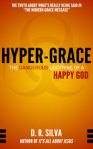


 f their homes, it seems that in addition to removing obvious leaven from the home (yeast, baking powder, baking soda, all fermenting/leavening agents along with all leavened breads and any food products containing leaven including frozen and canned products, condiments, etc.), it’s also important to get rid of any peanut butter and jelly, as crumbs from leavened bread can get transferred into the containers by one’s knife. Another person posted how they should probably get rid of their mayo, too, ‘just in case’.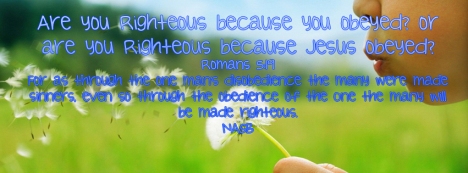





 governing authorities of the broader area? No, He told the local shepherds. And told them to go and see the newborn King . . . They were the first on the scene besides Mary and Joseph to take in the wonder of the advent of the Saviour of the world. Just regular folks. God didn’t leave out the king-types . . . they just came much later. He came for everyone, from shepherds to kings . . . He came for us all. What an amazing event – the coming of God in the flesh to dwell among those He created and to eventually provide for their redemption. To celebrate those things – that’s what I think it’s okay to do.

 Then took he him up in his arms, and blessed God, and said, “Lord, now lettest thou thy servant depart in peace, according to thy word: For mine eyes have seen thy salvation, Which thou hast prepared before the face of all people; A light to lighten the Gentiles, and the glory of thy people Israel.”
 It is with a grateful heart that I’ve received another testimony. This one comes from an individual who wrote me a while back as they began their journey out of the Hebrew Roots Movement. It’s been such a blessing to see how God has been progressively growing this dear person in His Grace. Many thanks to J. for the following.





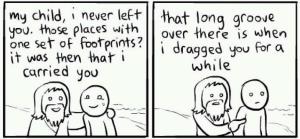














 Joyfully Growing in Grace